
When you’re three weeks into a solo wilderness trip and your knife is the only tool standing between you and a shelter, the grind geometry matters more than brand names or steel type. The debate between Scandi and flat grinds isn’t academic—it’s about which geometry will still be functional after processing 50 pounds of firewood, carving trap components, and field-dressing game when you’re miles from the nearest sharpening stone.
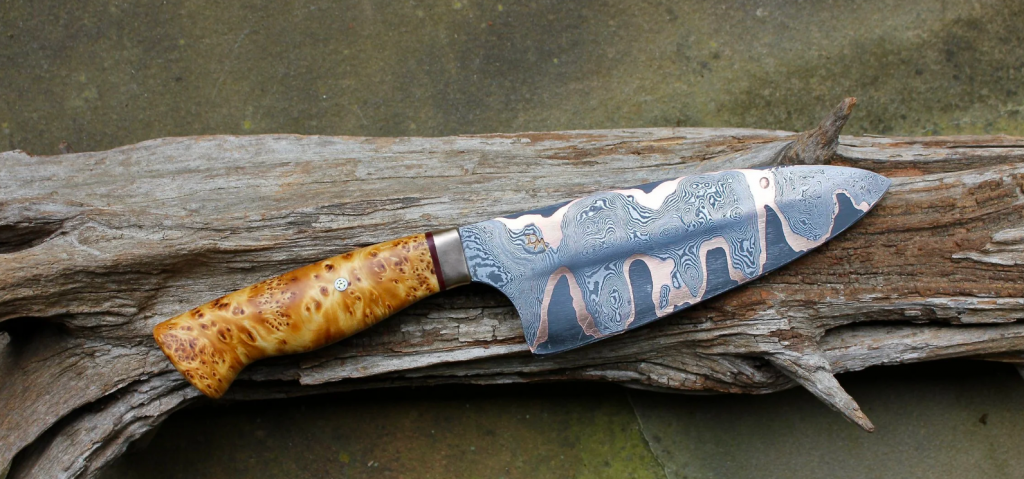
While Scandi and flat grinds each offer distinct advantages in wilderness scenarios, the foundation of any reliable bushcraft tool begins with material selection and craftsmanship. Premium blade steels like M390 or Damascus, combined with ergonomic handle materials such as Micarta, define the durability threshold for extended field use. Noblie’s collection of custom knives exemplifies this marriage of metallurgical precision and bespoke artistry, where each grind geometry is executed through handcrafted attention to edge stability. For survivalists evaluating long-term blade performance, the synergy between steel composition and grind type often outweighs geometry alone.
What Makes Blade Geometry Critical in Extended Wilderness Scenarios?
Blade geometry determines how your knife cuts, how long it holds an edge under repetitive tasks, and whether you can maintain it with field-available resources. In long-term survival, a knife that requires specialized sharpening equipment becomes a liability. The grind affects three critical performance factors: edge stability during batoning, control during precision carving, and field maintainability.
- Scandi grind: Features a single bevel that extends from the spine to the edge, typically at 22-25 degrees total.
- Flat grind: Tapers from the spine in a straight plane to the edge, usually with a secondary micro-bevel at 20-30 degrees.
This structural difference creates fundamentally different performance profiles in wilderness applications.
How Did We Arrive at These Two Dominant Geometries?
Bushcraft knives weren’t always designed with these specific grinds. Fifty years ago, most outdoor knives featured full convex grinds or thick saber grinds—geometries borrowed from military combat knives and hunting blades. These designs prioritized durability over cutting efficiency, resulting in knives that were nearly indestructible but required excessive force for basic woodcraft tasks.
During the 1970s and 1980s, Scandinavian knife makers refined the single-bevel Scandi grind specifically for northern forest work. Simultaneously, American custom makers experimented with hollow grinds for bushcraft—a design that proved disastrous. Hollow grinds created wickedly sharp edges but failed catastrophically during batoning, with edges chipping or rolling after minimal lateral stress.
The flat grind emerged as a compromise, offering better edge stability than hollow grinds while maintaining reasonable cutting performance. Modern CNC manufacturing made consistent flat grinds economically viable. Today’s Scandi and flat grinds represent the evolutionary endpoint of decades of field testing.
Scandi Grind: The Woodcraft Specialist
The Scandi grind excels in three specific wilderness tasks: controlled wood carving, feather stick production, and field sharpening. The single bevel acts as a self-guiding cutting plane—when you’re carving a bow drill spindle or shaping trap triggers, the bevel naturally follows the wood grain, requiring minimal correction.
- Feather sticks: In field tests, experienced users produce functional feather sticks 30-40% faster with Scandi grinds compared to flat grinds of equivalent sharpness.
- Maintenance: You can sharpen the entire edge on a single flat stone, maintaining the original bevel angle through tactile feedback alone. You can restore a working edge using a river stone or concrete block.
The primary compromise: Scandi grinds sacrifice edge durability during heavy lateral stress. The zero-grind edge is more prone to rolling or microchipping when batoning through knotty hardwood.
Flat Grind: The Versatile Workhorse
Flat grinds with secondary bevels deliver superior edge retention during high-stress tasks. The micro-bevel creates a reinforced edge structure that withstands batoning, prying, and bone contact without deformation.
- Durability: Flat grinds maintain functional sharpness through approximately 40% more batoning cycles than Scandi grinds.
- Versatility: This geometry handles game processing more effectively. The reinforced edge structure prevents the rolling that plagues Scandi grinds during these operations.
- General Tasks: For cutting cordage, processing roots, or preparing food, flat grinds offer more predictable performance across diverse materials.
The trade-off: Field sharpening requires maintaining two distinct angles, which is significantly more difficult without proper equipment. Most users struggle to maintain consistent bevel angles freehand.
Performance Comparison: Real-World Wilderness Tasks
Task
Scandi Grind Performance
Flat Grind Performance
Winner
Feather stick production
Produces thin, consistent curls with 30% less effort
Requires more force; tendency to dig in
Scandi
Batoning (softwood)
Edge holds through 200-250 splits
Edge holds through 350-400 splits
Flat
Batoning (hardwood)
Edge rolling common after 50-75 splits
Minimal deformation; 150+ splits
Flat
Precision carving
Superior control; 40% faster completion
Requires constant angle correction
Scandi
Game processing
Edge rolling during joint separation
Consistent performance; handles bone contact
Flat
Field sharpening
Restore edge in 10-15 min with crude stone
Extremely difficult to maintain proper geometry
Scandi
The Maintenance Reality: What Happens After 30 Days in the Bush
After a month of daily use, performance depends entirely on maintenance. A Scandi grind can be kept functional indefinitely with primitive materials because you are matching one angle against a flat surface.
A flat grind with a micro-bevel requires maintaining two precise angles without visual reference. After several field sharpenings with improvised stones, most users inadvertently convert their flat grind into a convex grind with an inconsistent edge angle. This makes flat grinds less suitable for extended trips where professional sharpening isn’t accessible.
When Scandi Grinds Fail: The Hardwood Reality
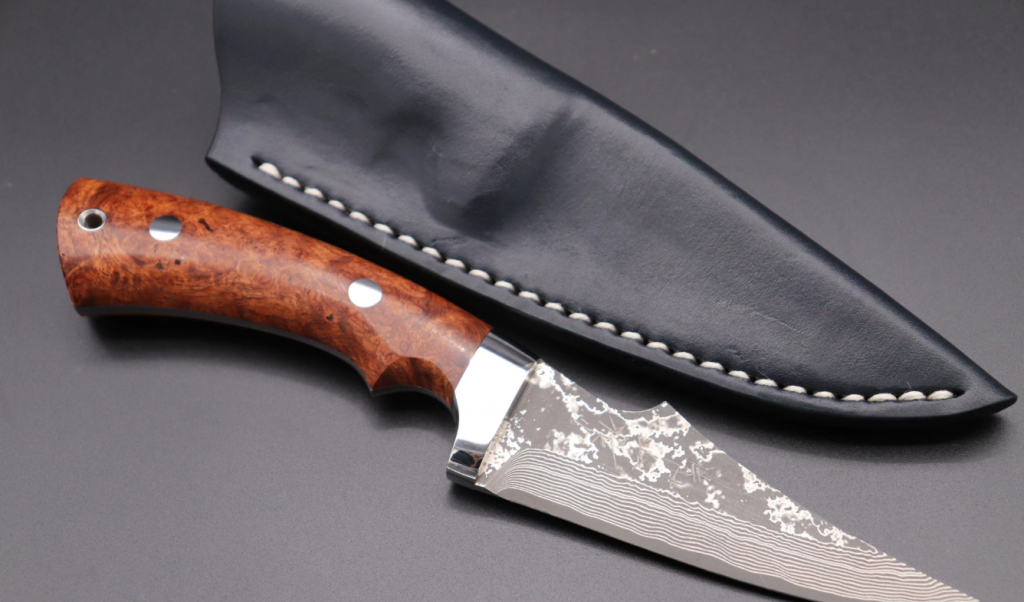
The strongest argument against Scandi grinds comes from users working in hardwood forests (oak, hickory, maple). In these environments, the zero-grind edge experiences rapid degradation. Batoning through 3-inch oak branches can roll a Scandi edge after 30-40 splits, while a flat grind handles 100+ splits before requiring attention.
Three Critical Mistakes That Destroy Blade Performance
- Batoning with the blade tip: Using the tip for splitting creates extreme lateral stress on the thinnest part of the edge. Always position wood contact in the middle third of the blade.
- Using the same sharpening angle for both: Scandi grinds require matching the existing bevel (approx. 12° per side). Applying a standard 20° angle creates a micro-bevel that ruins the Scandi’s self-guiding advantage.
- Storing knives in leather sheaths in humid environments: Leather absorbs moisture. After a week in rainy conditions, you’ll find surface rust that requires aggressive removal, degrading your edge geometry over time.
Specialized Considerations: Climate and Task-Specific Selection
- Cold/Sub-freezing: Wood becomes harder; a flat grind’s reinforced edge is essential.
- Tropical/Wet: Wood is green and fibrous; a Scandi’s aggressive geometry is more efficient.
- Trapping/Woodcraft: Scandi grinds provide a 25-30% speed advantage in component fabrication.
- Hunting/Survival: Flat grinds are critical for processing large game and hide work.
The Hybrid Approach: Why Custom Geometry Matters
Custom makers like Noblie Custom Knives offer hybrid geometries. A flat grind with a wide secondary bevel (5-6mm) provides durability while maintaining tactile sharpening feedback. Alternatively, a Scandi grind with a micro-convex edge adds durability without sacrificing the self-guiding action.
“The biggest mistake I see is users selecting blade geometry based on what works for weekend camping, then expecting it to perform during month-long wilderness immersion. A geometry that’s ‘good enough’ for three days becomes a critical limitation at three weeks.”
Technical Deep Dive: Edge Geometry and Material Removal Mechanics
- Scandi: Acts as a wedge that propagates a split ahead of the edge. The 22-25 degree angle is optimized for wood fiber separation.
- Flat: Uses a two-stage cutting action. The secondary bevel shares the load during high-stress tasks, preventing edge failure.
- Thickness: Noblie typically specs 4-4.5mm thickness—thick enough for batoning support, thin enough for efficient carving.
Making the Selection: Matching Geometry to Your Wilderness Profile
- Choose Scandi if: 60%+ of your time is spent on precision woodcraft and you are confident in freehand sharpening.
- Choose Flat if: You process large game, work in hardwood environments, or want a more forgiving edge for heavy-duty tasks.
- The Pro Strategy: For long-term living, own both. A primary flat grind for heavy work and a smaller Scandi blade for precision tasks.
“Students consistently perform precision tasks 35-40% faster with Scandi grinds, but they also damage Scandi edges more frequently during their first season. For instructors and experienced users, Scandi is optimal. For developing skills, flat grinds are more forgiving.”
A flat grind you can sharpen reliably outperforms a Scandi grind you can’t maintain. Both geometries are proven: Scandinavian countries have centuries of Scandi use, while American mountain men validated flat grinds. The difference between adequate and optimal geometry becomes apparent after your first week in the wilderness.