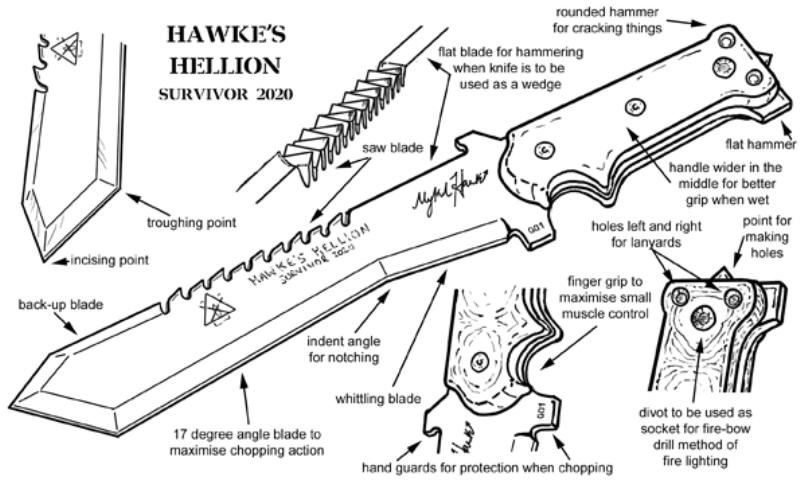
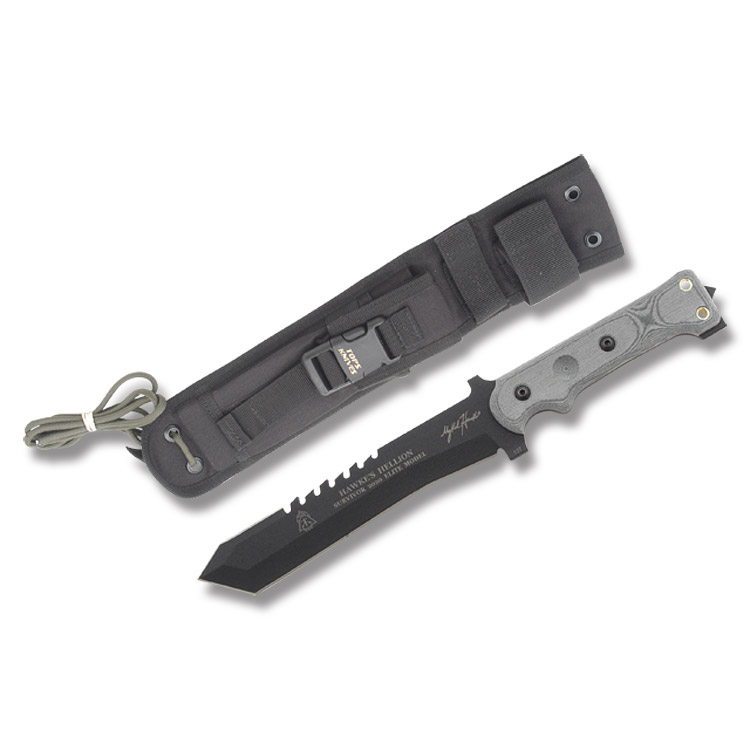
A good graphic explaining all the unique features designed into the Mykel Hawke line of knives.

The U.S. has a lot of untapped renewable energy, from wind in the Midwest to solar in the Southwest. These maps show where we could maximize our clean power resources.
Take a look at these maps: They show the renewable energy potential of every state in the country. The good news is that everywhere has resources to exploit, whether it’s solar in the Southwest, onshore wind in the Midwest, or offshore wind on the East coast.
The data was compiled by the National Renewable Energy Laboratory, part of the U.S. Department of Energy. In total, the U.S. has 481,800 terawatt-hours of annual generating potential, or 212,224 gigawatts of capacity across wind, solar, biopower, geothermal, and hydropower. If you don’t know your gigawatts, that’s more than enough to go around, in other words, though questions about transmission mean that solar power in the Southwest may not help people who need more power in the Midwest.
U.S. Photovoltaic Solar Resource
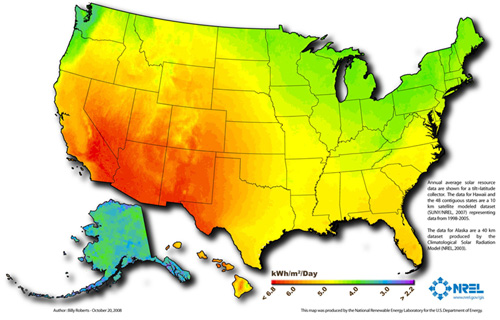
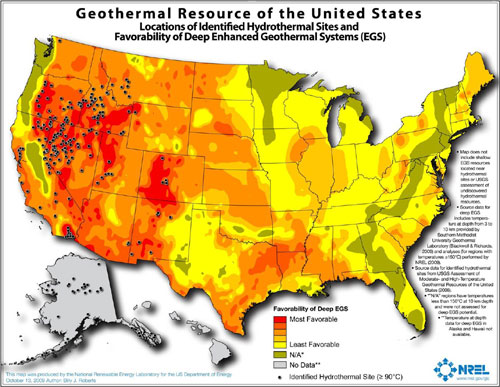
A few states stand out. Hawaii has the highest offshore wind potential (17% of the national total). Alaska and the Northwest enjoy 27% of the realizable hydropower. Texas has the greatest opportunities in plant-scale photovoltaics, with California not far behind. The Rocky Mountain states have the best geothermal potential.
U.S. Wind Resource (80m)
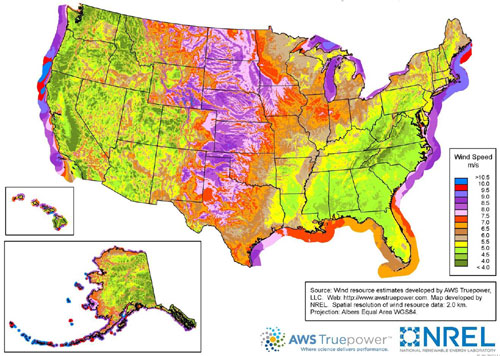
It’s important to note that the NREL uses a broad definition of “potential,” though. The maps are based on what is technically available, given assumptions about technology, land use, and environmental constraints. They don’t consider future economics and market conditions, which are obvious big caveats. We may not be able to afford a wind turbine in a few years.
U.S. Biomass Resource
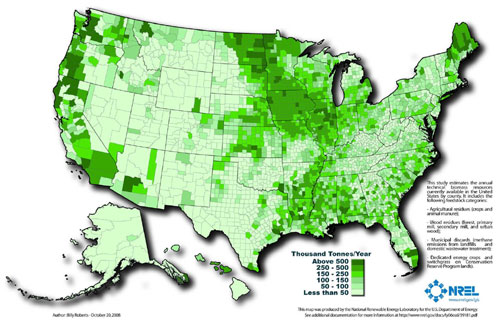
NREL also had to normalize a lot of data from different sources, inevitably drawing arbitrary lines here and there. Still, as co-author Anthony Lopez says, the maps give “a sense of scale regarding the potential for renewables, and which technologies are worth examining.” Seems like every state has something to work with.
Geothermal Resource of the United States
source: Maps Show The Incredible Potential Of Renewable Energy
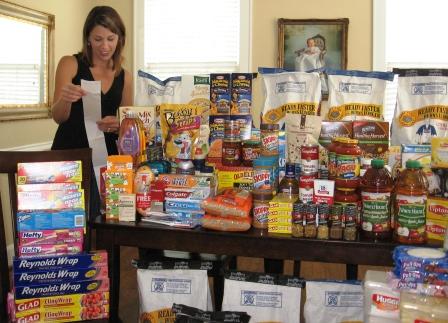
Extreme couponers can teach preppers a thing or two about stockpiling and storing the bounty they reap.
Not only saving money but getting creative on how to store their collected treasures. I really like the idea of using unsuspecting furniture items to hide and conceal their supplies…
Read More | Extreme couponers can teach preppers a thing or….
With all of the World’s conflicts, terrorist activity, political unrest, combined with rouge nations like North Korea and Iran racing towards nuclear power, the threat of dirty bombs grows.
What is a dirty bomb?
A dirty bomb is a mix of explosives, such as dynamite, with radioactive powder or pellets. When the dynamite or other explosives are set off, the blast carries radioactive material into the surrounding area.
A dirty bomb is not the same as an atomic bomb
An atomic bomb, like those bombs dropped on Hiroshima and Nagasaki, involves the splitting of atoms and a huge release of energy that produces the atomic mushroom cloud.A dirty bomb works completely differently and cannot create an atomic blast. Instead, a dirty bomb uses dynamite or other explosives to scatter radioactive dust, smoke, or other material in order to cause radioactive contamination.
What are the main dangers of a dirty bomb?
The main danger from a dirty bomb is from the explosion, which can cause serious injuries and property damage. The radioactive materials used in a dirty bomb would probably not create enough radiation exposure to cause immediate serious illness, except to those people who are very close to the blast site. However, the radioactive dust and smoke spread farther away could be dangerous to health if it is inhaled. Because people cannot see, smell, feel, or taste radiation, you should take immediate steps to protect yourself and your loved ones.
What immediate actions should I take to protect myself?
These simple steps—recommended by doctors and radiation experts—will help protect you and your loved ones. The steps you should take depend on where you are located when the incident occurs: outside, inside, or in a vehicle.
If you are outside and close to the incident
- Cover your nose and mouth with a cloth to reduce the risk of breathing in radioactive dust or smoke.
- Don’t touch objects thrown off by an explosion—they might be radioactive.
- Quickly go into a building where the walls and windows have not been broken. This area will shield you from radiation that might be outside.
- Once you are inside, take off your outer layer of clothing and seal it in a plastic bag if available. Put the cloth you used to cover your mouth in the bag, too. Removing outer clothes may get rid of up to 90% of radioactive dust.
- Put the plastic bag where others will not touch it and keep it until authorities tell you what to do with it.
- Shower or wash with soap and water. Be sure to wash your hair. Washing will remove any remaining dust.
- Tune to the local radio or television news for more instructions.
If you are inside and close to the incident
- If the walls and windows of the building are not broken, stay in the building and do not leave.
- To keep radioactive dust or powder from getting inside, shut all windows, outside doors, and fireplace dampers. Turn off fans and heating and air-conditioning systems that bring in air from the outside. It is not necessary to put duct tape or plastic around doors or windows.
- If the walls and windows of the building are broken, go to an interior room and do not leave. If the building has been heavily damaged, quickly go into a building where the walls and windows have not been broken. If you must go outside, be sure to cover your nose and mouth with a cloth. Once you are inside, take off your outer layer of clothing and seal it in a plastic bag if available. Store the bag where others will not touch it.
- Shower or wash with soap and water, removing any remaining dust. Be sure to wash your hair.
- Tune to local radio or television news for more instructions.
If you are in a car when the incident happens
- Close the windows and turn off the air conditioner, heater, and vents.
- Cover your nose and mouth with a cloth to avoid breathing radioactive dust or smoke.
- If you are close to your home, office, or a public building, go there immediately and go inside quickly.
- If you cannot get to your home or another building safely, pull over to the side of the road and stop in the safest place possible. If it is a hot or sunny day, try to stop under a bridge or in a shady spot.
- Turn off the engine and listen to the radio for instructions.
- Stay in the car until you are told it is safe to get back on the road.
What should I do about my children and family?
How do I protect my pets?
Should I take potassium iodide?
Will food and water supplies be safe?
How do I know if I’ve been exposed to radiation or contaminated by radioactive materials?
Where do I go for more information?
For more information about dirty bombs, radiation, and health, contact:
The Centers for Disease Control and Prevention (CDC) protects people’s health and safety by preventing and controlling diseases and injuries; enhances health decisions by providing credible information on critical health issues; and promotes healthy living through strong partnerships with local, national, and international organizations.
72 hour kit – see Bug Out Bag
AR-15 – Is the civilian version of the military M-16 and M-4 rifle.
Bugging Out – leaving your current position and moving to a designated area or suitable location for your safety.
Bug Out Bag (aka BOB) – A bag used for moving from one place to another in an emergency that carries bare essentials to last you at least 72 hours. Mainly the bag focuses on grabbing it and going without having to “pack”. You have no time to pack, you just grab it and go. Common items include food bars, fire starters, first aid kit, water, maps, cash, firearms, emergency medicine, solar blanket, and copies of personal identification (photos of passports, drivers licenses, social security card etc).
BOL – Bug out Location, a preplanned position to retreat to (other than your home) if you had the need to escape danger or disaster.
BOV – Bug out Vehicle
EDC – Everyday carry, what a person caries on their person on a daily basis.
EMP – An electromagnetic pulse is a burst of electromagnetic radiation. The abrupt pulse of electromagnetic radiation usually results from certain types of high energy explosions, especially a nuclear explosion, or from a suddenly fluctuating magnetic field. The resulting rapidly-changing electric fields and magnetic fields may couple with electrical/electronic systems to produce damaging current and voltage surges, destroying the majority of electronic devices.
CME – Coronal Mass Ejection. (Solar flares.) See EMP.
GO bag – see Bug Out Bag
JIC – Just In Case
“Junk” Silver – 1964 or earlier mint date circulated U.S. silver dimes, quarters, or half dollars with little or no numismatic value. These coin have a silver content of 90%.
M.A.G – Mutual Aid Group, made up of individuals in a specific geographic area. These individuals meet for the purpose of discussing, sharing ideas and planning for emergencies in their area. Think of it as neighbors banning together to help each other out in a time of need.
MBR – Main Battle Rifle
Multi-tool – This is a combination survival knife, pliers and will usually have a wide assortment of tools built in. One example is theMulti-tool.
MRE – Meal Ready To Eat. This is a military ration. Its normal shelf life is several years. The contents are sealed in a tough plastic coating.
OPSEC = Operational Security
Peak Oil – the point in time when the maximum rate of petroleum extraction is reached, after which the rate of production is expected to enter terminal decline, causing huge ripple effects in societies transportation, energy and manufacturing systems.
P.E.R.K – (Personal Emergency Relocation Kit) see Bug Out Bag
PSK – Personal Survival Kit
SHTF – Sh*t hits the Fan. – This means that some kind of event has happened. This is a term used in relation to your location. A SHTF situation is not normally world wide.
TEOTWAWKI – The End of the World as We Know it – a global shift in society. An Apocalyptic event.
WROL – (Without Rule of Law) A time when government bodies (police, military, etc) have either lost control, or no longer exist causing civil unrest and instability.
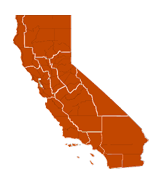
Great ShakeOut earthquake drills help people in homes, schools, and organizations improve preparedness and practice how to be safe during earthquakes. Most people participate in one of the Official ShakeOut Regions shown below. Now anyone in other states, provinces, or countries can also register to be included in the global participation total!
 10/18/2012 As of today: 9 million (2011: 8.6 million) |
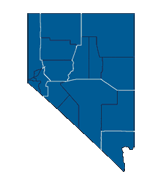 10/18/2012 As of today: 510,000 (2011: Over 190,000) |
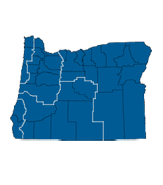 10/18/2012 As of today: 110,000 (2011: Over 23,000) |
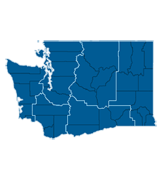 10/18/2012 As of today: 550,000 (First year) |
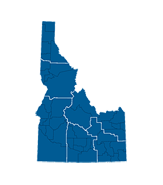 10/18/2012 As of today: 84,000 (2011: Over 86,000) |
|||
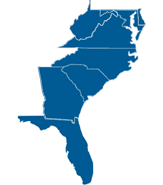 10/18/2012 As of today: 1 million (First year) |
 10/18/2012 As of today: 51,000 (2011: Over 58,000) |
 10/18/2012 As of today: 360,000 (First year) |
 10/18/2012 As of today: 35,000 (First year) |
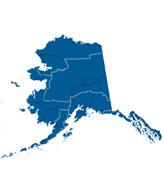 10/18/2012 As of today: 50,000 (First year) |
|||
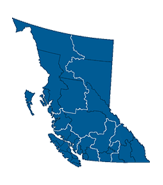 10/18/2012 As of today: 520,000 (2011: Over 530,000) |
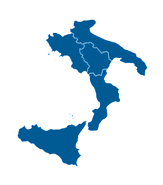 10/18/2012 As of today: 14,000 (First year) |
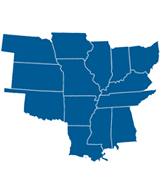 2/7/2013 As of today: 32,000 (2012: 2.4 million) |
 4/17/2013 As of today: 4,000 (2012: Over 940,000) |
||||
 9/26/2012 As of today: 1.3 million (First year) |
 Various Dates 140,000 |
 10/18/2012 As of today: 260,000 |
|||||
The ShakeOut began in California and has also been organized in many other states and countries. Official ShakeOut Regions require significant local or regional coordination, typically by an emergency management agency or an alliance of many organizations. If you are interested in establishing a ShakeOut drill for your region please contact us. If your state, province, or country is not yet participating you can register as part of the global participation total.
via ShakeOut