Could You Build A Shelter To Save Your Life?

Seven Primitive Survival Shelters That Could Save Your Life

In its simplest form, a shelter is nothing more than a shell that traps a pocket of dead air warmed solely by body heat. In tree belts, such shelters are constructed of decomposing leaf litter and other organic debris; in barren, polar regions, they are made of snow. Knowing how to build even the simplest shelter could save your life in an emergency.
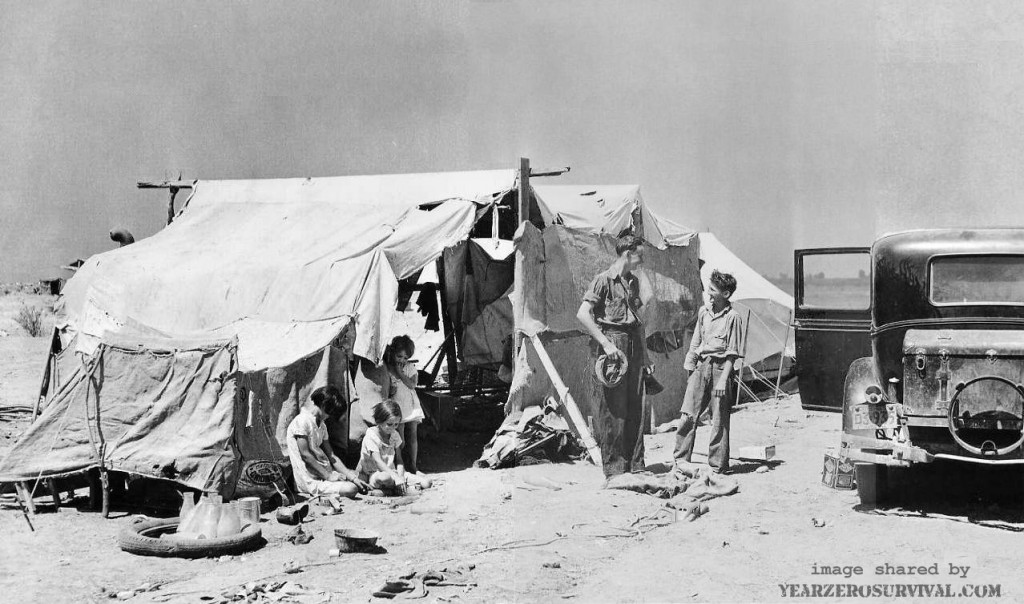
Fleeing-the-SW-Dust-Bowl

Wickiup
This forerunner of the tepee remains the quintessential primitive shelter -“sturdy enough to blunt prevailing winds, weatherproof, quickly built for nomadic hunters, but comfortable enough to serve as a long-term home. It can be partially enclosed or fully enclosed and vented to permit an inside fire.
Step One Tilt three poles together in tripod form and bind them together near the top. If you can find one or more poles with a Y at one end, tilt the others against the crotch, eliminating the need for cordage.
Step Two Tilt other poles against the wedges formed by the tripod in a circular form and thatch, leaving a front opening and a vent at the top for smoke.


Wigwam
A complex version of the wickiup, this is built with long, limber poles bent into a dome-shaped framework to maximize interior space.


Step One Inscribe a circle and dig holes at 2-foot intervals to accommodate the framing poles.
Step Two Drive the butt ends of the poles into the holes and bend the smaller ends over the top. Lash or weave the tops together, forming a dome-shaped framework.
Step Three Lace thin green poles horizontally around the framework for rigidity.
Step Four Thatch the framework, leaving entrance and vent holes.


Salish Subterranean Shelter
Used by Pacific tribes from Alaska to present-day California, pit shelters are impractical unless you have a digging implement, but they offer better protection from extreme heat and cold than above ground shelters.


Step One Dig a pit the circumference of the intended shelter to a depth of 3 feet.
Step Two Build a supporting tripod of poles, strengthening the framework with horizontally laced limbs.
Step Three Thatch the shelter, leaving a hole at the center to serve as both a laddered entrance and a smoke vent. Use earth removed from the pit to sod and insulate the shelter walls.


A-frame
The pitched roof of the A-frame bough shelter offers more protection against the wind than a lean-to and can still be heated by fire at the entrance. One drawback is that the occupant can’t lie down parallel to the fire for even warmth.


Step One Lift one end of a log and either lash it or wedge it into the crotch of a tree. Tilt poles on either side to form an A-frame roof.
Step Two Strengthen and thatch the roof as you would a bough lean-to.


Pole and Bough Lean-to
One of the most ancient shelters, the single wall of a lean-to serves triple duty as windbreak, fire reflector, and overhead shelter.
Step One Wedge a ridgepole into the crotches of closely growing trees (one end can rest on the ground if necessary), or support each end of the ridgepole with a tripod of upright poles lashed together near the top.
Step Two Tilt poles against the ridgepole to make a framework. To strengthen this, lace limber boughs through the poles at right angles.
Step Three Thatch the lean-to with slabs of bark or leafy or pine-needle branches, weaving them into the framework. Chink with sod, moss, or snow to further insulate.


Quintze Hut
Properly constructed, this poor man’s igloo can be body-heated to above freezing on a 20-below day, higher if you light a candle.


Step One Build up snow to a depth of at least 8 inches and pack it down to make a floor.
Step Two Heap loose snow onto the floor. Piling the snow over a backpack or mound of branches will let you create a hollow, which hastens the excavation process, but it isn’t necessary. Let the snow consolidate for an hour or more, until it is set up hard enough to form snowballs.
Step Three Tunnel through the mound at opposite ends to dig out the center efficiently, fill in the unused entrance, and crawl inside to shape the interior. Ideally, the quintze should be narrow at the foot end, with a bed long enough to lie down on, and just tall enough at the head end for you to sit up. The walls and roof need to be at least a foot thick (check this with a stick).
Step Four Poke out an air vent overhead and dig a well at the entrance for the cold air to settle into. Cut a snow block for a door. Glaze interior walls with a candle to prevent dripping.


Debris Hut
Heap up a big mound of duff and detritus from the forest floor, then excavate a pocket that is large enough to crawl into. After getting inside, partially block the doorway to minimize air circulation. If it isn’t cramped and dirty, you’ve made the air space too big for your body to heat it sufficiently.


Photo Gallery by Field & Stream Online Editors Source


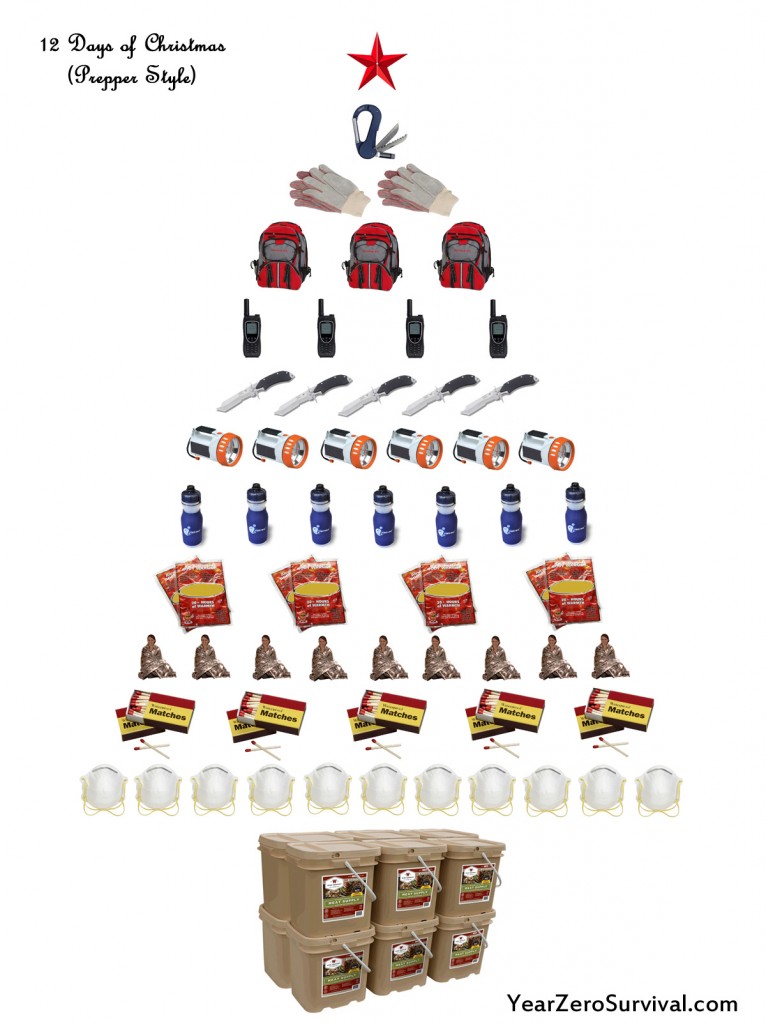
12 Days of Christmas (Prepper Style)

Twelve Days Of Christmas Survival Style

On the twelfth day of Christmas, 
my true love sent to me
Twelve M.R.E.s,
Eleven Respirator Masks,
Ten Fire Starters,
Nine Emergency Blankets,
Eight Body Warmers,
Seven Water Filtration Bottles,
Six Lights a-Flashing,
Five Blades of Steel,
Four Satellite Phones,
Three Bug-Out Bags,
Two pair of Gloves,
And a Carabineer!

Happy Holidays from Year Zero Survival

Prepper-Survival-Gifts

Protein Poisoning or Rabbit Starvation

by Guest Blogger OmegaMan

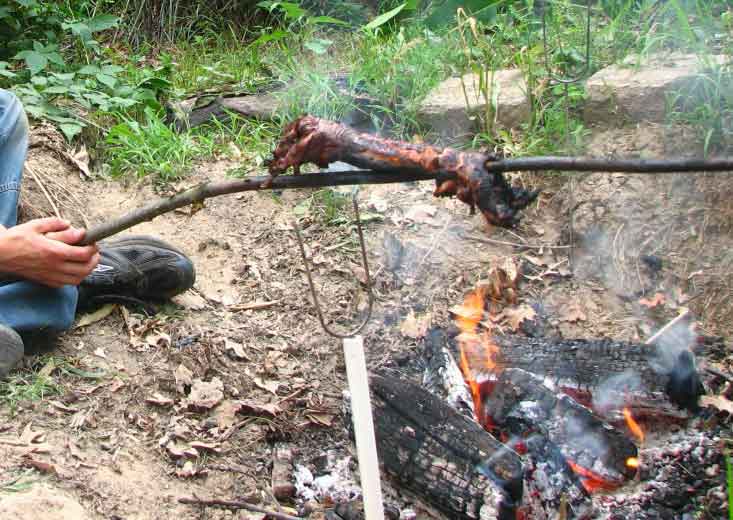
Many survival books discuss the topic of “Rabbit Starvation”.  The purpose of these articles is to remind the survivalist to keep a mixture of fats and proteins in their survival diet….that is to not just rely on the lean meats and proteins of such lean animals rabbit as a sole food source.

In essence, the stress put on a person during a survival situation, along with a lack of diversified nutrients can cause acute malnutrition if one relies on lean proteins as a food source.  Common symptoms which take about a week to appear are fatigue, headache and most concerning…diarrhea, low blood pressure and heart rate. This is caused by a build-up of urea and ammonia in the body as the kidneys struggle to digest large amounts of lean proteins.

There are stories of people gorging themselves on large quantities of lean meats alone that their stomachs will become distended.

Vilhjalmur Stefansson the Canadian arctic explorer wrote that the people eat till their stomachs are distended; but no matter how much they eat they feel unsatisfied. Some think a man will die sooner if he eats continually of fat-free meat than if he eats nothing, but this is a belief on which sufficient evidence for a decision has not been gathered in the North. Deaths from rabbit-starvation, or from the eating of other skinny meat, are rare; for everyone understands the principle, and any possible preventive steps are naturally taken.

Remember to eat the rabbits liver and brains to get some needed fat. The diarrhea may not go away until fats are added to the diet.

Remember, the real point is to get an intake of various essential nutrients and not just rely on pure protein from rabbits or any other lean meats. When possible, vary your diet with carbs, grains, proteins and important survival fats.

A little unknown fact is that in Air Force Survival  recruits are taught to eat the undigested leaves from the rabbits stomach to also add to their dietary intakes. I am told it tastes like a bitter pesto.


Untapped Renewable Energy – Preppers Power Source

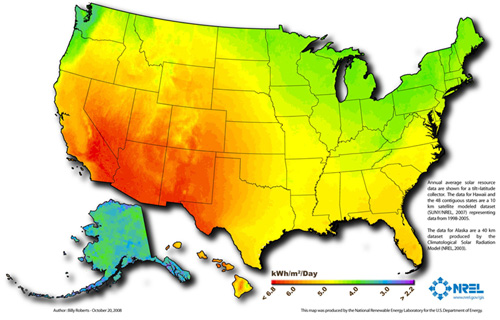
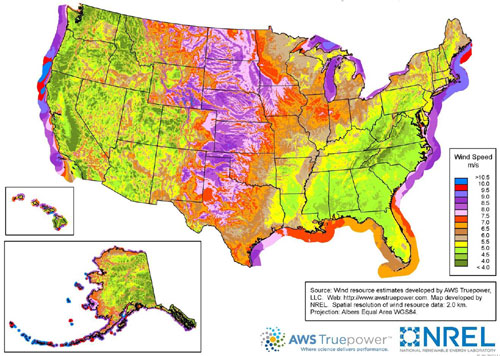
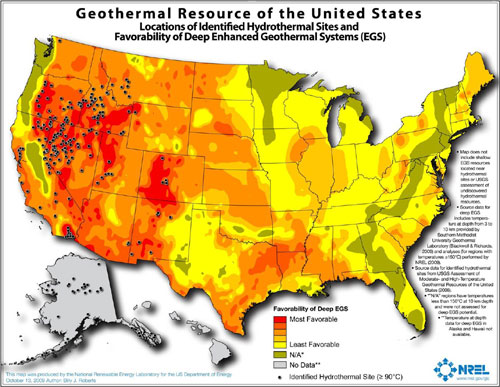
The U.S. has a lot of untapped renewable energy, from wind in the Midwest to solar in the Southwest. These maps show where we could maximize our clean power resources.

Take a look at these maps: They show the renewable energy potential of every state in the country. The good news is that everywhere has resources to exploit, whether it’s solar in the Southwest, onshore wind in the Midwest, or offshore wind on the East coast.

The data was compiled by the National Renewable Energy Laboratory, part of the U.S. Department of Energy. In total, the U.S. has 481,800 terawatt-hours of annual generating potential, or 212,224 gigawatts of capacity across wind, solar, biopower, geothermal, and hydropower. If you don’t know your gigawatts, that’s more than enough to go around, in other words, though questions about transmission mean that solar power in the Southwest may not help people who need more power in the Midwest.

U.S. Photovoltaic Solar Resource


A few states stand out. Hawaii has the highest offshore wind potential (17% of the national total). Alaska and the Northwest enjoy 27% of the realizable hydropower. Texas has the greatest opportunities in plant-scale photovoltaics, with California not far behind. The Rocky Mountain states have the best geothermal potential.

U.S. Wind Resource (80m)


It’s important to note that the NREL uses a broad definition of “potential,” though. The maps are based on what is technically available, given assumptions about technology, land use, and environmental constraints. They don’t consider future economics and market conditions, which are obvious big caveats. We may not be able to afford a wind turbine in a few years.

U.S. Biomass Resource


NREL also had to normalize a lot of data from different sources, inevitably drawing arbitrary lines here and there. Still, as co-author Anthony Lopez says, the maps give “a sense of scale regarding the potential for renewables, and which technologies are worth examining.” Seems like every state has something to work with.

Geothermal Resource of the United States


source: Maps Show The Incredible Potential Of Renewable Energy


What Do Rat Whiskers And Surviving Have in Common?

by Guest Blogger OmegaMan

Psychiatrist Curt RichterEver heard of Psychiatrist Curt Richter? He studied the consequences of emotional stress when trying to survive. He noticed that when living things are subjected to great pressure, many will just give up and die. If the stress was psychological, then why did the subjects mind and body appear to collapse?

In short, Richter was experimenting putting rats in a tub of water. At room temperature the rat could swim about 80 hrs non-stop before giving up. If he stressed the rat by lowering or raising the water temperature or even blowing air into its face, a rat could still swim between 20 and 40 hrs. He also found that once a rat picked its direction, it would generally stick with either a clockwise or counter clockwise direction without changing. Many things from ants to lobsters will do this if one or their antennae or whiskers are cut also.

Richter decided to study the effects on direction by cutting the whiskers on just one side of a rats face. By accident…guess what they discovered? The rat swam for only a few minutes, gave up and sank to the bottom! Just for the record, they actually rescued it.

How could this happen? What effect could cutting whiskers have on survival longevity? Well, upon investigation, it wasn’t so much in the cutting of the whiskers as it was in the procedure. He found that his assistants had un-intentionally frightened and stressed the rat by first capturing it in a firmly held black bag and then dropping it into water. It was the “trauma” induced fear response that had sent the rat into over stimulated exhaustion.

Curt Richter also found if he removed the rat just before sinking, let it rest for a few minutes, the rat would relax and seem to realize it in fact that it could survive. If thrown back into the water, it could swim for hours. If it was allowed to play with the stressful black bag first and then thrown back into the water and rescued several times…its survival training would cause it to perform better than those rats without training. Interesting how this relates to the survivability of humans thrown into their own survival situation.

In summary, it was concluded that momentary “HOPE” had an extreme influence on helping the body & mind, cope with an adverse survival situation.

Remember…Never panic! Never give up…!


Extreme Couponers Can Teach Preppers A Thing Or Two…


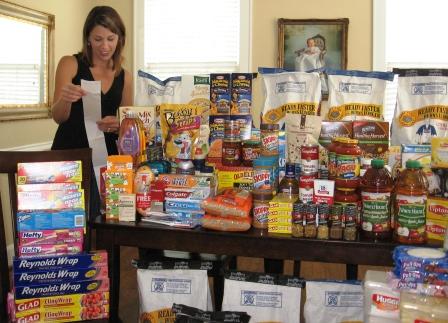
Extreme couponers can teach preppers a thing or two about stockpiling and storing the bounty they reap.

Not only saving money but getting creative on how to store their collected treasures. I really like the idea of using unsuspecting furniture items to hide and conceal their supplies…

Read More | Extreme couponers can teach preppers a thing or….


Dirty Bombs – Frequently Asked Questions (FAQs)

With all of the World’s conflicts, terrorist activity, political unrest, combined with rouge nations like North Korea and Iran racing towards nuclear power, the threat of dirty bombs grows.

People have expressed concern about dirty bombs and what they should do to protect themselves if a dirty bomb incident occurs. Because your health and safety are our highest priorities, the health experts at the Centers for Disease Control and Prevention (CDC) have prepared the following list of frequently asked questions and answers about dirty bombs.

What is a dirty bomb, and what the dangers are? Questions answered by the CDC via Year Zero Survival Blog.

What is a dirty bomb?
A dirty bomb is a mix of explosives, such as dynamite, with radioactive powder or pellets. When the dynamite or other explosives are set off, the blast carries radioactive material into the surrounding area.

A dirty bomb is not the same as an atomic bomb
An atomic bomb, like those bombs dropped on Hiroshima and Nagasaki, involves the splitting of atoms and a huge release of energy that produces the atomic mushroom cloud.

A dirty bomb works completely differently and cannot create an atomic blast. Instead, a dirty bomb uses dynamite or other explosives to scatter radioactive dust, smoke, or other material in order to cause radioactive contamination.

What are the main dangers of a dirty bomb?
The main danger from a dirty bomb is from the explosion, which can cause serious injuries and property damage. The radioactive materials used in a dirty bomb would probably not create enough radiation exposure to cause immediate serious illness, except to those people who are very close to the blast site. However, the radioactive dust and smoke spread farther away could be dangerous to health if it is inhaled. Because people cannot see, smell, feel, or taste radiation, you should take immediate steps to protect yourself and your loved ones.

What immediate actions should I take to protect myself?
These simple steps—recommended by doctors and radiation experts—will help protect you and your loved ones. The steps you should take depend on where you are located when the incident occurs: outside, inside, or in a vehicle.

If you are outside and close to the incident

  • Cover your nose and mouth with a cloth to reduce the risk of breathing in radioactive dust or smoke.
  • Don’t touch objects thrown off by an explosion—they might be radioactive.
  • Quickly go into a building where the walls and windows have not been broken. This area will shield you from radiation that might be outside.
  • Once you are inside, take off your outer layer of clothing and seal it in a plastic bag if available. Put the cloth you used to cover your mouth in the bag, too. Removing outer clothes may get rid of up to 90% of radioactive dust.
  • Put the plastic bag where others will not touch it and keep it until authorities tell you what to do with it.
  • Shower or wash with soap and water. Be sure to wash your hair. Washing will remove any remaining dust.
  • Tune to the local radio or television news for more instructions.

If you are inside and close to the incident

  • If the walls and windows of the building are not broken, stay in the building and do not leave.
  • To keep radioactive dust or powder from getting inside, shut all windows, outside doors, and fireplace dampers. Turn off fans and heating and air-conditioning systems that bring in air from the outside. It is not necessary to put duct tape or plastic around doors or windows.
  • If the walls and windows of the building are broken, go to an interior room and do not leave. If the building has been heavily damaged, quickly go into a building where the walls and windows have not been broken. If you must go outside, be sure to cover your nose and mouth with a cloth. Once you are inside, take off your outer layer of clothing and seal it in a plastic bag if available. Store the bag where others will not touch it.
  • Shower or wash with soap and water, removing any remaining dust. Be sure to wash your hair.
  • Tune to local radio or television news for more instructions.

If you are in a car when the incident happens

  • Close the windows and turn off the air conditioner, heater, and vents.
  • Cover your nose and mouth with a cloth to avoid breathing radioactive dust or smoke.
  • If you are close to your home, office, or a public building, go there immediately and go inside quickly.
  • If you cannot get to your home or another building safely, pull over to the side of the road and stop in the safest place possible. If it is a hot or sunny day, try to stop under a bridge or in a shady spot.
  • Turn off the engine and listen to the radio for instructions.
  • Stay in the car until you are told it is safe to get back on the road.

What should I do about my children and family?

  • If your children or family are with you, stay together. Take the same actions to protect your whole family.
  • If your children or family are in another home or building, they should stay there until you are told it is safe to travel.
  • Schools have emergency plans and shelters. If your children are at school, they should stay there until it is safe to travel. Do not go to the school until public officials say it is safe to travel.

How do I protect my pets?

  • If you have pets outside, bring them inside if it can be done safely.
  • Wash your pets with soap and water to remove any radioactive dust.

Should I take potassium iodide?

  • Potassium iodide, also called KI, only protects a person’s thyroid gland from exposure to radioactive iodine. KI will not protect a person from other radioactive materials or protect other parts of the body from exposure to radiation.
  • Since there is no way to know at the time of the explosion whether radioactive iodine was used in the explosive device, taking KI would probably not be beneficial. Also, KI can be dangerous to some people.

Will food and water supplies be safe?

  • Food and water supplies most likely will remain safe. However, any unpackaged food or water that was out in the open and close to the incident may have radioactive dust on it. Therefore, do not consume water or food that was out in the open.
  • The food inside of cans and other sealed containers will be safe to eat. Wash the outside of the container before opening it.
  • Authorities will monitor food and water quality for safety and keep the public informed.

 How do I know if I’ve been exposed to radiation or contaminated by radioactive materials?

  • People cannot see, smell, feel, or taste radiation; so you may not know whether you have been exposed. Police or firefighters will quickly check for radiation by using special equipment to determine how much radiation is present and whether it poses any danger in your area.
  • Low levels of radiation exposure (like those expected from a dirty bomb situation) do not cause any symptoms. Higher levels of radiation exposure may produce symptoms, such as nausea, vomiting, diarrhea, and swelling and redness of the skin.
  • If you develop any of these symptoms, you should contact your doctor, hospital, or other sites recommended by authorities.

Where do I go for more information?
For more information about dirty bombs, radiation, and health, contact:

The Centers for Disease Control and Prevention (CDC) protects people’s health and safety by preventing and controlling diseases and injuries; enhances health decisions by providing credible information on critical health issues; and promotes healthy living through strong partnerships with local, national, and international organizations.