5 Alloy Steels And Different Properties Of Knife Blade Materials

Are you planning to customize a knife for yourself?

Are you an enthusiastic knives collector?

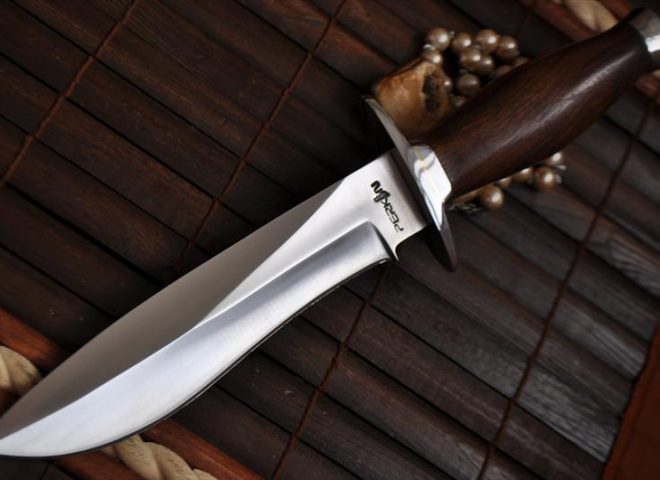
Knives are small, sharp weapons which are used for multiple purposes, depending on the need. They are extremely dangerous steel products; some look dangerously luxurious (specially made for collectors), while some are simply designed to get the most use out of it.

Uses

The various uses of knives:

  1. In the kitchen
  2. Collectable item
  3. To hunt animals
  4. For self defence
  5. For safety purposes

Different Alloy Steels

If you desire to change the properties of steel, you can mix certain elements to it and modify its properties, during the melting process. The following are some of the additions for modifying knife properties:

  • Carbon

Even though, it is not an alloying element, adding carbon increases the hardness of the blade. Carbon is an easily found element in nature and it is a common practice to add it to steel to increase its durability and hardness.


  • Molybdenum

It is not found in free state on Earth, rather in various oxidation states in minerals. It is added to the blade steel to increase its tensile strength, hardenability and corrosion resistance. It basically modifies the steel and upgrades it, as it is used in the steel industry to make superalloys and high-strength alloys.


  • Vanadium

It is found in nature in various minerals and fossil fuel deposits. It improves the hardenability of the steel; promoting fine grains. The grain structure in steel is important because it directly affects the wear resistance and strength of the blade. Swordsmiths try to make a blade with fine grain structure because it makes the best blades; a desirable structure for all.


  • Chromium

It is easily found in the environment from the erosion of chromium-containing rocks. It improves wear resistance, corrosion resistance and hardenability. It is one of the major martensitic stainless steels; commonly used for sports cutlery applications.


  • Nickel

Pure native nickel is found in Earth’s crust in tiny amounts. It is added to the blade steel to improve its toughness, corrosion resistance and hardenability. It is one of the major elements in Austenitic stainless steel, also used for dive knives. Millions of tons are used annually around the world.

As you have already seen above, adding alloys make the blade steel better in every aspect, depending on the alloy element. It is widely practiced around the world by swordsmiths because it not just increases its durability, but also its attraction to the buyer.

Different Properties of Steel

The selection of steel solely depends on the properties of the steel and its manufacturability. Different properties are established by adding alloys, as already mentioned above. The following are some of the common properties of blade steel:

  • Toughness

It refers to the ability of the blade steel to absorb energy prior to its fracturing.


  • Hardness

It refers to the ability of the blade steel to resist permanent deformation. It is measure on a Rockwell scale.


  • Strength

It refers to the ability of the blade steel to resist to applied forces.


  • Hardenability

It refers to the ability of the blade steel to harden through the heat-treating process.


  • Ductility

It refers to the ability of the blade steel to bend or flex without fracturing.


  • Corrosion resistance

It refers to the ability of the blade steel to resist deterioration due to reactions with the environmental elements like water or air etcetera.

Related: Boot Knife Reviews

  • Wear resistance

It refers to the ability of the blade steel to resist abrasion and wear during use. It totally depends on the use by the owner because it is variable for different blades and their owners.


  • Initial sharpness

It simply means the sharpness of the ‘out of the box’ blade.


  • Edge retention

It refers to the ability of the blade steel to hold an edge without frequent resharpening. It simply means till what time the blade can remain sharp before the edge wears out or become useless.


  • Manufacturability

It refers to the ease with which the blade steel can be blanked, machined, ground or heat-treated.

Own a Knife Now

Do you think you know enough among blades now?

Own one yourself and experience the thrill that it gives you to have a sharp collector knife in your hand or use it at something to see how dangerous it could be. There are various places where you can find knives for sale in UK, USA or Australia and order them now!

10 Tips to Creating a Comfortable Mattress Outdoors

Long before orthopedic beds and latex mattresses were invented, people slept on the ground, on animal fur, on leaves or straws. History teaches us that the ancient Romans used straw for their mattresses, and in Asia, inhabitants opted for rice chaff (the non-edible husks). Oat chaff was the primary material for beds in Scotland. Leaves, reeds or seaweed were also considered good mattress-fillers in other parts of the world.

Nowadays, people who live off-grid often choose to handmade their beds and mattresses, using whatever they have at their disposal: straw, feathers, wool. Creating a bedstead with natural elements may seem challenging, but it only takes creativity, some manual labor, basic tools and a few tips, which I have already prepared for you.


Straw is better than hay

It may be easier to find hay when being outdoors, but straws are better suited for a mattress. Many people are allergic to hay, and sometimes they don’t even know it. Therefore straw is the safer choice. Besides, there’s often plenty of it available after cereal crops have been harvested.

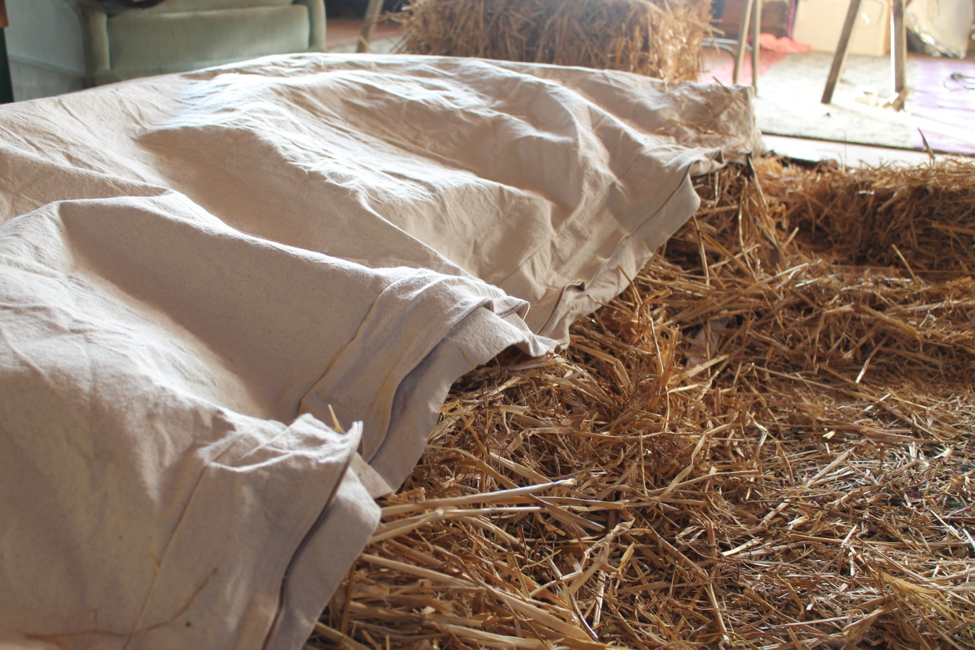
Straw Bed

Carry a tick

Whether you’re just going camping or you’re in a critical situation, make sure you have a tick in your backpack or survival kit. It is a mattress cover, and you can make it from any material you like – usually, they were made from canvas woven from hemp, but presently any resistant material can be an option. When you’re out there, you’ll just unpack the tick and fill it with local stuffing – straw, fallen leaves, even grass.


Stuff tightly

The secret is to stuff evenly and tightly, so you won’t have lumps in your mattress. You can use a stick to push the straws into corners or even get inside the tick and arrange them properly, as trymattres.com suggests.


Get dry ingredients

Whether you’re using straw, leaves, grass or even hay, make sure they are dry. If it’s raining and everything is wet, try finding dry moss (on trees or rocks) and fill the tick with it.


Go freestyle

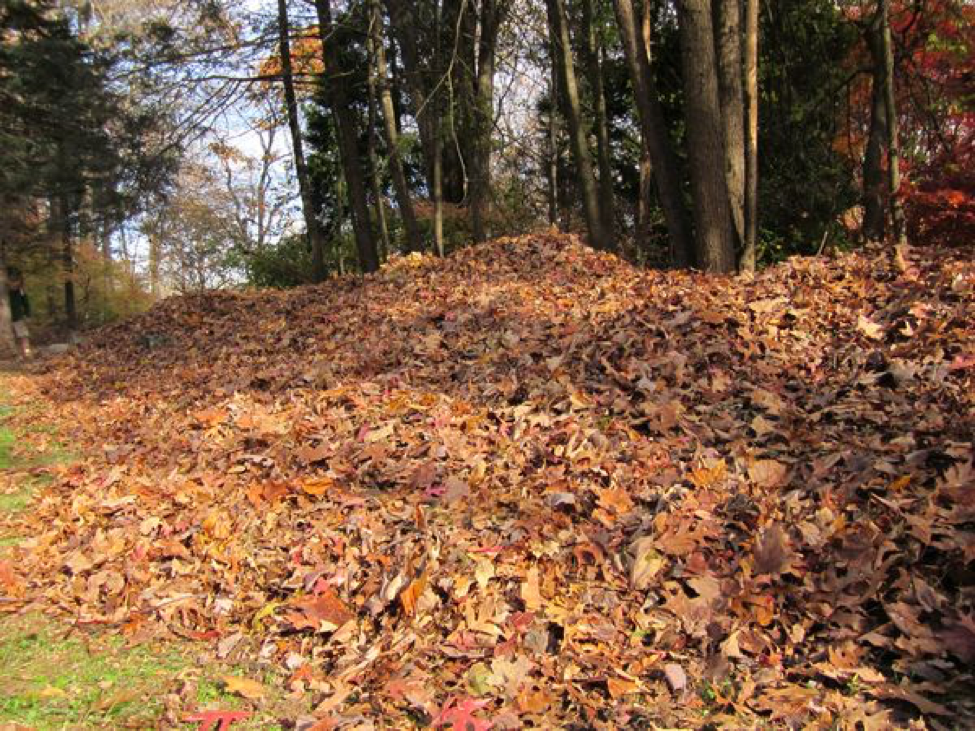
What if you don’t have a tick? You’ll be just fine sleeping on the ground! Get together as many leaves as you can, moss, hay, straws, anything you can find. Make a pile and give it the shape of a mattress, to fit your whole body. Your bed is made.

Laef Bed

Check for bugs

Even if you are extremely brave, you don’t want to wake up because something is moving through your handmade mattress! So before stuffing the natural elements into the tick (if this is how you’ll create your bed), I advise you to check for crawling beings.


Be a caveman

If you’re a hunter and your prey is a big animal, remember that its skin or fur can be a warm and comfortable bed for you. But this is something that requires a particular set of skills. Skinning an animal is not an easy job, and not anyone can do it.


Make a water mattress

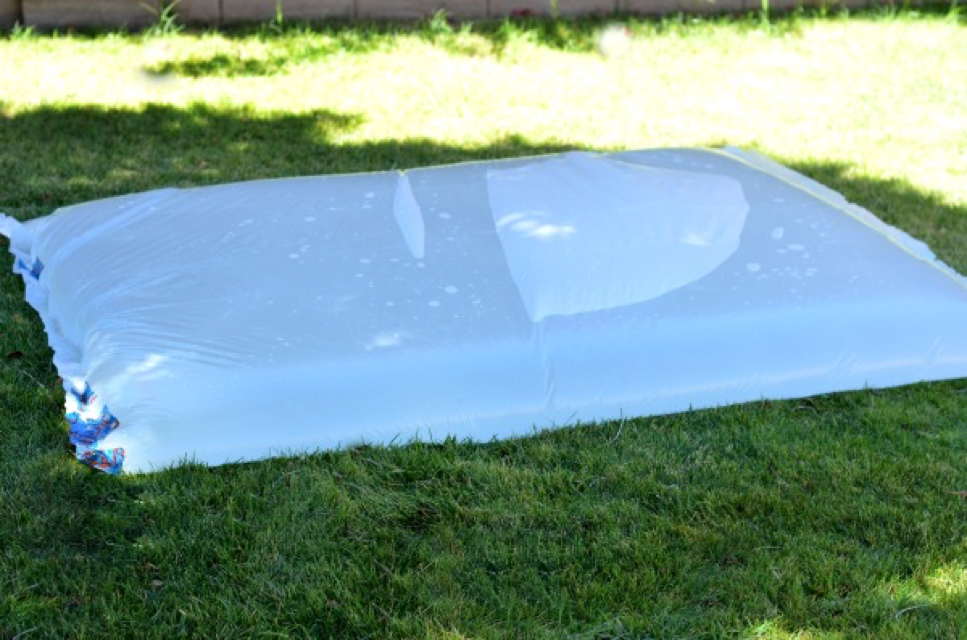
If you’re near a water source, take advantage of it. You’ll need a few essential items for this: thick plastic foil, transfer or baking paper, a flat iron, adhesive tape and a hose. That’s why this distinct type of mattress is not something you could make in the wild, but it’s an excellent choice for outdoor camping. Tutorials can be found on the web, and the outcome will be a hit.

water bed

Braided twigs

Get all the twigs you can find and braid a mat. It may take a while, but you don’t need other tools than your hands. You can sleep directly on the mesh, or you can put leaves, straw or hay on it.


Do some digging

Dig a four-square or round hole in the ground, big enough to fit you and several inches deep. Put the leaves, grass, straw or hay in it and prepare for a warm sleep. Mother Earth is there to provide for you.


Hurricane Irma Disaster – A Huge Damage to the Economy

RMA is the name of a category 5 hurricane, one of the worst hurricanes formed in the Atlantic Ocean in 2017. The last horrible hurricane of such intensity, experienced by the U.S in 2005, was when Katrina shook its coastal areas.

Hurricane Irma Damages

It started on the 30th of August 2017 and raged at 185 miles/per hour for 37 hours. It is recorded to be the longest and fiercest hurricane of the Atlantic Ocean.

Irma originated in the deep tropics near the islands of Cape Verde and quickly intensified.

Regions Affected by Hurricane Irma:

The most catastrophic damage caused by Irma as a category 5 hurricane was experienced by the following regions:

  • Barbuda
  • Saint Martin
  • Anguilla
  • Virgin Islands
  • Saint Barthelemy

Impact of the Tropical Hurricane Irma

Overall Damage of this hurricane is calculated at more than $30 billion in 11 days. Some of the Catastrophes are mentioned below along with regions:

  • Florida: 3 million Floridan lost the power supply. And more than 6.5 million people migrated.
  • Irma caused a massive destruction in the Caribbean.
  • Hurricane Irma wreaked havoc in British and American Virgin Islands.
  • The ST Martin, Islands on the Dutch half, Island of Barbuda were devastated.
  • Puerto Rico was safe from the direct encounter, but still suffered from electricity and power shortage.

For more detailed facts and figures, check very comprehensive infographic produced by HuntingMark.com.

HuntingMark
 

Irma Broke the Records:


This tropical hurricane broke many global records:

  1. This was the first storm with wind speed of 185 miles/HR in the Atlantic Ocean, and it remained for more than a day. (1 day and 17 hours to be exact).
  2. It broke the records of low pressure, that is, 914 millibars.
  3. 7th September was the most active day for the Atlantic hurricanes on record.
  4. Storm Irma raged as 5th category storm for 3 days turning into the 4th category.
  5. This hurricane turned into a category 2 storm and finally dissipated on the evening 12th of September.

How to Teach Your Kids to be Prepared… For Anything! [INFOGRAPHIC]

Family survival planning is a very engaging and beneficial undertaking. Not only is it important that everyone is on the same page, should disaster strike, it can be a great bonding experience to bring you all closer. In the long run, this gives you the necessary tools to become a cohesive unit of togetherness that can combat any situation, should the worst happen.

There’s such a wealth of activities you can engage in that your kids will love as well, so it doesn’t have to be a monotonous task, but rather real life lessons exploring the outdoors for example.  If you have young children, then you can start these valuable lessons from as early as five years old to really bed in some of the key lessons that can then be expanded upon, right up to their teenage years. Broadly speaking, there are a few main considerations to address as a starting point.

Shelter, food and spotting early warning signs are great kick off points for any discussion or activity and can be a recurring theme throughout your lessons. After that point, your judgment and intimate knowledge of your kids will dictate how you move forward.

With that in mind, check out the below infographic provided by MIkes Gear Reviews to get a better understanding and ideas of how to prepare your kids for anything life throws their way.

Teach kids to survive


How to Live Off the Grid: a Guide to Freedom

We live such hectic lives, filled with absolute non-sense that we forget what it is we’re actually living for. Most of us have 60 hours’ work weeks so we can pay rent, taxes and buy food. We don’t even have time for our loved ones, and we seem too busy or too tired even when we take a day off. That’s when leaving it all behind and starting a new life in the middle of nowhere starts to sound like an awesome idea.

Give it all up

The first thing is renouncing your old life and habits. That sounds pretty terrifying, but it’s liberating at the same time. Ask yourself this: if a tornado were to take you to Oz, what would you miss the most about your life now?

Giving up your life starts by prioritizing the essential things and relationships. After that, you’ll find there are plenty of things you would gladly let go of, if, in exchange, you could have peace, tranquility, and love.

Find a place

Cabin-in-the-woods

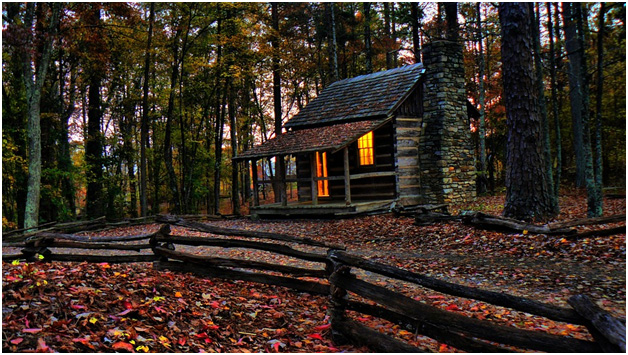
After deciding you really need to take off, you can’t simply do it without a plan. That’s why you should find somewhere to stay first. Maybe you have a cabin in the woods or a property in an isolated territory, and that could be your starting point.

But if you have to find your own place, things can get complicated. For instance, you can either buy or rent a piece of land. You should make sure the place is isolated enough so you won’t have any nosy Nellies around, but still, have some neighbors at convenient distances. You should also check that a nearby town doesn’t have future plans to extend closer to your property if you want to live a more solitary life.

After that, you can set up a camp, maybe even move in your trailer and start building your own home. If you have some money saved, you can commission the work to a professional, but you also have the option of turning this into your first DIY project.

Learn survival skills

You can’t move off in the wilderness without learning some survival skills first. The first one would be how to find water if there are limited water sources near your property. If you have very hot summer days when springs peter out, you might need to use other techniques like placing plastic bags on tree branches or digging for water.

making-fire

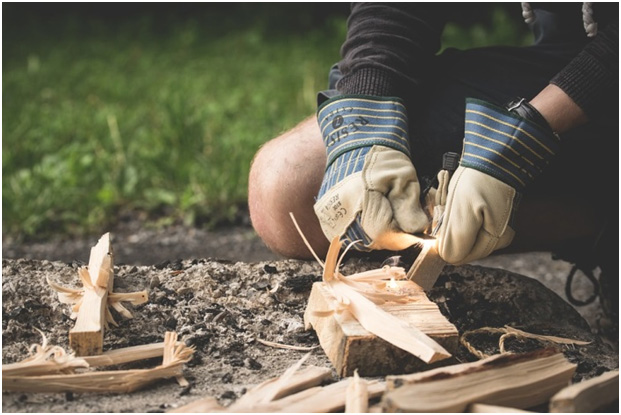
You should also learn how to build a fire, but that’s the easy part. After all, you can leave home equipped with 20 pounds of waterproof matches. The hardest part is to learn which trees you can cut down, how to chop them and how to store the wood properly. If you cut green trees and the wood gets too wet, you’ll have fewer chances of building a lasting fire.

Grow your own food

This can mean different things depending on where your property is. If you’ve moved off to a deep, damp forest in the mountains, your only options might be hunting, fishing and eating wild fruits. Of course, learning some hunting and fishing skills, along with buying proper equipment is useful no matter where you might end up. And you need to recognize which plants are edible, and which aren’t.

If you’re moving to a friendlier environment, you can always build a greenhouse with basic equipment. So you might need nothing more than some sturdy cellophane and a few pallets, along with plenty of water and the right seeds.

Apart from that, you can farm certain animals, depending on how large your property is. Chicken is the easiest when you take into account all the logistics, like space and food, plus they give you nutritious meat and eggs. Otherwise, you can consider raising cows for their milk, maybe buy a couple of horses if you own a bigger farmstead.

Arrange your amenities

You also need some degree of comfort, especially for keeping a clean environment. So you’ll want a toilet and some sort of washing facilities, and you have plenty of options here too. The easiest would be to buy a camp toilet and a camp shower, which can easily be transported and used no matter where you are.

Or, you can build your own bath, and improvise if you don’t have any running water. For instance, your toilet can be an outhouse, but you have to place it at some distance from your house and greenhouse.

Your shower can be a barrel of warm water with a valve attached to it and a hose with a showerhead for the warmer summer days. Or you can get a bathtub for indoor use, and that would help you relax after a long day’s work.

Earn the money you need

You might still need some money even if you’re living in a remote location for paying the rent or for buying the things you can’t produce on your own, but that doesn’t mean you should get a day job in the city.

One idea is to sell or trade the things you produce in surplus. So if you have lots of eggs or meat, you can sell that to your neighbors, or trade with them for clothes or different tools.

Another idea is to focus on a skill you already have, and sell the results of your work on the Internet. For instance, you might be into crafting and learn how to make interesting sculptures. Or decorate axes. Or make origami. The world is your oyster.

Learn to enjoy solitude

prepare-to-be-alone

This might prove to be difficult enough, especially if you’re all alone. We’re so accustomed to noise (even white noise) that eating a meal by ourselves without constantly checking our social media accounts seems impossible. But if you’ve chosen to live off the grid, you can find pleasure in loneliness.

So after all that, what seems like the most difficult to do? What plan do you have? Tell us all about that in the comments.


About the author: Mike is a passionate hunter and his favorite grounds are Alaska and British Columbia. He’s also an expert in hunting gear and he is one of the most reliable resources when it comes to choosing the right tools for the job. He also writes for OpitcGearLab.com

How to Make a Good Emergency Plan for Your Family

Maybe you receive a fair bit of warning, like a weather report predicting a hurricane, or maybe a sudden tectonic shift creates an earthquake with both immediate and cascading, destructive effects. Either way, there is no reason to be caught off guard and without an emergency plan.

Given that even fairly basic emergency plans can be prepared relatively easily and cheaply, finding yourself surprised by a sudden catastrophe places yourself and loved ones at risk without a good justification. If you are still sitting on the fence, or more likely the couch, here are five reasons why you should have an emergency plan ready and waiting for the unforeseen.

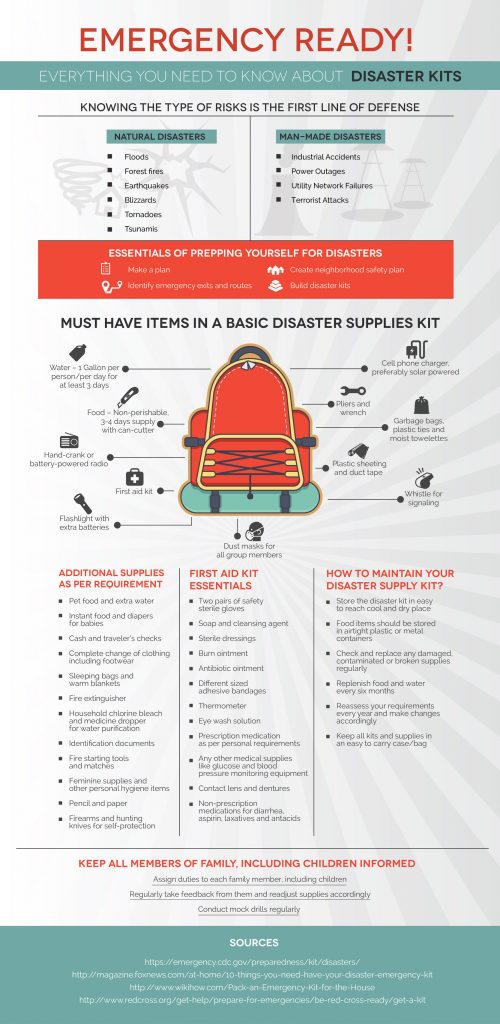
How to Build a Disaster Kit Infographic

5 Reasons Why is Important to Have a Family Emergency Plan

Speed – When a disaster strikes, time is the most valuable resource and one that you simply cannot get more of. That is why a proper emergency plan includes more than just the supplies you have collected. It includes a comprehensive approach that accounts for all stages of response. One of the most important is the very first stage.

Regardless the disaster, the first stage will involve organizing the party in a single location if possible. If the party members are separated, plans for reaching various rally points before meeting up can give a quick recovery to a chaotic circumstance. Unless the disaster calls for you to ride it out, like with a tornado or some other such disaster, those first moments can determine whether a disaster is manageable or filled with regret.

Efficiency – Considering response time is one the most vital elements for successfully reacting to a disaster, a well-developed kit will require a plan that provides each member of your party with a set of responsibilities so that they do not have to figure it out on the fly. Setting up a series of rally points or keeping a well-stocked and organized bug out bag on hand will only go so far if you have to figure out the steps after your party meets up on the spot.

Moreover, if everyone knows what they are supposed to do and has a specific set of tasks, your party as a whole can accomplish more in the limited amount of time before bugging out or hunkering down than one or two people could alone. Remember, children can contribute too–just make sure their tasks do not strain them physically as their endurance levels are likely not as developed as the adult party members

Reason vs Instinct – People are constantly saying that the best answer is usually your first thought. This may be true when you are in a safe and comfortable situation without the threat of injury or death, but when survival is on the line, people’s instincts usually do not serve them any better than a random guess.

However, if you take the time to develop a plan of action for when disaster strikes, you will be more likely to keep a cool head, reason through the risks, and determine an appropriate course of action. Remember, anyone in a profession that involves risk of bodily harm trains for hundreds, sometimes thousands, of hours to develop the kind of mindfulness necessary to make rational decisions in high-stress scenarios.

Supplies – Once a disaster strikes, what you have on hand is likely the only supplies you will be able to procure. In fact, even if you have some warning, there is a good chance that a run on supplies by unprepared people will likely clean out your local stores in record time, not to mention delay you further from escaping or hunkering down as the situation calls.

That is why you should make sure that you have a fully stocked and packed bug out bag for every member of your party–ready and waiting to go the second it is needed. Keep in mind, having your supplies packed in an easily reachable place is just as important as having the supplies in the first place.

Self-Reliance – Despite what you may see on news reports during a disaster, most assistance that people receive occurs well after the disaster has already passed. As heartening as it is to witness neighbors from the surrounding region pitch in to help out those caught in an unfortunate event, they generally only do so once their own safety can be secured.

As sad as it may seem, you cannot rely on government institutions or other authorities to come to your aid when disaster strikes. Chances are, they are already overwhelmed with calls for similar relief. Moreover, charities and NGOs generally begin their relief after the danger has passed as well.

Things to Consider When Making an Emergency Plan

As alluded to earlier, a solid emergency plan includes far more than simply a bug out bag with all of the supplies necessary for a few days. The plan should account for all the steps each party member will need to take before, during, and after the immediate danger has passed. This can be broken up into three sections.

Pre Planning – This is arguably the most important part of an emergency plan. This is the point when you figure out where the party will meet up depending on their dispersion. Moreover, the different members should understand their assigned tasks as well as the routes and location should you need to leave the area.

In the Mix – Once it comes time to put your plan into action, you will need the members of your party to respond without hesitation. That is why it is important that your party actually runs through the plan before a disaster strikes, ideally to the point that it becomes muscle memory, so that no time is wasted when rubber meets the road.

Survival – Depending on the disaster, you may well be without many of the modern amenities so many people have come to rely upon for their daily survival. That is why you need to know how to survive in the wild for extended periods of time. Various survival skills like building a shelter, starting a fire, and securing food and water are vital.

You can find an easy to read checklist packed with tips and necessities for a proper emergency plan at Survivor’s Fortress.

Conclusion

Just remember, your actual plan is every bit as important, if not more so, than your bug out supplies. While planning may not provide that immediate rush of accomplishment or sense of satisfaction that a well-prepared bug out bag can, supplies without a plan can only take you so far.

Keep in mind, your plan needs to account for all stages of disaster response. If you are bugging in, your plan may not involve as many steps, but each step is just as vital to ensuring your survival. Moreover, every party member needs to know the different roles and tasks to be accomplished.

With a thoughtful plan that considers numerous types of disasters, includes a variety of redundancies, and maintains the ability to improvise if necessary, you and your party should feel confident in its ability to handle whatever the world throws at it.

Further Reading:

Hunting Tents And Everything You Need To Know About Them

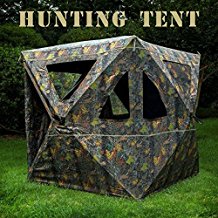
If you’re in the market for a new hunting tent, you might want to make sure you are getting the right one for the job. There are different types of tents and they all have something different to offer. In this article we will be looking at the various types of existing hunting tents and what sets them apart. Once you acquire this knowledge you will be able to easily find the best canvas tents of 2017 or any other tent that suits your needs and requirements. With that said, let us waste no more time and start looking at the different types of tents available on the market.

Truck tents

The name for this type of tent isn’t accidental as it derives from the implication of your truck’s bed into the mix. Unlike other tents, this one is specially made so that it fits in your truck’s bed and makes it a living space altogether. It’s quite an interesting buy and definitely a very benefic one that will allow you to have a tent ready to go while you’re on the move. Keep in mind however that a truck tent isn’t a solo mission and installing it is a two man job. So unless you have a hunting buddy, this might be difficult to use.

Winter tents

In the winter, the rules of the game change and many people feel like they’re freezing to death in their regular tents. You can avoid becoming one of them by staying warm enough in the winter time. That can be done with the help of a winter tent which is specially designed to keep warm in and the cold out. If you plan on doing more than just wait around in your hunting tent, you should know that winter tents usually come with stove vents.

Tree tents

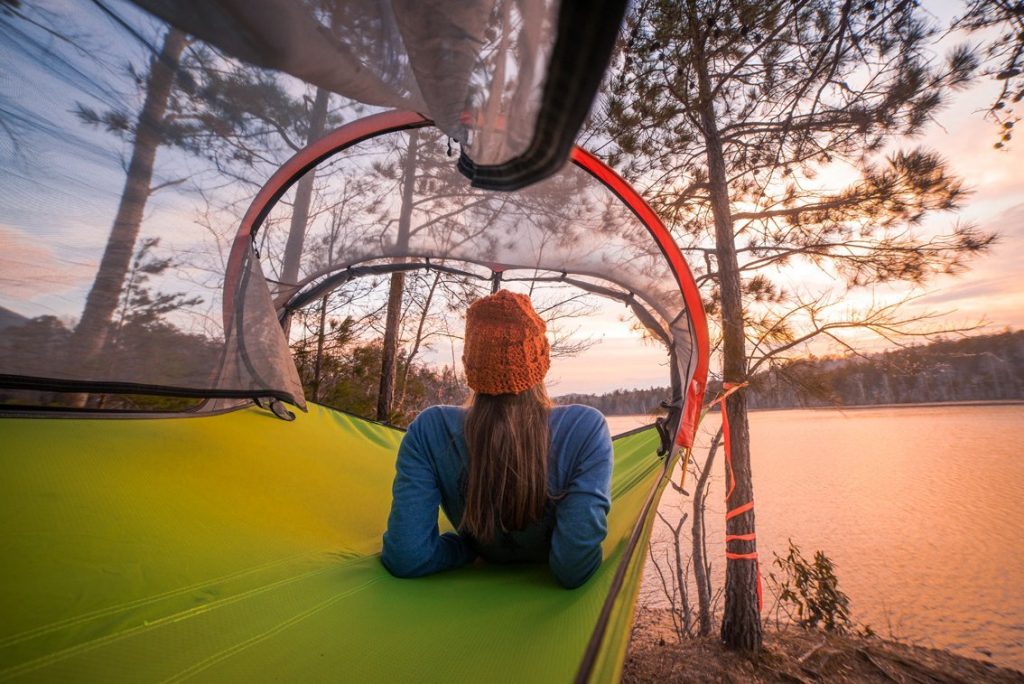
Tree tents are rather new to the party in comparison with all the other available tent models, but it promises a really great design and experience. With tree tents, you can have your tent hover over the ground and even lift it at a respectful distance from the soil. You would want to do this when the ground is not leveled and actually having to lay on it, tent or not, would be sure to inflict some physical pain. All that can be avoided however as the tree tent is great for using three suspensions wrapped around the trees to pull and make the tent float.

All weather tents

The name of this one might have given away its main prowess, which is the fact that it can be used in virtually any season or weather. These tents are made to last a long time thanks to how resistant they are to all forms of weather from snowing and raining to the chilly winds and over-hot heat waves. The last thing you want on your mind when you’re in the tent is the weather, but luckily you won’t have to as this type of tent is bound to keep you safe.

A Survivalists Guide To Body Armor

Owning body armor these days makes a lot of sense for civilians as well as professionals in the security industry. With crime statistics through the roof in recent years, frequent terrorist attacks, violent protests and demonstrations – more and more people are viewing the purchase of a tactical vest as a sound investment.

It’s hard to put into words just how important body armor is, but let’s just say – it can be the difference between life and death in a number of scenarios. Still, many survivalists are quick to buy different type of guns and ammo, but overlook protective vests. However, it’s really this simple – if you own a gun or plan on owning a gun, you should also have a bulletproof vest in your house.

It’s a common trait of all survivalist to plan ahead, to be prepared. Equipping yourself with adequate protection helps you stay safe in specific circumstances. You need to understand how body armor works, what it can and cannot do for you against different threats, and how to select the best one for you.

Types and Styles of Body Armor

While there are 6 levels of protection in ballistic armor, there are three forms of armor platforms: covert,overt armor and tactical overt.

Covert armor is worn under the clothing and can be easily concealed. It is lightweight and flexible, making it idea for prolonged use. Recent advancements in the development of body armor have allowed the use of breathable materials that improve heat transfer, making it more comfortable for the wearer.

Overt armor’s main function is to protect the wearer and can also be used to intimidate the opposition. It comes in a variety of colors, styles and levels, although it is usually used when a high threat level exists. Overt armor is typically bulkier and heavier than covert and it conveys a sense of authority. Apart from offering more protection, its other main benefit is that it’s easy and quick to put on and take off.

Tactical armor is worn in a situation that is associated with a high degree of risks that prove too much for soft armor to handle. This means that it is likely for armor-piercing rounds to be used. This type of system relies on a combination of overt armor fitted with additional SAPI (hard ceramic) plates and panels that cover the neck, arms, thighs and groin area for maximum safety.

Levels of protection

Body Armor is rated at different levels based on the NIJ standards. Because the protection of the armor increases with the level, so does its weight and the cost. Ballistic body armor is rated by the Department of Justice against different round calibers. Basic soft body armor does not stop penetration from sharp objects and weapons, but it will stop thick-bladed stabs and offers protection against slashing attacks. These makes them suitable to wear in places, where there are large gatherings of people (protests, marches, during riots, etc.) as in close quarters – people often use concealable but deadly weapons, such as knives, broken bottles, screw drivers or other piercing objects to cause harm.

Survivalists who want to ensure they receive maximum protection can go for a combination of ballistic and stab proof systems that are available for purchase online but they are more expensive. In terms of bullets – pistol bullets are easier to stop than rifle bullets, because they are slower. This type of combined protection gives the best chances of surviving in risky situations, such as riots or a scenario, where you might need to travel from point A to point B while facing attacks and poor weather conditions.

Basic levels, such as Level IIA. (Level I is not in use anymore) through IIIA are considered soft body armor types and don’t always offer sufficient protection in high-tension situations, while Level IV provides the fullest protection against pistol and melee weapons but is bulkier and heavier on the wearer.

Do some research and compare the different options on body armor available online. Make sure you measure correctly and select a vest that fits well, is lightweight and comfortable apart from offering a high level of protection – these are just a few of the ground rules that every survivalist should stick to when shopping for body armor.