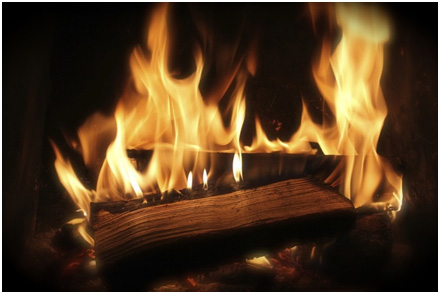
How To Build A Fire

When humans discovered how to make fire, everything changed for the better. We gained the ability to cook our food, keep warm, and use heat to produce more advanced tools and materials. But in our modern world we can easily exist without the need to ever use open flame. Still, no one brags about how they can’t build a fire. On the contrary – most people are embarrassed after a failed attempt, while their respective camping buddies mocking their measly efforts. Our advanced world sometimes leaves us in an ironic primitive state.

No matter what season it is, you should know how to build a fire fast and effectively. In the summer, you may be out camping, or in the back yard with some marshmallows. In colder months you may want to clean out the fireplace to get cozy with some added warmth. Either scenario can quickly become a catastrophe when plans of a solid blaze go awry.

So don’t get caught without this easy knowledge. Fire building is easy! All you need are these six simple steps. Once you have the right materials, the most crucial step in the infographic below is step four: stacking the kindling. People will often suffocate the fire by not building a proper stack around the tinder. Following one of the four basic methods below, the key is to build it in such a way that the fire can grow by catching onto larger pieces of tinder, kindling, and fuel. By following these simple fire-building steps, you will never be caught fudging up the most satisfying job on the campsite or backyard hangout.

You’ll be able to sleep tight in your tent knowing that you were the one to bring warmth for the night to everyone. For great tent reviews, check out this camping tent website.

Learn how to build a fire fast and proper. Stacking the fuel for a successful first light is key. This infographic will show you with some great illustrations. No more embarrassing efforts ending in a puff of smoke.


Source: Fix.com

Easy to Make Fire Starters from Wood Chips, Shavings and Sawdust

If you’ve been using old newspapers and dangerous amounts of lighter fluid to get your fires going, believe me, there is a better way. Even better, much of this can be done with leftover materials most already have sitting around the house. Well, what sort of materials are we talking? 

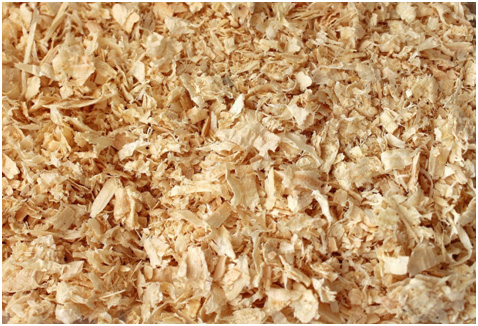
saw dust fire starters


Wood chips are easy enough to find, especially if you live in a heavily wooded area. These shavings can come from cutting down trees, trimming trees, or just general woodworking – assuming you have some of those tools around the house. One of the best materials to use is easily sawdust, as all of your woodworking projects will leave you with an abundance of the stuff. All your drilling and sawing will create more than you’d first imagine. Also, sawdust is much safer and wildly more effective than what most people generally use when attempting to start a fire. Discover on housetipster.com how sawdust has several uses ranging from fixing awful oil and gas spills to killing weeds. It’s surprising how beneficial this material can be for solving particular issues around the home.


First-rate fire starters

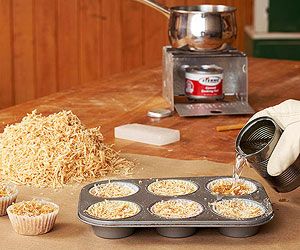
  • Pack sawdust into paper muffin cups, above, or a cardboard egg carton.
  • Melt paraffin wax in a double boiler, pour over the sawdust and allow to cool.
  • Slow-burning when lit, these hotcakes make great starters for a fireplace or campfiresawdust-fire-starters

A great way to use up scrap wood chips, shavings and sawdust to make these easy and effective fire starters. Be sure to use paraffin wax not candle wax, as it is food grade and burns completely.

Now that you have these hotcakes, they are easily brought along on camping trips or a simple walk to the backyard fire pit. Folks will be wondering just what in the world you’re using to start your fires so effectively. They’ll be shocked when you tell them you packed wood chips, shavings and sawdust into muffin trays and made the most efficient fire starter around. They’ll be begging for your secret, which, is simply, castoff materials that most take for granted.


source: Wood Magazine


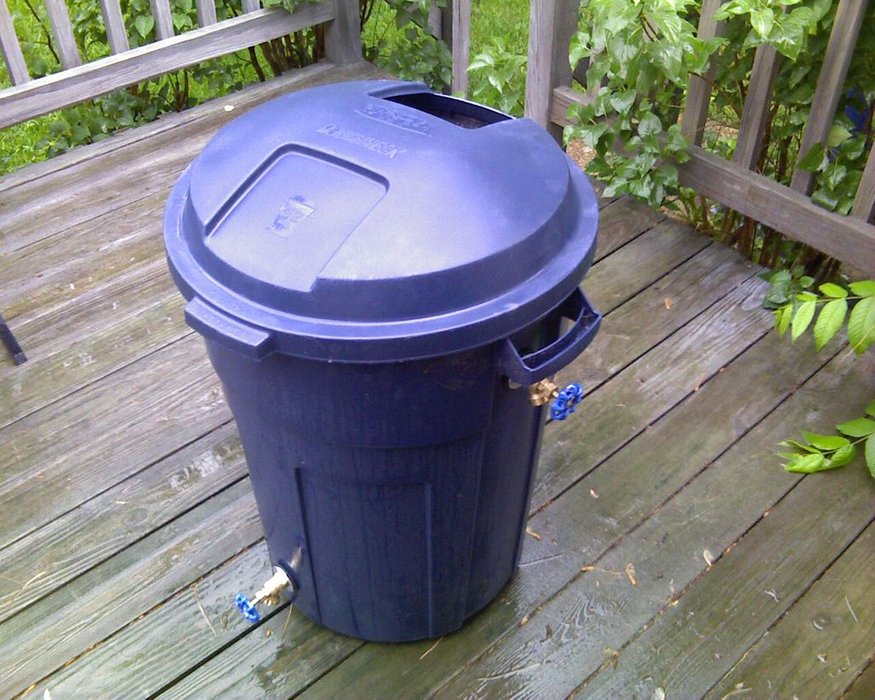
Roughneck Rain Barrel

I have to say almost anyone could actually DO this. With basic modifications depending on your downspout or gutters, this is perfect. Easy DIY Rain Water Collection system. For a more advanced version click here.

Step 1: Parts and Tools

Parts:
1 32 Gallon Rubbermaid Roughneck trashcan – From my garage
1 roll of window screen – On hand from fixing the patio door last summer
1 90 foot hose – $15.00
1 Nozzle set – $3.00
1 set of 3 conduit locknuts – $0.99
2 1/2 inch boiler drains – $9.48
4 flat metal washers – $2.10
4 rubber washers – $5.32
Total with tax – $38.22
Tools:
Utility knife
Scissors
Staple Gun
Pliers
Screwdriver

 Step 2: Attaching the faucets

1. Begin by using the utility knife to cut a hole in the trash can for the faucet several inches from the bottom of the can. The rubber washers will keep any of your harvested rain water from leaking out of your rain barrel, but be careful not to make the hole too big.

2. Thread the metal washer onto the faucet first then the rubber washer. The rubber washer should be sandwiched between the metal washer and the side of the trash can.
3. Place the faucet through the hole you cut and put another rubber washer on the inside of the trash can.
4. Use the pliers to help screw the locknut on tightly. The tighter you get it screwed on the less likely you are to have leaks.
5. Repeat this process for the second faucet several inches form the top of the trash can. While a second faucet probably isn’t absolutely necessary it can act as an overflow valve.

 Step 3: Attaching the screen

The screen is important. It will keep debris out of your rain barrel. It will also keep mosquitoes from being able to get in and lay eggs in your water.1. Lay the screen over the top of the trash can.
2. Begin stapling the screen to the top of the trash can. Be sure the can is clean inside before you staple it closed.
3. Use the scissors to trim off the excess screen.

 Step 4: Making the lid

I don’t suppose a lid is strictly necessary, but I think it makes it look a little better, and it will keep debris from piling up on top of your rain barrel. Using the utility knife cut out an opening in the lid of the trash can. This will be the intake for the downspout from your gutters. Put the lid on over the screen and your rain barrel is complete.

 Step 5:

The last step is installing your rain barrel.1. Begin by cutting your down spout to the desired height. I used a utility knife, but I suppose a drimel tool would work too. You may need to move a couple of the brackets that hold the down spout to the wall. Just unscrew them and move them where you want them.
2. Reattach the curvy but at the bottom of the down spout and set your rain barrel underneath. I attached a hose to the faucet at the bottom of the barrel and ran it around the side of the house to the front where I need it, but you could just as easily skip the hose all together and save yourself $15.00.

[source] Roughneck Rain Barrel.

Another Type of Flu-Season Prep to Consider

There are a bazillion blog posts around about prepping for flu-season, ranging from stocking-up on Elderberry Syrup ( a good idea) to getting (or avoiding) flu shots to getting hand-sanitizer to wearing an NBC HAZMAT suit every time you leave the house. Take ‘em all with your own grains of salt.

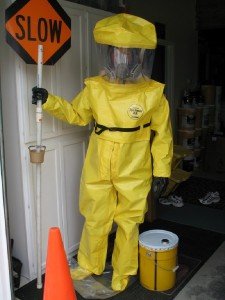
Tychem BR Hazmat Suit Chemical Protective Clothing MEDIUM W/ Attached Gloves & Booties, Zipper Front Closure & Removable Hood. Includes Kevlar Glove Liners

There’s a whole other area of preparations that get somewhat glossed-over. What happens if one of those sneaky li’l viruses actually makes it past all those carefully-crafted barriers, and you actually get sick? It can happen to the best of us.

It’s an unfortunate, but true, Fact of Life that, the older we get, the harder this type of illness hits us. What might have been a 2 day annoyance 20 years ago can KNOCK YOU FLAT ON YOUR BUTT for a couple weeks, now. Not a fun fact, but true. It can be a lot worse if you live alone.

A bit of American History to consider, before thinking “it’s just the flu, no big deal”.

When our European ancestors first came to the New World, our First Nations ancestors all along the woodlands of the East Coast lost about 70-90% of their population within the first 100 years. They weren’t killed off by force of arms, they weren’t killed off by ‘incurable’ things like imported STD’s (despite popular literature) or Bubonic Plague. They weren’t even killed off directly by the imported “colds and flus and sniffles” that they had no immunity against. They died of dehydration. This sounds silly on the surface, but think about it.

If every single individual in the village is too sick (due to lack of immunity) to make the hike to the spring, or the creek, for water, for 5 days, there is a very good chance that no one at all will survive. A little thing like a cup of water a day could have changed our history dramatically.

What does this mean today?

Get an extra case of bottled water, and stick it someplace close to your bed. (You may not want to get up and walk to the kitchen). A case of some electrolyte-replacement drink of your choice is a good idea, too.

Chicken Soup. Yes, “Grandma Penecillin” it does help. Last time I was seriously down with the flu I had a lot in my freezer, downstairs. I didn’t get down there for 6 days. Now, a half-dozen cans of non-condensed chicken noodle soup in the bedroom too (“Progresso” brand, with pop-tops) – you can ‘chug’ them right out of the can.

If you don’t mind your bedroom seeming like your old college dorm room, a small ‘dorm’ fridge and microwave oven right by the bed, in place of the standard “night stand” is not a bad idea. Remember what “Survivorman’ Les Stroud once said, “In a survival situation, 2 of the things you miss most are something hot and something cold”. If you are feeling too sick to get out of bed for a week, and there’s no one around to help you, you ARE in a survival situation, make no mistake about that.

Think you’re getting sick? Get ready, just in case.
Put a couple bags of that soup in your dorm fridge and let them thaw. Make a big pitcher of green tea and fresh ginger root and put that in your fridge too. Better hot, works cold, too. Toss in some bottled water and electrolyte drink, too, you’ll be happy you did.

Plug in your phone next to your bed, and don’t be embarrassed to use it to yell for help if you need it.

Stay well, stay safe, we’re all in this together.

Another Type of Flu-Season Prep to Consider. | The Survival Geezer.

20 Ways To Become More Self-Sufficient Before ‘The Crunch’ Arrives

One thing you don’t want to be during the coming “crunch” — a polite word for “collapse” — is dependent on the system. The more you can take care of yourself, the better off you’ll be physically, financially, emotionally and even spiritually.

Learn to survive, follow Year Zero Survival.


Here are 20 ways to become more self-sufficient while you still can:

1) Get a small solar system that can be used to run a laptop or recharge batteries

2) Drill a water well and install a hand pump or solar-powered DC pump

3) Set up a rainwater collection system or barrel

4) Stash some cash: stock away some green dollar bills and lots of U.S. nickels

5) Own and learn how to use a handgun, rifle and shotgun

6) Store some ammunition

7) Own and know how to use a water filter

8) Start a garden this spring and acquire more food production skills

9) Save garden seeds so you can plant the next generation of food

10) Acquire a wood-burning stove for heat and cooking

11) Possess a large quantity of stored food; enough for at least 90 days

12) Get to know your local farmers and ranchers

Practice your skills

13) Store up valuable barter items that are relatively cheap today: Alcohol, coffee, ammo, matches, etc.

14) Safely store extra vehicle fuel (gasoline, diesel) at your home or ranch

Be sure to use fuel stabilizers to extend their life.

15) Learn emergency first aid skills and own first aid supplies

This could save a life or possibly save a trip to the emergency room.

16) Start growing your own medicine

Plant and grow aloe vera, oregano, garlic, cayenne pepper and other medicinal herbs that can replace a surprisingly large number of prescription drugs. Oregano, for example, is a potent antibiotic. Aloe vera treats cuts, scrapes and burns.

17) Own emergency hand-cranked radios so you can tune in to news and announcements

18) Boost your immune system with vitamin D and superfoods

19) Increase your level of physical fitness

20) Learn how to raise animals such as rabbits, chickens, goats or cows.

via 20 ways to become more self-sufficient before ‘the crunch’ arrives – NaturalNews.com.

How To Identify Dry Firewood

Using wet wood to get a fire going will leave you cold and frustrated…regardless of how much effort you put into it.

Even if you do get a fire going (which in a survival situation is better than nothing) your fire will be inefficient and will require much more maintenance to see it through the night.

dry tinder and wood start the best fires.

The reason why it won’t burn is that the water contained in the wood is absorbing the heat, preventing the wood from absorbing enough heat to ignite.

As heat continues to be applied to the wood, the water turns to vapor, absorbing a huge quantity of heat in the process. It isn’t until this process is finished that the hydrocarbon gasses start leaving the wood so that they can then catch fire.

Basically your best bet is to make sure that you have the driest tinder, kindling, and fuel possible.

tinder, shavings, sawdust, fire starters

It’s one thing if you have a cord of wood neatly stacked out in your woodshed, but how do you find dry wood in the wild?

Below are three quick tips you can use in a pinch:

The Snap Method:

The Premise: dry kindling is devoid of a high water content and will snap easily instead of bending.

How To do it: take your smaller bits of kindling no thicker than your thumb and grasp them at both ends.  Pull the ends towards the middle, the kindling should snap in the middle.

What to look for:  twigs, sticks, and other kindling that snaps cleanly and easily is an indicator of dry kindling.How do you know if your fuel is dry?

The Percussion Method:

The Premise: as wood dries out, its acoustical properties change.

How to do it: grab two sample pieces of wood at one end and let them dangle, one from each hand. Swing the bottom ends together, and listen to the sound at impact.

What to look for: dry wood will “ring” or “bonk” when they hit each other. Wet wood, however, will issue a dull thud on impact.

Cracking the code:

The Premise: as fuel wood pieces dry, the wood fiber shrinks, which causes visible radius cracks to open up on the ends of the wood.

How to do it: examine the ends of a sample piece, looking for cracks that radiate from the core to the bark.

What to look for: big, deep radius cracks are a good indicator of well-seasoned wood.

Note: this is the least reliable indicator, as the cracks won’t close back up if the seasoned wood is subsequently allowed to re-absorb rainwater.

via Three Quick Tips To Identify Dry Firewood 

Should Survival Skills Be Taught To Children In School?

Should Survival Skills Be Taught To Children In School? Or, leave it to organizations like the Boy Scouts or Girl Scouts, to teach these skills.

The debate on the existing education system has been raging for quite some time now. On one hand, it is true that school education teaches a lot of valuable knowledge that serves as a foundation for higher education with subjects such as math, reading, writing, etc…  But it is equally true that students severely lack in survival skills.  A closer examination of education system and modern requirement can lead to meaningful insight regarding the much discussed issue of whether children should be taught survival techniques at school.

teach kids survival skills?

The American education system is appreciable as it teaches a lot of educational subjects like math, science and English among others that are essential for a proper education.  These are basics of education and are absolutely vital if children are to become innovative scholars in their respective fields.  However, on second thought, in the process of teaching these disciplines, are we forgetting the life skills that are vital for survival?

The lack of survival skills among school-going children raises a big question about the education system.  While it is important to learn spelling, isn’t it equally or more important to know how to start a fire and what to do in an emergency situation?  Simple survival tactics can be of great benefit and add value to the student’s quality of life.  Survival tactics can also save lives in emergency situations.  In fact, in life-threatening situations, the theoretical concepts definitely come second to survival skills.

The balance is tricky to maintain.  Too much focus on either one can be harmful to the comprehensive development of our children. Also, questions can be raised if survival skills can be really taught in schools.  School students already have too much to learn and additional lessons may induce stress.  But an education that does not teach basic survival tactics can be considered incomplete.  Should a debate on whether or not survival skills be taught to children school be necessary, or should those skills be left to the parents to teach?

via Should Survival Skills Be Taught To Children In School?