This is a handy infographic on what you should know when storing water. Print, save or share this for future use. Knowledge is the first step in prepping for survival.
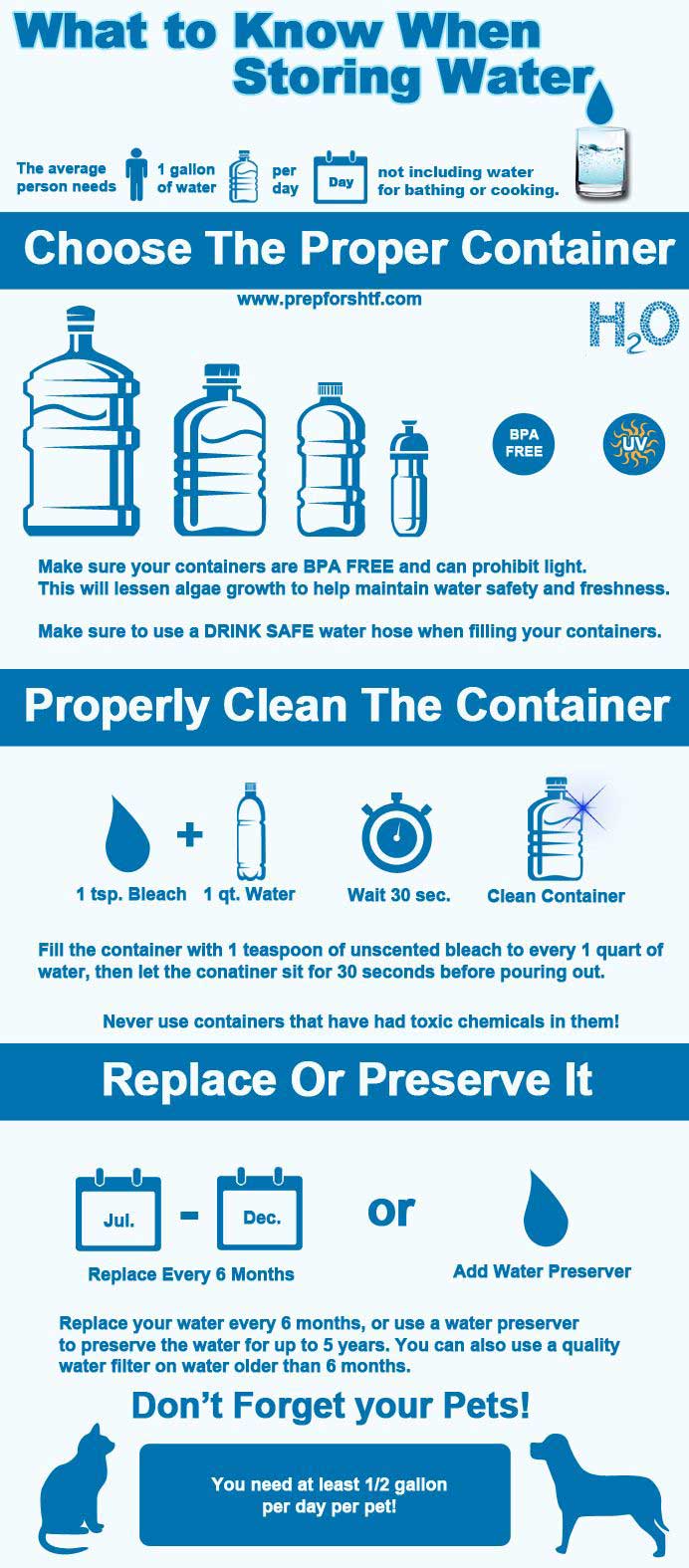

This is a handy infographic on what you should know when storing water. Print, save or share this for future use. Knowledge is the first step in prepping for survival.
NAVIGATION
The first category for these essentials is going to be navigation. You may not think you will need this if you are going some place that you think you know. This thinking could be very dangerous should you get disoriented or lost. With modern technology many people use handheld GPS to navigate. These are excellent tools to use for general navigation and being able to backtrack or get back to a specific location. I generally use a basic GPS when I am out or even use the app Trimble Outdoors Navigator for short local trips. I really like GPS but if you are going to use it I strongly recommend carrying extra batteries. Even if you are using electronic navigation you should always carry a map and compass as a backup. This is important because batteries can die and electronics can fail. When you do carry a map and compass you will want to keep it in a waterproof container or bag to keep it dry.
FIRST AID
The next item you will want to carry on you is first aid supplies. In this kit you will want to keep all the basics for minor injuries and for more serious injuries or activity specific items. In this kit you will also want to keep extra medication if you are on any life sustaining medications. If you would get lost you do not want to be without things such as insulin for a diabetic or an inhaler if you have asthma. You will want to keep these items in their original containers. If you have to use anything in this kit you will want to replace it before your next trip.
PROPER CLOTHING
The next thing you need is protection from the elements. Typically you want to be prepared for the extremes for the season you are going out in. Dressing in layers will help you to be prepared for highs and lows in temperatures. You will also want to be prepared for things such as rain, snow, or keeping the sun off of you. Sunscreen is very important in the summer to keep yourself from getting too much sun light and possibly getting sun poisoning.
ILLUMINATION
Having some kind of light for illumination will be another major concern. I always carry at least a flash light and extra batteries on me when I go out. Even if you plan on being home before dark the situation could be out of your control and change that. Being left in the dark is a major problem for trying to remain safe. A flashlight can also give you a little bit of piece of mind if you were to get stuck out in the dark. This can be used to watch where you are walking, checking out a small cave to use for shelter, or even just for being able to read your map.
FIRE
Keeping several items on you that you can use to start a fire is also very important. I normally like to keep 2-3 options with me for starting a fire. This can be as simple as keeping a lighter, some waterproof matches, and a flint and steel with you. If you were to get lost or stuck in the woods fire is very important for several reasons. It can keep you warm, help you to purify water, and also to keep animals away. Fire is very important and is one thing you definitely don’t want to be without. You will also want to practice starting a fire with these items every once in a while. A flint and steel is worthless if you don’t know how to use it efficiently.
TOOLS
The main tool you should carry at a bare minimum is a sharp and reliable knife. There are ways to make tools even a knife in the outdoors but you would be amazed at the importance of having a knife. Other tools such as a multi-tool, duct tape, and activity specific tools are always good to have on you. For example if you are out on a mountain bike having the tools to do minor repairs can save you if you get a flat tire or broken part on the trail. These tools can change based on what you are doing but at a minimum I would keep a knife on me at all times.

WATER AND FOOD
Having some water and some extra food is also very important. Water is something you can only live for about two days without. Having water with you and also a way to procure more if needed is very important. It is normally recommended that you have two liters of water per person per day. Food is slightly less important since you can live longer without it, but you do need calories to fuel your body when you are active. I usually keep at least a small snack with me even on short trips.
SHELTER
Shelter is another very important item to have on you or being able to make. The shelter you take with you will depend on the activity you are doing. If you are planning on staying overnight you will probably already have some kind of shelter. In all other situations carrying a small emergency sleeping sac or emergency blanket would be a good idea. In an emergency a space blanket will give you something to try to keep body heat in or to stay dry.
SIGNALING
Some sort of signaling device is important since it can help you be rescued sooner. This could simply consist of a signalling mirror or emergency whistle. The mirrors will allow you to signal to someone at a distance but could be less effective if there is a lack of sun or light sources. An emergency whistle is going to allow you to make noise and the sound will typically carry a distance to allow rescuers to know where you are at. SPOT Personal Trackers can also lead rescuers to your location if something were to happen and it works like a GPS.
PLAN
The last thing I would add to this list is a plan. Letting someone know where you are going, what area you will be in, and what your plans are is always a great idea. If someone knows when to expect you and you don’t return they will know something is wrong. This will allow people to start looking for you sooner in an emergency, and let them know where to start looking for you.
This list is not set in stone and will need to be tweaked for the specific situation and activity you are going to partake in. I also have not listed these items in the order of importance, but this is because I want you to remember that all of these items are very important when venturing into the outdoors. Later we will go into each category in more detail. I hope you enjoyed the post and will remember these essentials on your next adventure.
[source] Essentials for any Adventure – OffHiking.Com. Continue reading
In a catastrophic event, most people fail to do the one thing that would save their life, says Michael Bond. [source] BBC – Future – How to survive a disaster.
At seven o’clock in the evening of 27 September 1994, the cruise ferry MS Estonia left Tallin with 989 people on board, heading for Stockholm through the Baltic Sea. It never got there. Six hours into the journey, pushing through a force nine gale, the bow door broke open and the ferry started taking on water. Within an hour it had sunk, taking with it 852 of its passengers and crew.
What happened? One person who knows the answer is John Leach, a military survival instructor who researches behaviour in extreme environments at the University of Portsmouth. He has studied the actions of survivors and victims from dozens of disasters around the world over several decades (and as it happens he was present at one of them, the fire at King’s Cross underground station on 18 November 1987 which killed 31 people). He has found that in life-threatening situations, around 75% of people are so bewildered by the situation that they are unable to think clearly or plot their escape. They become mentally paralysed. Just 15% of people on average manage to remain calm and rational enough to make decisions that could save their lives. (The remaining 10% are plain dangerous: they freak out and hinder the survival chances of everyone else.)Even given the speed of tragedy, the stormy sea and the length of time it took rescuers to arrive (a full-scale emergency was only declared half an hour after the sinking), survival experts were astonished at the high death toll. It appears that many people drowned because they did nothing to save themselves. “A number of people… seem to have been incapable of rational thought or behaviour because of their fear,” concluded the official report into the accident. “Others appeared petrified and could not be forced to move. Some panicking, apathetic and shocked people were beyond reach and did not react when other passengers tried to guide them, not even when they used force or shouted at them.”
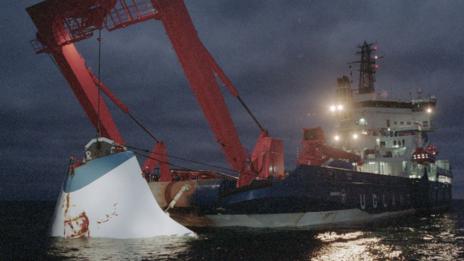
The bow of sunken ferry MS Estonia, on which more than 800 people died in 1994 (Getty Images)
Stories about survival often focus on the 15%, and what is so special about them that helps them stay alive. But Leach thinks this is the wrong question. Instead, we should be asking, why do so many people die when they need not, when they have the physical means to save themselves? Why do so many give up, or fail to adjust to the unfolding crisis? In most disaster scenarios, he says, you don’t need special skills to survive. You just need to know what you should do. “My role as a combat survival instructor is to teach people how to survive. My role as a psychologist is to teach people not to die.”
Emergency exit
We haven’t always had a clear picture of what people really do in emergencies. Engineers designing evacuation procedures used to assume that people respond immediately when they hear an alarm, smell smoke or feel their building shake or their boat begins to list.
Yet as cases in recent decades began to show, the real challenge is getting them to move quickly enough. On 22 August 1985, 55 people died in a Boeing 737 on the runway at Manchester Airport in the UK after the plane, which was bound for Corfu, suffered engine failure during take-off. The government’s Air Accident Investigations Branch reported: “Perhaps the most striking feature of this accident was the fact that although the aircraft never became airborne and was brought to a halt in a position which allowed an extremely rapid fire-service attack on the external fire, it resulted in 55 deaths. The major question is why the passengers did not get off the aircraft sufficiently quickly.”
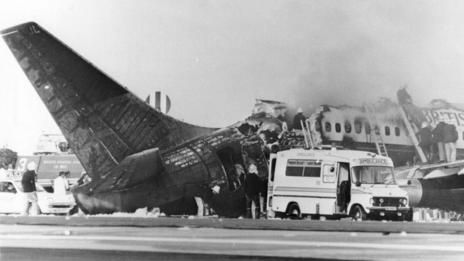
Passenger behaviour in a fatal fire at Manchester Airport in the 1980s puzzled experts (Getty Images)
Rather than madness, or an animalistic stampede for the exits, it is often people’s disinclination to panic that puts them at higher risk.
One of the most graphic examples of crowd passivity in recent times occurred in New York’s Twin Towers after the hijacked planes hit them on 9/11. You’d have thought those who survived the initial impact would have headed for the nearest exit pretty quickly. Most did the opposite: they prevaricated. Those who eventually got out waited six minutes on average before moving to the stairs, and some hung around for half an hour, according to a study by the US National Institute of Standards and Technology (NIST). Unprepared for what was happening to them, they either carried on as normal or hung around to see what would happen, waiting for others to move first. One study found that half of those who survived delayed before trying to escape, making phone calls, tidying things into drawers, locking their office door, going to the toilet, completing emails, shutting down their computer, changing their shoes. One woman accustomed to bicycling to work even returned to her office to change into her tracksuit before trying to leave.
Survival mode
The prevailing psychological explanation for these kinds of behaviours – passivity, mental paralysis or simply carrying on as normal in the face of a crisis – is that they are caused by a failure to adapt to a sudden change in the environment. Survival involves goal-directed behaviour: you feel hungry, you look for food; you feel isolated, you seek companionship. Normally, this is straightforward (we know how to find food or companions). But in a new, unfamiliar environment, particularly a stressful one such as a sinking ship or a burning aircraft, establishing survival goals – where the exit is and how to get to it – requires a lot more conscious effort.
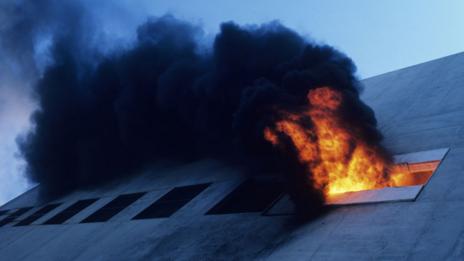
(Getty Images)
“In emergencies, quite often events are happening faster than you can process them,” explains Leach. The situation outruns our capacity to think our way out of it. Jerome Chertkoff, a social psychologist at Indiana University, puts it another way: “Being in a situation where your life is in danger increases your emotional arousal, and high arousal causes people to limit the number of alternatives they consider. That can be bad when trying to determine a course of action, since you may never consider the option most likely to result in escaping safely.”
This explains why in emergencies people often fail to do things that under normal circumstances would seem obvious. So the only reliable way to shortcut this kind of impaired thinking, most survival experts agree, is by preparing for an emergency in advance. “Practice makes actions automatic, without [the need for] detailed thinking,” says Chertkoff. This means making a mental note of the fire exits when you go to the cinema (and imagining yourself using them), reading the evacuation guidance on the back of the door when you stay in a hotel, and always listening to aircraft safety briefings however frequent a flyer you are. “Every time I go on a boat the first thing I do is find out where my lifeboat station is, because then if there is a problem I just have to respond, I don’t have to start thinking about it,” says Leach. Typically, survivors survive not because they are braver or more heroic than anyone else, but because they are better prepared.

Check your exits beforehand – you may not have the sense to in a crisis (Thinkstock)
What about how you deal with other people? No matter how well-primed you are, one aspect of emergency situations will always be out of our control: how those around us behave. Here, too, the scientific understanding is at odds with common wisdom or what we are likely to read in the media.
Commentators often highlight the supposed stupidity or madness of crowds during disasters – a stampede of pilgrims, the crush of a football crowd, the blind scramble for the exits in a burning nightclub. In reality, this is rarely what happens. Research shows that in most scenarios, groups of people are more likely to help each other than hinder. “In emergencies, the norm is cooperation,” says Chris Cocking, who studies crowd behaviour at the University of Brighton. “Selfish behaviour is very mild and tends to be policed by the crowd rather than spreading.”
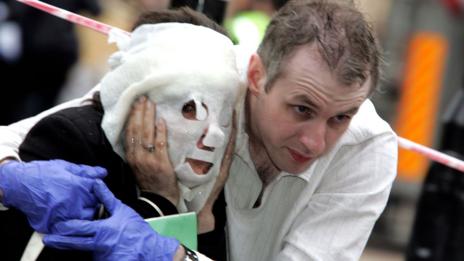
Paul Dadge helping injured passenger Davinia Turrell after the London bombings of 2005 – one of the defining images of the attack (Gareth Cattermole/Getty Images)
Take the suicide bombings on London’s transport system on 7 July 2005, which killed 52 and injured more than 700. For several hours, hundreds of passengers were trapped in smoky underground tunnels with no way of knowing if they would be rescued, nor if further explosions were imminent. Amid this chaos, most people were highly cooperative and helpful, according to survivors interviewed by Cocking, John Drury at the University of Sussex and Steve Reicher at the University of St Andrews. Psychologists call this response “collective resilience”: an attitude of mutual helping and unity in the middle of danger.
Stronger together
Drury, Cocking and Reicher have documented many examples of collective resilience. In 2008, they talked to survivors of 11 mass tragedies or incidents from the previous four decades, including the 2001 Ghana football stadium crush in which 126 people died while trying to escape through locked exits, and the sinking of the cruise ship Oceanos off South Africa in 1991 (when remarkably all 500-odd passengers survived). In each case, group solidarity was more prevalent than selfishness. Cocking thinks that people’s tendency to cooperate during emergencies increases the chances of survival for everyone. “Individually, the best thing tactically is to go along with the group interest. In situations where everyone acts individually, which are very rare, that actually decreases effective group evacuation.”
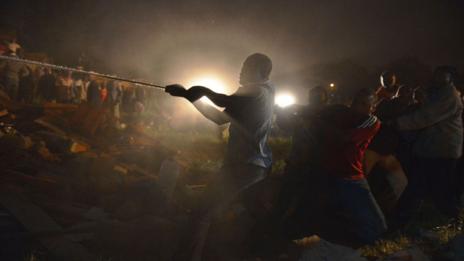
In a crisis, people are more likely to help each other than be selfish (Getty Images)
Still, some emergencies can be so disorientating that cooperation may be beyond some people. For a dramatic example of how differently people behave when their life is on the line, consider the story of the British-Irish Atlantic Odyssey rowing team who in January 2012 attempted to cross the ocean east to west in a record-breaking 30 days. After 28 days, a freak wave capsized their boat while they were still 500 miles (800 kilometres) from their destination in Barbados. According to Mark Beaumont, an adventurer and broadcaster who was part of the six-strong crew, they would all have drowned had several of them not dived repeatedly under the upturned hull to free the life raft and retrieve the emergency beacon, GPS tracker, satellite phone, fresh water and food.
Deep shock
But not all of the crew reacted so rationally. “A couple of the guys went into pretty deep shock,” he recalls. “One of them could barely get a word out. He just shut his eyes and shut down.” Later, this colleague, who was a strong rower, explained to Beaumont that he had become overwhelmed by the situation. “I was completely out of my league,” he told him. “I thought the best thing to do was take up as little room as possible in the life-raft, shut my eyes and wait for it to pass, whether that was to die or be rescued.”
The chances are you will never find yourself in a disaster situation. But it’s a good idea to imagine that you will: to be aware that there are threats out there, and that you can prepare for them, without sliding into paranoia. “All you have to do is ask yourself one simple question,” says Leach. “If something happens, what is my first response? Once you can answer that, everything else will fall into place. It’s that simple.”
[source] BBC – Future – How to survive a disaster.
The modern age has made it so it’s easier than ever to learn how to survive in the wilderness. Every day, new ways to create tools that are needed to survive in the wilderness are developed, and the internet has made it so anyone can access guides to recreate them if they know where to look. Many new gadgets and devices have also been made to help make camping trips and outdoor adventures safer and easier, but there is probably no better technological advancement than the mobile phone itself.
In the past few years, we’ve seen the mobile industry rise to incredible proportions. Some estimates say that the introduction of affordable mobile devices in developing countries might push internet usage past 3 billion by the end of the year. With mobile usage at an all-time high, we’ve seen many new apps come out for every niche possible, including survival guides.
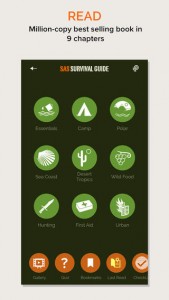
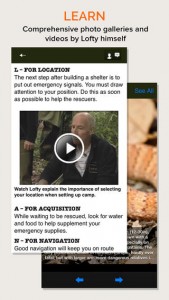
Of course, with the wealth of survival apps out there, some still shine above the others. John “Lofty” Wiseman’s SAS Survival Guide is perhaps one of the most comprehensive of these apps. Having been one of the most definitive guides for over 20 years, the SAS Survival Guide puts together the best of the elite training techniques of Britain’s fighting force, the survival guide has now been launched in a mobile app.
Other than allowing you to learn various survival skills through your phone, the app also helps you make sure that you’re never caught unawares, allowing full usage even when offline. This is great news, especially if you’re relying on your mobile phone in the wilderness, as Kim Shadbolt of Pocket Fruity writes in a blog post, using 3G to access the internet can be quite unreliable – not to mention that it drains your battery faster. “3G is good, but can be a bit temperamental depending on where you are, what network you’re on and how much data allowance you have,” the blog post reads.
The app contains videos of everything from how to tie knots to how to read animal tracks, as well as galleries of detailed images of medicinal and poisonous plants and animals that you might encounter in the wilderness. A sun compass, survival checklist, and even a More code signaling device are also available on the app. The only downside? While it’s available on both iOS and Android, the app costs $5.99. With so much content, however, it’s a great investment, especially if you’re taking wilderness survival seriously.
When humans discovered how to make fire, everything changed for the better. We gained the ability to cook our food, keep warm, and use heat to produce more advanced tools and materials. But in our modern world we can easily exist without the need to ever use open flame. Still, no one brags about how they can’t build a fire. On the contrary – most people are embarrassed after a failed attempt, while their respective camping buddies mocking their measly efforts. Our advanced world sometimes leaves us in an ironic primitive state.
No matter what season it is, you should know how to build a fire fast and effectively. In the summer, you may be out camping, or in the back yard with some marshmallows. In colder months you may want to clean out the fireplace to get cozy with some added warmth. Either scenario can quickly become a catastrophe when plans of a solid blaze go awry.
So don’t get caught without this easy knowledge. Fire building is easy! All you need are these six simple steps. Once you have the right materials, the most crucial step in the infographic below is step four: stacking the kindling. People will often suffocate the fire by not building a proper stack around the tinder. Following one of the four basic methods below, the key is to build it in such a way that the fire can grow by catching onto larger pieces of tinder, kindling, and fuel. By following these simple fire-building steps, you will never be caught fudging up the most satisfying job on the campsite or backyard hangout.
You’ll be able to sleep tight in your tent knowing that you were the one to bring warmth for the night to everyone. For great tent reviews, check out this camping tent website.

Source: Fix.com
If you’ve been using old newspapers and dangerous amounts of lighter fluid to get your fires going, believe me, there is a better way. Even better, much of this can be done with leftover materials most already have sitting around the house. Well, what sort of materials are we talking?

Wood chips are easy enough to find, especially if you live in a heavily wooded area. These shavings can come from cutting down trees, trimming trees, or just general woodworking – assuming you have some of those tools around the house. One of the best materials to use is easily sawdust, as all of your woodworking projects will leave you with an abundance of the stuff. All your drilling and sawing will create more than you’d first imagine. Also, sawdust is much safer and wildly more effective than what most people generally use when attempting to start a fire. Discover on housetipster.com how sawdust has several uses ranging from fixing awful oil and gas spills to killing weeds. It’s surprising how beneficial this material can be for solving particular issues around the home.
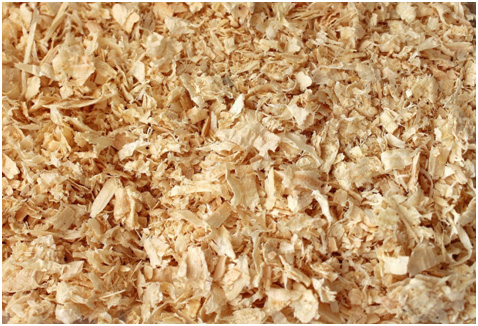
First-rate fire starters

A great way to use up scrap wood chips, shavings and sawdust to make these easy and effective fire starters. Be sure to use paraffin wax not candle wax, as it is food grade and burns completely.
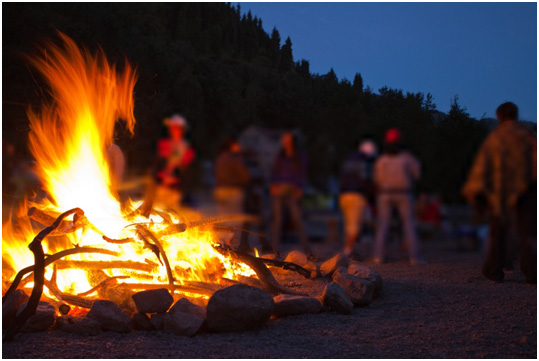
Now that you have these hotcakes, they are easily brought along on camping trips or a simple walk to the backyard fire pit. Folks will be wondering just what in the world you’re using to start your fires so effectively. They’ll be shocked when you tell them you packed wood chips, shavings and sawdust into muffin trays and made the most efficient fire starter around. They’ll be begging for your secret, which, is simply, castoff materials that most take for granted.
source: Wood Magazine
I have to say almost anyone could actually DO this. With basic modifications depending on your downspout or gutters, this is perfect. Easy DIY Rain Water Collection system. For a more advanced version click here.
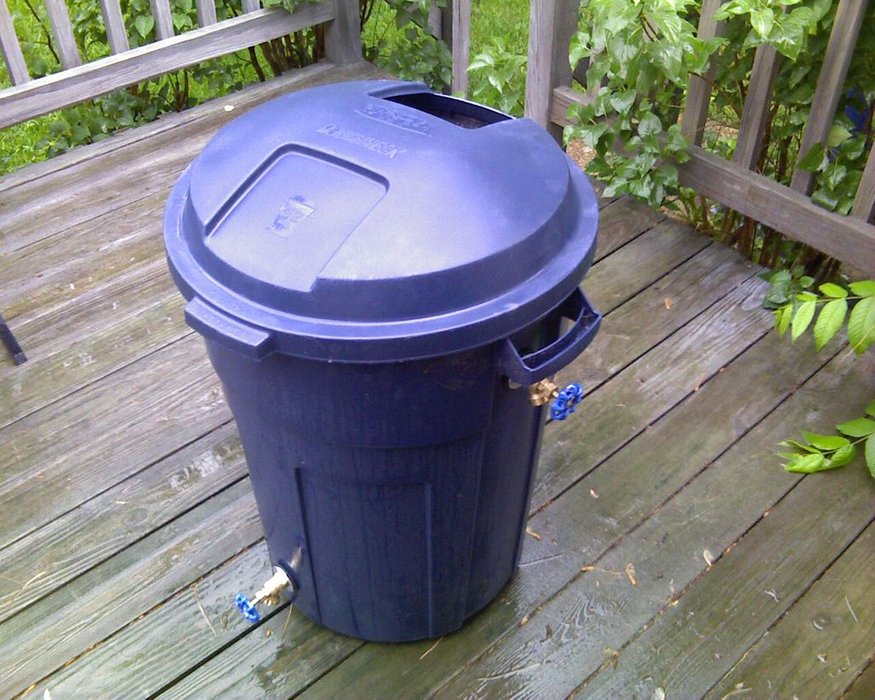


[source] Roughneck Rain Barrel.
There are a bazillion blog posts around about prepping for flu-season, ranging from stocking-up on Elderberry Syrup ( a good idea) to getting (or avoiding) flu shots to getting hand-sanitizer to wearing an NBC HAZMAT suit every time you leave the house. Take ‘em all with your own grains of salt.
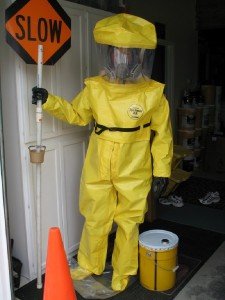
There’s a whole other area of preparations that get somewhat glossed-over. What happens if one of those sneaky li’l viruses actually makes it past all those carefully-crafted barriers, and you actually get sick? It can happen to the best of us.
It’s an unfortunate, but true, Fact of Life that, the older we get, the harder this type of illness hits us. What might have been a 2 day annoyance 20 years ago can KNOCK YOU FLAT ON YOUR BUTT for a couple weeks, now. Not a fun fact, but true. It can be a lot worse if you live alone.
A bit of American History to consider, before thinking “it’s just the flu, no big deal”.
When our European ancestors first came to the New World, our First Nations ancestors all along the woodlands of the East Coast lost about 70-90% of their population within the first 100 years. They weren’t killed off by force of arms, they weren’t killed off by ‘incurable’ things like imported STD’s (despite popular literature) or Bubonic Plague. They weren’t even killed off directly by the imported “colds and flus and sniffles” that they had no immunity against. They died of dehydration. This sounds silly on the surface, but think about it.
If every single individual in the village is too sick (due to lack of immunity) to make the hike to the spring, or the creek, for water, for 5 days, there is a very good chance that no one at all will survive. A little thing like a cup of water a day could have changed our history dramatically.
What does this mean today?
Get an extra case of bottled water, and stick it someplace close to your bed. (You may not want to get up and walk to the kitchen). A case of some electrolyte-replacement drink of your choice is a good idea, too.
Chicken Soup. Yes, “Grandma Penecillin” it does help. Last time I was seriously down with the flu I had a lot in my freezer, downstairs. I didn’t get down there for 6 days. Now, a half-dozen cans of non-condensed chicken noodle soup in the bedroom too (“Progresso” brand, with pop-tops) – you can ‘chug’ them right out of the can.
If you don’t mind your bedroom seeming like your old college dorm room, a small ‘dorm’ fridge and microwave oven right by the bed, in place of the standard “night stand” is not a bad idea. Remember what “Survivorman’ Les Stroud once said, “In a survival situation, 2 of the things you miss most are something hot and something cold”. If you are feeling too sick to get out of bed for a week, and there’s no one around to help you, you ARE in a survival situation, make no mistake about that.
Think you’re getting sick? Get ready, just in case.
Put a couple bags of that soup in your dorm fridge and let them thaw. Make a big pitcher of green tea and fresh ginger root and put that in your fridge too. Better hot, works cold, too. Toss in some bottled water and electrolyte drink, too, you’ll be happy you did.
Plug in your phone next to your bed, and don’t be embarrassed to use it to yell for help if you need it.
Stay well, stay safe, we’re all in this together.
Another Type of Flu-Season Prep to Consider. | The Survival Geezer.