Investments in crypto assets have been very popular in recent years, for they have shown good results when many people have become millionaires. The crypto market now attracts more and more people willing to join this field and become owners of digital currencies.
Buying crypto in the long term is one of the less risky options for investors who are not ready for intensive trading.
Crypto today is on its drop since spring 2022. Then the market collapsed, and all the crypto rates dropped significantly. That was the beginning of the bear market trend that lasts till today. However, the market is cyclic, and after every downtrend, an upward trend comes. What will happen next? Experts believe 2023 can become a new bull trend for the crypto market. So now is the best time to acquire popular digital coins at a low rate and hold them in the long run.
What are Bear and Bull Trends?
Cryptocurrency live prices depend on the following factors:
Bear trend – pessimistic expectations, the drop in demand, and overall prices decline.
It is quite possible that in 2023 we will witness a new bull market. How will we understand that started? – Crypto rates will move up, demand for digital assets will grow, and new crypto projects will release and attract investment. During the bull trend, crypto rates can increase by 40%, which is just impossible in the traditional financial market.
The fact is that many people pay attention to the crypto market during bull rallies only, which is wrong because, after every market skyrockets, a downward trend starts. So we recommend acting as smart investors and buying cryptocurrency when their crypto rates are low. Then hold coins and wait for the market trend to change. Hopefully, it will be in 2023.
You can buy digital assets on the WhiteBIT crypto exchange. It is an official platform operating under European jurisdiction.
How to transform your house into an off-grid household
As more people consider their environmental impact, many search for ways to reduce their carbon footprint. Taking your home off-grid is one of the most effective ways to reduce energy consumption. In some cases, it could also increase the value of your home.
Being off the grid means not being hooked up to utilities by wires, pipes, or cables. Off-grid homes get energy from renewable energy sources such as the sun and the wind.
“The grid” is the electrical grid, a network that delivers electrical power to properties. Living off-grid means being disconnected from the electrical grid. While it might make you think of primitive living, it’s not the case.
You can live in an off-grid residential home and grow your produce. When a building is off-grid, it has no connection to any utilities, and its power comes from alternative energy sources.
How do you prepare to live off-grid?
If you are a city dweller looking to transition your life off the grid, take time to prepare for a big move. Spend time planning where you want to live and how you plan to sustain yourself. Consider your sources of energy, food, and water.
Explore all resources that could help you to learn about off-grid living. They could be blogs, websites, and online courses.
Defining off-grid living
Living off-grid is living a completely self-sufficient lifestyle. It means you don’t rely on public food, housing, and utility sources.
Off-grid homes generate their electricity through alternative sources like solar and wind. An off-grid home is self-sufficient and low-tech when it comes to its energy needs.
Off-grid living also involves recycling your wastewater and growing your food. Many people who live off-grid also transition away from electronics and the Internet.
Choosing a location for off-grid living
First, you need to find a perfect location for your off-grid living. Living off-grid means that you need to find the land where you can build your new dwelling. If you want to be off-grid, find a remote location where you will not have to deal with rules and building codes.
It also means you could be miles away from the nearest road, highway, or hospital. But the upside is that you will need less money to buy your land and have lower property taxes.
Sustaining yourself
To sustain your life while living off-grid, you must get creative. One of the most common ways to provide for yourself is to grow your food. You can start your garden or greenhouse since you will not have access to grocery stores. Consider your climate when planning what fruits and vegetables to grow and how to conserve them.
You can also start growing your livestock to produce eggs and meat. It’s a good idea to have a combination of both, so you are not left without food if your crops don’t grow for some reason.
Learning how to live off-grid
Living off the grid means you could be hours away from the nearest hospital and essential services. Learning basic first aid skills and knowing how to fix your home could be crucial for your survival.
First aid
Learn first aid techniques that you will need in case of any emergency. Know how to treat basic cuts and resolve more severe problems when you might need to provide emergency care like CPR. Always have your First Aid Kit handy.
Basic carpentry
Learn basic carpentry to build your furniture, maintain your house and take care of repairs.
Basic mechanics
Learn basic mechanics to fix your vehicles so you know what to do if you need to be your mechanic. It’s imperative because you might need a few vehicles like cars and tractors to sustain your off-grid lifestyle.
Pros and cons of eliminating technology
There are many benefits to unplugging from technology. Disconnecting can help you to reduce stress and anxiety. Most people get calls and emails daily, besides news alerts and social media notifications. It’s tough to be present when you constantly have digital information.
Benefits of eliminating technology
Connecting with nature
When you cut technology from your life, you have more time for other activities. One of them is reconnecting with nature. You can spend time outdoors, go for a walk, or hike in the mountains without having to check your phone.
Connecting with yourself
While technology offers a way to stay connected with our friends and family, it can also make you feel lonely and lost. When you spend time away from electronic devices, you can reconnect with yourself and spend time reflecting on your life. Meditating and doing yoga can also help.
Downsides of eliminating technology
While living off-grid has many benefits, it also has some drawbacks. Think about how you plan to overcome them before making a leap of faith and changing your lifestyle.
Running out of essential supplies
There might always come a time when you run out of some essentials. When the weather is bad and you can’t reach the nearest store, you could be out of food or water for a few days.
To avoid this situation, always keep an eye on the weather and have a phone or radio system in place if you need emergency help. Ensure that your house has enough supplies. Always stock it with food, water, medicine, and other essentials.
Feeling lonely
Living off-grid means you might not have immediate access to your friends and family. While staying disconnected offers a break from the chaos and constant barrage of information, it can also make you feel isolated.
You can always catch up with your loved ones when you get a chance next time. Remember to always look at the bright side – you are living the life that most people never will experience.
Types of off-grid shelter
Based on your location, consider what type of off-grid housing you can choose. Your climate and location will dictate your options. Some building materials are more suitable for colder climates rather than warmer ones. You also need to consider the size of your land and other things you plan to have on your property.
Other factors that could affect your choice are the cost of building materials and transportation options. Keep in mind that you will also need to maintain your housing on your own.
Cabin
Cabin in the woods sounds like a romantic escape, but it can also be your off-grid housing. A house in the woods is an excellent option if you live in a cold forested area and need a place to keep you warm.
RV
An off-grid camper allows you to stay disconnected from power and water supplies. Unlike other types of off-grid housing, you can move RV to any place. It’s a great idea, as you can escape cold weather in winter and enjoy sunny destinations when your home city is freezing.
If you love to travel and do not feel like being tied to one place, an RV is the way to go.
Tiny home
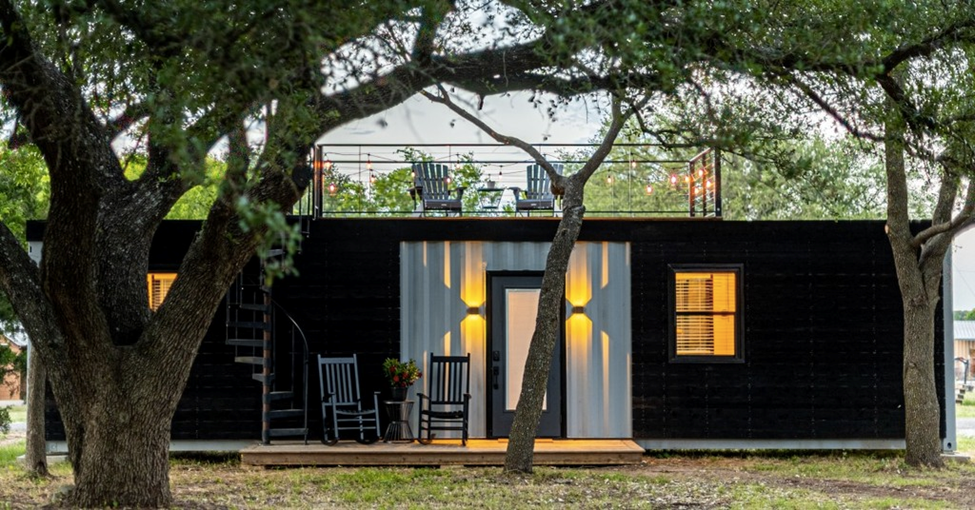
The tiny house might be like any typical house, just a mini version. You would downsize and let go of any extra stuff you have to live in a tiny house. Shipping containers are one of the most popular building materials for building tiny homes.
Some of the biggest reasons people opt for tiny homes are the savings and the size. A smaller home lends itself to a more minimal life — you’re not tied down by a lot of stuff or a hefty mortgage payment.
Tiny homes are about 225 square feet versus a whopping 2,301 on average for a traditional house.
Earthship
Earthships are sustainable homes that are built with recycled or natural materials. They get power from renewable sources like wind and solar. Earthships collect their drinking water, treat their sewage, and grow their food.
Earthships are often built in remote areas and are designed to be self-sustainable.
The basics of living off-grid
If you are starting your off-grid life from zero, you have some essentials to think about. There are several things you can’t live without, and you need to consider your plan to approach these things.
Water collection
A reliable source of clean, potable water is essential for living off-grid. Before you choose the location for your off-grid home, ensure that it has access to a water source. You will need enough access to haul your home’s water if it doesn’t. Many off-grid homes also have a water-collection system place and a well.
Always filter your water because even seemingly clean water could be unsafe to drink. Treating your water before using it for cooking and drinking is also advisable.
Power generation system
Solar panels are a popular choice among off-gridders. But don’t forget to install a backup generator that can supply energy in an emergency. If you have the financial resources, consider adding a battery power storage system.
Although costly, the power generation system could save you in the most critical moment.
A battery energy storage system collects energy from the grid or a power plant and discharges it later to provide electricity.
Food
Growing your food is essential for your survival when living off-grid. While you can collect certain things like berries and plants, doing so is not always the safe choice, as some of them could be poisonous.
Cultivate a vegetable garden to avoid having to look for food in the natural environment. Learn how to store your food, as you will need your supplies to last for a long time.
If you have any livestock on the property, learn how to preserve meat and other animal products. Having a supply of non-perishable food is vital for emergencies.
Emergency supplies
Always have emergency supplies well-stocked. You will need a solar-powered speaker to avoid losing communication in an emergency. Keep emergency lights, batteries, and signaling tools handy.
Make sure you have a cooking and water purifying system at your fingertips. A First Aid Kit and basic medicines are essential because they can help you to survive before the help arrives.
How to transform your house into an off-grid household
While living off-grid implies that you need to move to a remote place, it’s not true. You can start living off the grid by converting your property into an off-grid home. Most properties are not designed to go off-grid, except for homes built in the last 3-5 years and can be energy efficient.
To move your home off the grid, you need to replace high-energy-consuming appliances with more efficient options. They include electrical and air conditioning systems, water heaters, and cooking appliances.
Replace the source of your home energy
Inspect your home wiring and consider going solar, geothermal, or wind power, depending on your location. Wind power might be the best option if you live in a windy place. And if you live in a sunny climate, consider installing rooftop solar panels.
Change your water heater
A water heater is essential to any home, and you need to find out how to make it more efficient. Consider moving your water heater to the roof or making it more energy efficient. If it is old, you could replace it with a new version like a solar one. The solar heaters are suitable only for warmer climates with plenty of sunshine. They are not ideal for snow or icy regions.
You can also change it to an inline gas or electric model. These devices are installed near the tap or shower and switch on when water begins to flow.
Replace air conditioning and heating
Air conditioning and heating systems consume a lot of electricity. If you are serious about living off-grid, you need to replace them with options that don’t rely on the grid.
You can change your air conditioner to an evaporative cooler if you live in a climate with low humidity. If you live in a place with high humidity, consider using fans, which need 95 percent less energy than a typical air conditioner. For the heating, switch to gas or a solid fuel-based central heater.
Invest in new kitchen appliances
Consider gas-powered kitchen appliances for your off-grid living. Try to cook your food outside on an open fire whenever possible. If you have a refrigerator older than ten years, replace it. New refrigerators have better insulation. They also consume less energy thanks to inverter-based refrigerator systems.
If you live in a cold climate, you do not need a refrigerator as you can store the food outside or in the basement.
Final thoughts
Off-grid homes have become popular in recent years. As more people are aware of their environmental impact, many seek to live a more sustainable way of life. Some also look for a quieter pace and a relaxed lifestyle that living off the grid offers.
While transitioning to the off-grid lifestyle is a big move, it has many rewards. If you transition your home off-grid, you might finally have the lifestyle you always wanted. And you can enjoy it while being a good steward of the environment.
If you are a prepper, you will probably know that a nuclear attack is the most challenging survival situation. You cannot evacuate because exposure to radioactive material is life-threatening. The worst part is that risks abound indoors too, so no place is actually safe after an explosion. But proper preparation can help you deal with the hazards and survive despite the daunting risks. Awareness is the key to survival, and planning takes you a step ahead. Let us share some tips to prep for living through a nuclear attack.
Make a family disaster plan
The world is going through uncertain times, and no place is safe. A nuclear strike may happen anywhere, so it is vital to be ready. Think beyond the conventional disaster preparedness plan because the threat of radioactivity is worse than you think. Gather as much information as possible, and pass it on to your family members. Remember that the best way to stay safe is to coop indoors. Ensure that everyone does it if disaster strikes. Also, create an evacuation plan to follow once it is safe to come out.
Build a survival kit
Like a disaster plan, every family must have a survival kit as it can be a lifesaver in a nuclear crisis. The basics are the same as you will require food, water, medicines, daily essentials, and communication gear under lockdown. But you must also invest in gas masks and hazmat suits if you suspect an impending nuclear attack. You can check a hazmat suit buyer’s guide to pick a reliable option. Stocking up on Potassium Iodide is important as it offers protection against thyroid cancer risk from exposure to iodine-131 found in radioactive fallout.
Maintain distance
Another survival tip you can rely on to stay safe after a nuclear attack is maintaining as much distance as possible from the fallout particles. Moving to an underground area such as the basement of your home or office building is the best way to stay safe. You can also stay in a room without windows and openings as thick walls, bricks, and concrete can maximize protection against radioactive particles. Remember to dispose of your clothing first as it may have deadly particles. Stick to packaged water and tinned food as tap water and fresh produce will definitely be contaminated.
Evacuate when possible
Evacuation should be your top priority because living in an area exposed to nuclear radiation is dangerous. But leaving the fallout shelter for a couple of weeks after radioactive fallout is the last thing you should do. Wait for the authorities to announce when it is safe to leave, and do it at the earliest. Have your bug-out bags ready and evacuate at the earliest. It is best to carry cash and your ID documents because you may not get a chance to return in the foreseeable future.
Living through a nuclear attack is not a matter of chance, but it depends on how well you are prepared to handle the disaster. Follow these tips to keep yourself and your loved ones safe through the worst.
Back pain is a common issue that may affect anyone at some point in life – it’s no secret that it seems to be an issue for most people more often than not. However, the good news is that back pain can be managed effectively, and there are many ways to do so.
If you’re in pain, this article may come as an unexpected relief; it will detail some of the best ways of managing back pain and provide information on the different remedying products available so you can find the appropriate match for your individual needs.
You will also find tips on what not to do when it comes to managing back pain and information on medical supports used to combat chronic back problems, such as sciatica, herniated discs, and degenerative disc disease. In any case, if you want to know more about how to beat your back pain and the most effective products used for relief, continue reading the rest of this dedicated guide.
Seek Medical Advice
Before you take any action for a bad back, you must seek advice from a medical professional. They may prescribe pain killers, provide information on exercises to stretch out your back, or offer details on corrective support equipment, such as insoles and many others. Medical supports are highly effective and widely available online, such as on sites like podobrace.co.uk.
Have Good Posture
Posture is key to maintaining the integrity of your back and spine. Being seated in a chair with poor posture can lead to health problems, which is especially true for back pain. Therefore, you must pay attention to your posture while sitting and standing.
While it may be difficult when you’re experiencing pain, you must maintain proper posture while working or standing, as doing so will help prevent additional injuries from occurring.
Use Heating Pads and Ice Packs
Heat and cold therapy are effective tools for managing back pain. The heat helps to relax tense muscles, while cold therapy aids in enhancing muscle tone. Both of these therapies help reduce stress on your spinal cord.
Exercise Regularly with a Low-Impact Routine
Exercising regularly is one of the most effective ways of managing back pain. Not only will it help keep your spine healthy, but it will also positively impact your general well-being as exercise helps boost lung capacity and blood circulation. Moreover, exercise should be done at least three times per week for at least 30 minutes per session.
Conclusion
To sum it up, back pain is a common issue, and many people will experience it at some point in their lives. Still, however common back pain may be, that doesn’t mean that you should ignore it, as it can get much worse if you do.
Lastly, if you’re reading this and have chronic back pain or a bad back, please seek medical advice first, then consider trying some of the methods outlined above to manage your pain and prevent the condition from worsening or reoccurring in the future.
It’s a harrowing statistic, but according to the National Weather Service, about 70 percent of winter weather-related fatalities occur in an automobile. You can bet many of those vehicle-related deaths began with someone simply leaving the house to run an errand, make a short trip to visit family or friends or take care of routine business. The weather turns unexpectedly bad, road conditions rapidly deteriorate and, suddenly, what was an ordinary drive becomes an overnight ordeal.
Don’t think just because you don’t live in New England, the upper Midwest or the western mountains that something like this can’t happen to you. Even in areas where snow is a rare event, cars can slide off icy roads and become stranded in freezing weather, leaving passengers stuck right there with them. Here’s how to make it through a freezing night in your car and ride out events until help can arrive.
Be Prepared
The first thing to do as winter approaches is be sure you have stored a few key items in your car. If you wait until you need them to try to round them up, it will be too late. Essential items to include in a winter survival kit, according to a combination of recommendations by Wisconsin Emergency Management’s Ready Wisconsin initiative and survival expert Peter Kummerfeldt’s OutdoorSafe website, include:
Other essential winter tools in severe weather country include jumper cables, the best small shovel, tire chains and rock salt, sand or kitty litter to provide added traction when stuck on a slick surface.
Before You Go
If you’re leaving for an extended trip, always check weather and road conditions before departing. If poor conditions are forecast, you may consider postponing your trip. Also, let others know when you are leaving, which way you will be traveling and when you should arrive at your destination so they can alert authorities and provide them with solid information to help in finding you should the need arise. Fill your car with fuel and make frequent stops to stretch, relax and refill your tank, never allowing it to get much below a half tank. Should you become stuck and need to spend the night in your car, the ample gas will allow you to start your car throughout the night and run the heat for short intervals.
If You Are Stranded
First call for help if you can’t get your car unstuck. Don’t overexert yourself and don’t leave your car and begin walking for help. You stand a much better chance of being found if you remain with your car, which can also provide the best shelter from the elements. The Minnesota Department of Public Safety warns against running your car constantly. Instead, be sure the exhaust pipe is free from snow and roll down a window enough to vent the car and prevent carbon monoxide buildup. Run the car for short 15-20 minute intervals to warm up and then turn it back off, using blankets, a sleeping bag, hand warmers and the body heat of others in your car to stay warm. Eat snacks to keep nourished and read a book (another item Kummerfeldt recommends) until help arrives.
Since the episode last night of Doomsday Preppers had a guy modifying an old school bus to be his battle wagon after the destruction caused by of an F5 tornado, I thought I would share this article showing other options you might consider. While I will admit, part of me wants to build my own gassifier engine and go to town on an old bus with a cutting torch, these options below come with considerably less work, risk of fire and could run much better than that old yellow tank. If nothing else, you won’t need to make your own employees work on this for you. For the rest of us that don’t have our own companies that might be a non-starter.
If you are going to purchase a vehicle that you can use to bug out, one of these beauties below might be the ticket. The good folks at the HiConsumption site pulled this great list together.
With The Walking Dead season premiere set to kick off in just over a week, we once again got to thinking about the zombie apocalypse. We got you covered last year with a list of zombie proof gear to help fend off the undead, but the reality is you aren’t going to be able to take on those flesh eating zombies on foot. You need wheels, and your current vehicle just isn’t going to cut it. Now imagine for a second that you had perfect circumstances – imagine you can get your hands on nearly anything you could think of (within reason of course). That’s the approach we took when creating this list of the best vehicles for the zombie apocalypse. You need something reliable, capable, and let’s be honest, you need something badass. You’ve been prepping for this zombie outbreak for years now, and you want to let everyone know that you are the baddest S.O.B. on the planet. Check out some of our favorite options for the end of the world in the 12 best vehicles for surviving the zombie apocalypse below.
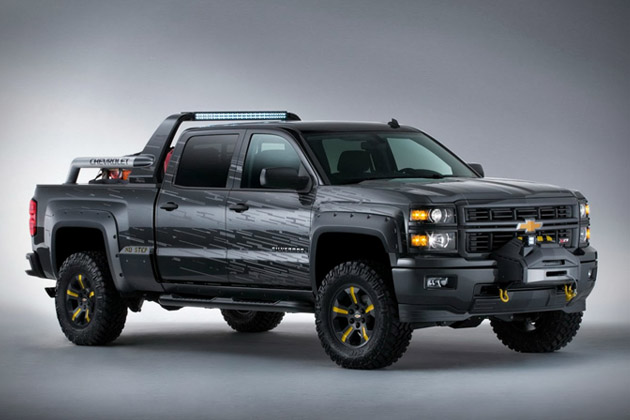
1. Chevrolet Silverado Black Ops
Let’s start things off with a practical choice. Chevy makes a solid truck, there’s no doubt about it, and this one was built specifically for unforeseen emergencies. Although we can’t say that the zombie outbreak was “unforeseen,” we can certainly classify it as an emergency. The fully capable 4×4 features a 5.3 liter EcoTec3 V8 engine with plenty of power (355 ponies to be exact) along with lower body armor, raised suspension, solar power pack, generator, military First Aid Kit, gas masks, a crate of food with Top Ramen and Twinkies (your new favorite food groups in this post apocalyptic world), and a whole lot more. [Details]
2. Motoped Motorized Bicycle
You’re going to need something that is nimble and quick. Sure the big bulky trucks have their place, but a solid 2 wheeled companion is an essential. Motoped created a simple conversion kit that lets you outfit your mountain bike with Honda 50-190cc motor for about $1,000. [Details]
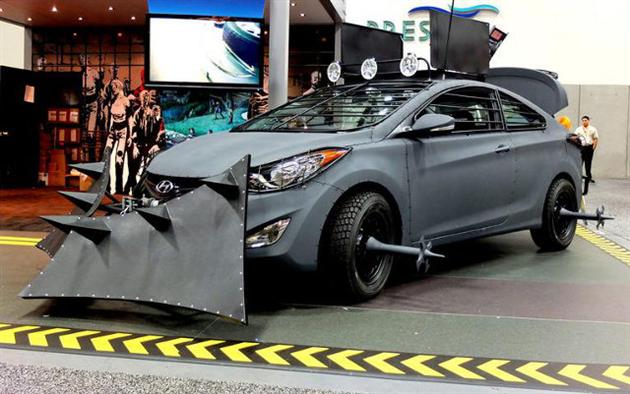
3. Hyundai Zombie Survival Car
If Hyundai is good enough for Rick and his crew on The Walking Dead, we’d suffice to say that it’s good enough for us. Thankfully the folks at Hyundai take their zombie response research very seriously, and have outfitted one of their Elantra coupes with a ton of security features from a zombie plow with massive spikes to armored windows and spiked all terrain tires for going where no other vehicle can go. [Details]
4. Knight XV Fully Armored SUV
Who says you can’t stay drenched in luxury in this new post-apocalyptic world? The Knight XV is luxury and ruggedness, fused into one completely bad-ass SUV. The vehicle is packed with a 6.8 liter V10 engine, seating for 6, night vision cameras and bulletproof armor. [Details]
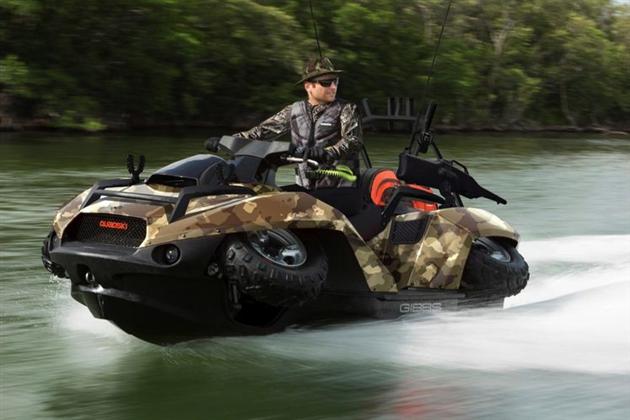
5. Gibbs Quadski Amphibious 4 Wheel Drive Quad
It’s been debated for years whether or not zombies will be able to swim. From our extensive research (hundreds of hours watching zombie movies and shows), we’re going to go with no, they can’t swim. The 4WD Gibbs Quadski is perfect for tackling tough terrain, and within 5 seconds, the vehicle can tuck its tires to hit the water. Thanks to the 175 horsepower engine, you can hit speeds of up 45 miles per hour on land, which is plenty fast to leave those undead bastards in the rear view. [Details]
6. Mercedes-Benz G63 AMG 6×6
Not only will MB’s 6 wheeled off road monster provide you with a fully capable means of transportation, but it will also bring about some nice entertainment. For such a massive vehicle (8,400 pound curb weight), the 5.5 liter AMG V8 powered 6×6 is actually quite agile. Although it’s based on the military version, this thing handles more like a truck than a tank. [Details]
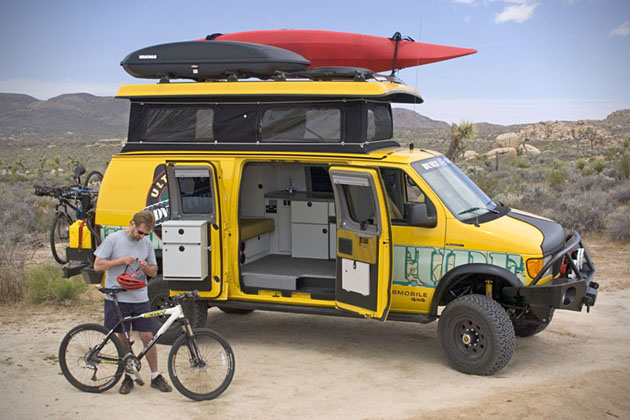
7. Sportsmobile Ultimate Adventure Vehicle
The folks at Sportsmobile design rugged Mercedes-Benz and Ford E-350 vans that are capable of tackling any off road terrain, while also providing a mobile home living experience. The cargo van has been equipped with everything one needs to survive in the wild, with plenty of room for bikes and water vessels. [Details]
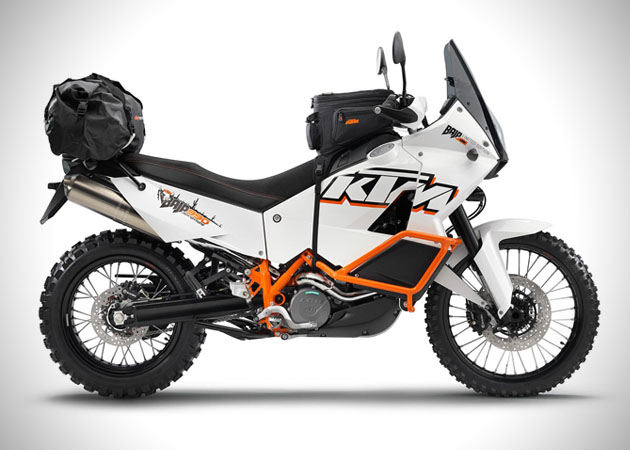
8. KTM 990 Adventure Baja Edition
Again, enclosed cars and trucks are great, but 2 wheelers serve a vital role in your survival. There are few motorcycles that perform quite like this bad boy from KTM. Crowned the most off road capable travel enduro in the world, the 990 Adventure Baja has been outfitted with everything you need from suspension to power plant to ensure that you can transition from the asphalt to the dirt roads. There’s a slim chance anyone will be keeping up with road maintenance after the virus spreads, and this V-Twin powered machine will be able to tackle any beaten road you can throw at it. [Details]
9. WaterCar Panther Amphibious Jeep
It goes without saying that a Jeep Wrangler will always be a solid choice when it comes to the inevitable apocalypse. You can’t go wrong when it comes to Jeep, but a Jeep that can quickly convert to a boat? Now that’s a real winner. Assuming that zombies can’t swim, this thing is great for escaping those sticky situations. Packed with a 3.7 liter V6 motor built by the Japanese auto makers at Honda, this Jeep is capable of speeds exceeding 40 miles per hour on water, and 80 mph on land. The best part is the transition from land vehicle to boat takes only 15 seconds. [Details]
10. Pal V One Personal Air and Land Vehicle
Technically the results are still inconclusive when it comes to zombie’s ability to swim (although we think not), but there is one thing we’d put money on – zombies will not be able to fly. With that being said taking to the air can be risky business during this zombie infested time era (imagine crashing into a horde of zombies), but bear with us on this vehicle. The Pal V One acts like a sports car on the ground, accelerating from zero to sixty miles per hour in just 8 seconds, while reaching a top speed of 112 mph. In just minutes, the vehicle can be transformed into a Gyro-Copter, flying at altitudes of about 4,000 feet (well below commercial flight routes, although we can’t imagine there will be many commercial flights during the zombie apocalypse). The vehicle’s fuel tank can store enough fuel for over 300 miles of flight time. Now this vehicle is currently still in the “development” process, but the concept, if executed well, could make a nice addition to your stable of vehicles rather than your sole choice of transportation. [Details]
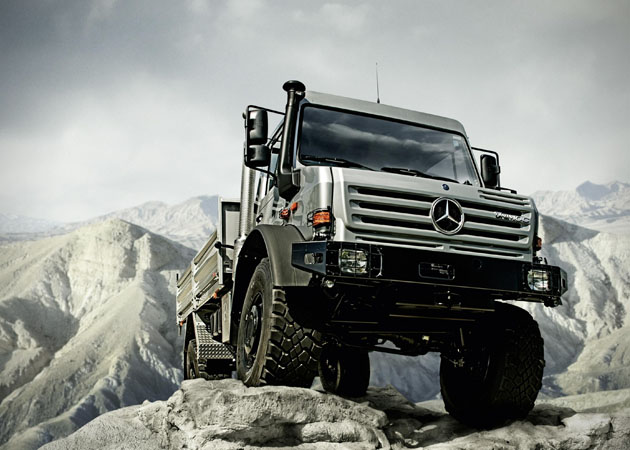
11. Mercedes-Benz Unimog
The folks at Benz said it best when they said the monster of a vehicle known as the Unimog offers “absolute off-road supremacy.” You can take Mercedes’ word for it, or you can research the 10 different models that were designed for disaster emergencies in the harshest conditions. This could be a bit impractical as your only means of transportation, but it could be a huge asset in your stash of vehicles. [Details]
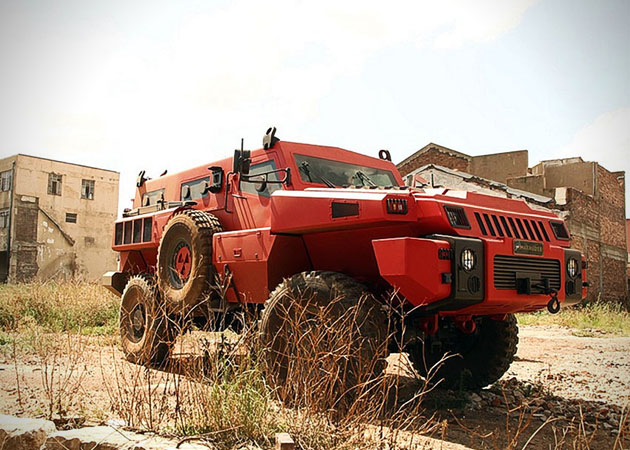
12. Paramount Group Marauder
Hands down the baddest vehicle on the planet, the Marauder will withstand any test you throw at it. The armored vehicle destroys everything in its path. Features include long range fuel tanks, the ability to survive TNT explosions, ultra modern climate control system, run flat tire that can be pierced by 12.7mm bullets, anti blast seats, and so much more. The vehicle has a fording depth of half the vehicle, meaning it can swim too. Reaching speeds of 120 kilometers per hour, this thing is far from a slouch. If you can get your hands on one of these, do it. [Details]
Try these new Bacteria Test Kit is a quick and easy way to test water for harmful bacteria. (It generally takes most Health Departments over 24 hours to incubate and test a water sample.) The kit contains 10 individual use test kits.
Now you can look for e-coli and other bacteria in drinking water, ponds, streams, and even public swimming pools. A positive result on one of these screening tests may indicate dangerous levels of bacteria and aid you in your water treatment options.
The kit tests for the presence of bacteria and detect E.coli, Pseudomonas aeruginosa, species of Shigella, Enterobacter, and many other coliform and non-coliform bacteria.
Fast, Accurate and Easy to use, the Bacteria Test Kit is an excellent addition to your survival preps, as well as, for camping, hiking, boating, travelling and other outdoor activities.
With its combined ease of use, speed, and affordability, there is no other test like it on the market!
Again we are proud to be on the cutting edge of innovation by offering these bacterial test kits to our friends and fellow survivors.
In this piece, we’re going to take a pass at addressing the question: what’s the shortest effective barrel length for an AR15? To do so, we’ll start with a little bit of general ballistic science to get some basic concepts under our feet. From there, some specific commentary on the operating mechanism of the AR platform, specifically the gas system, is important.
But first, let’s define effective. Here, we mean an effective barrel length as one that can be used in an AR with which you can reasonably expect to engage human-sized targets out to about 300 yards with some skill involved.
Ballistic Science 101
When a bullet is fired, the burning powder builds pressure behind the bullet, pushing it forward through the barrel, where the bullet roughly seals against the rifling, accelerating as it travels down the barrel.
In general terms, greater barrel length means more velocity, which, in turn, means less bullet drop and greater accuracy. Of course, there’s a limit to this: a six-foot barrel would not net you many gains in velocity, but it would make the rifle extremely unwieldy, something like an old-timey Punt gun, which was a bow-mounted shotgun people used to hunt ducks.
AR15 Gas Systems
Regardless of barrel length, the AR15 is a direct gas impingement gun, requiring a gas tube that runs parallel to this barrel. To have the gun cycle as a semi-automatic firearm rather than a bolt action one, you’ll need to have a function gas system. These days, gas systems come in several more or less standard lengths.
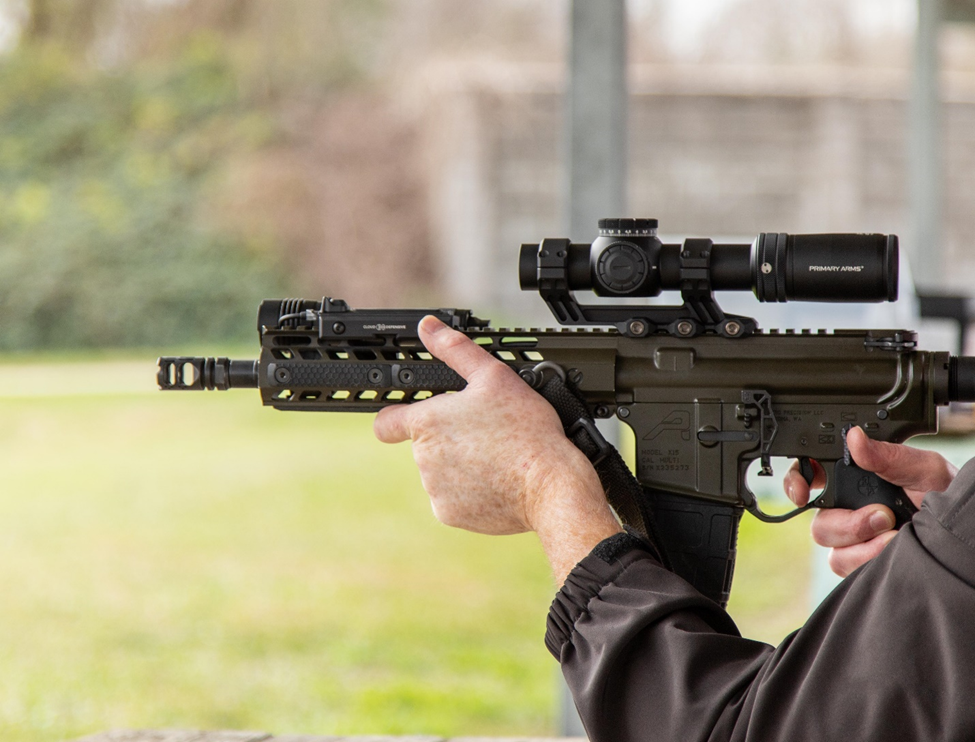
Pistol length gas systems are the shortest, and they’re about 4” long. A carbine length system is 7” long. Further, a midsize gas system is 9” long and the longest, rifle systems are 12” long. These, as you’ll see soon, correspond to several barrel lengths, and with accompanying pros and cons.
Six Inch Barrels
About the shortest barrel that you can hope to have normal function in an AR is a 6” barrel. These will have substantial accuracy problems because of a short sight radius as well as the fact that the bullet will not get up to normal velocity, resulting in a bullet drop. These will function with a pistol-length gas system and might work for extremely close quarters work, but be careful as you’ll have your hands awfully close to the muzzle at all times.
Ten To Twelve Inch Barrels
With a little bit longer barrel comes a little more velocity: with a carbine gas system, these short ARs can gain some serious accuracy over the extremely short models, but you’ll still notice that bullet drop will start sooner than you’d like.
This is a common length of AR for folks in special forces who know that their mission will take them indoors, as this is a compact weapon that still can reach out to about 200 yards with a little bit of practice. Overall, these are the first reasonable option we think is out there if you want accuracy past room-clearing distances.
Thirteen to Sixteen Inch Barrels
This is, in some regards, the Goldilocks zone for AR barrel lengths, as we’ll develop in the next section. Paired with a Carbine length gas system, rifles with barrels of this length give up very little in terms of velocity when compared to longer barrels but are a little more compact than longer weapons. Additionally, the carbine gas system, balanced with an appropriate buffer spring and weight, are exceptionally soft recoiling weapons, which makes follow-up shots a lot easier.
Twenty Inch Barrels
About the longest barrel you’re likely to see on an AR platform rifle is 20.” These give the greatest possible velocity out of standard 5.56mm ammunition, without being too bulky for people to use in adaptable mission settings. Barrels of this length are less common now but are a good choice for folks who want to stretch the legs of the platform. With a rifle-length gas system, they’re also exceptionally reliable weapons as well, as this is basically the design as it was first developed in the 1950s.
So, What’s the Best Barrel Length?
As with most things in the firearms world, the answer is: what’s your purpose?
If you want the best possible ballistics, then a 20” barrel with a rifle-length gas system is the way to go. Even though these are long and a little heavier than what’s common these days, most accuracy-focused setups will have longer barrels to get additional velocity and a longer sight radius for iron sights. The M16A1, as issued in Vietnam, came with a barrel of this length and it performed well for troops for years.
Of course, some people don’t want the best ballistics, and they are looking for a handy gun to use in home defense. To that end, a Short-Barreled-Rifle might well be the most effective: a 10” barrel with a pistol length gas system can be highly effective in close quarters and they’re super handy. If it were up to us, we’d also put a suppressor on it to tame the unholy muzzle blast that comes from all of the unburnt powder and unused energy from short barrels.
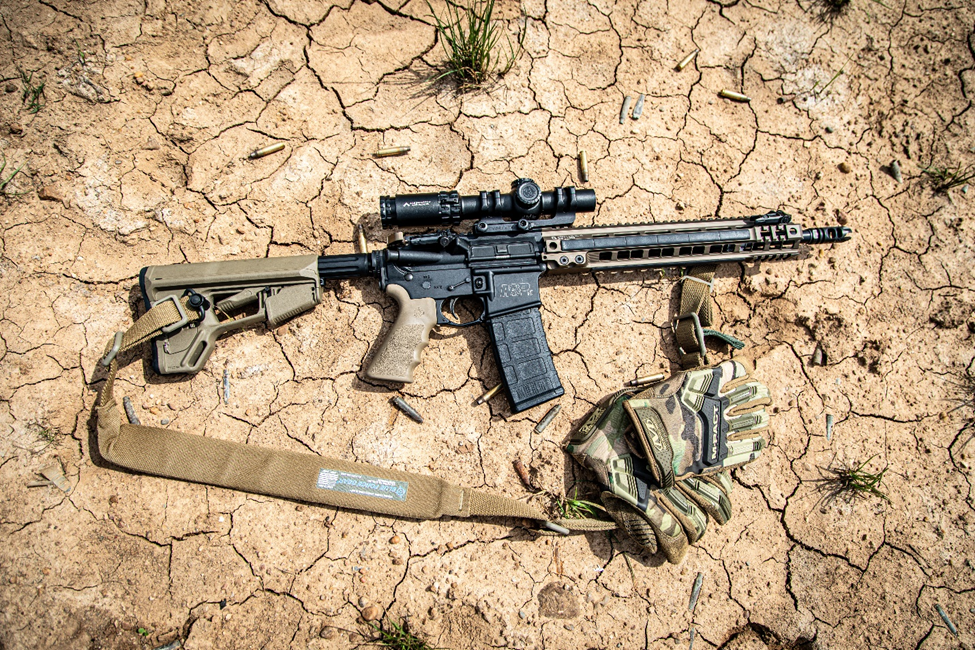
For most folks, something in between works well. Enter the M4, the standard service rifle in the hands of several million people in the armed forces all over the world. With a 14.5” barrel and a carbine length gas system, the M4 can reach out to about 300 yards with no issue but is also handy enough to be pressed into room-clearing duty in, say, Fallujah. This is what we go with most of the time on our personal rifles.
With all of that said, and government paperwork aside, you don’t really have to choose. It’s entirely possible to have a single lower receiver, a few buffer springs, and a set of uppers that you can change out in seconds depending on your mission requirement. That’s one of the brilliant things about the AR 15 design, and we personally own several different barrel lengths for different tasks.