32 Survival Uses For Trash Bags


Heavy-duty plastic bags, like those meant for trash and yard debris, can be used in a surprisingly wide variety of ways to help ensure your survival during a disaster situation like an earthquake, hurricane, or even Zombie outbreak. These light-weight, extremely low cost, readily available, and incredibly versatile tools should be in every B.O.B. (Bug Out Bag)  and Emergency kit.
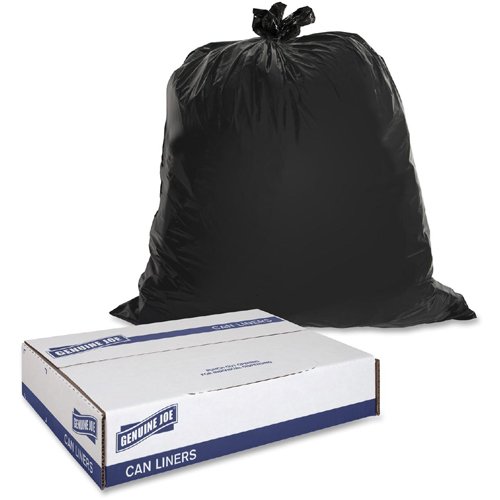
Trash Bags

We’ve listed a few of our favorite survival uses for plastic bags, but keep in mind that this everyday item is only limited by your imagination… and whether or not you happen to have a few on hand.


MEDICAL 

While it might be the first thing that comes to mind when you think of a trash bag or yard debris bag; a clean, unused bag can be used for a wide variety of medical purposes.

Waterproof bandages – After applying the appropriate bandage to a wound, place a layer of plastic bag over the bandage to protect it from outside moisture and contamination. Secure the protective covering properly, and remove and change the bandage and covering as needed.

Fight hypothermia – The potentially deadly effects of hypothermia can be battled by utilizing a large plastic bag as a “hot box” or additional layer to trap heat next to the body. Simply cut a hole for your head (and arms if needed), and wear the bag as a pullover. You can also simply drape the bag over your body, as you might a survival blanket.

Cold Compress – Fill with snow, ice, or cold water. Fold or tie off bag and apply as needed.

Handle medical waste – Plastic bags can be utilized as gloves for handling medical waste and contaminates such as blood, organs, vomit, and fecal matter… though we’re not sure why you’d handle the last two, unless you’re cleaning up a mess. Check the bag for punctures and/or rips BEFORE you try them on as gloves.

Tourniquet – Like many other flexible materials, large plastic bags can be used as a makeshift tourniquet. While it wont be the best thing for long term use, it can make a world of difference for the short run… remember it’s all about surviving the moment, you can worry about the long-term later.

Sling – Plastic bags can be used to support and immobilize a broken or wounded arm.


WATER

Containers come in handy when you need to collect, transport, and/or treat water, but there’s even more that you can use them for when it comes to water.

Collection/Storage – Lining a trash can, hole in the ground, or other receptacle with a clean plastic bag makes the collection of rainwater safer than simply letting it fill into a potentially contaminated container. Plastic bags can also be used as scoops for collecting water from pools, streams, and other bodies of water.

Solar Still – Fully enclose the leafy green area of a tree branch, securing the plastic bag tightly at the opening. Let it sit in the sun for a few hours as the condensation builds within the bag . Carefully remove the bag when ready, and repeat the process as needed. This method doesn’t typically result in large amounts of liquid, but every little bit counts… especially during a survival situation.

Transport – Creating a sturdy double walled bag for transporting water can be done in just a few steps. Cut or tear open the sealed end of a plastic bag so you are left with a tube. Twist or tie a knot in the center of the bag so you are left with two open ends and a shape like an hourglass. Fold one side over the other and you’re left with a double walled water carrying device.

Filter/Purify – Water isn’t any good to you if it isn’t safe to drink, but a simple plastic bag can go a long way to making water potable. Learn other important tips and tricks for water filtration and purification here: H20 (Water).

Gravity Filter – Gravity filters are simple multi-layer systems that remove the majority of contaminates, and you can easily make one at home. Double wall a plastic bag as seen in the WATER: Transportation portion of this article. Cut a small “spout” hole into the lowest point possible, without destroying the integrity of the bag too much. Reinforce the spout with a bit of duct tape so it doesn’t split when filled. Next, place a coffee filter, bandana, or similar cloth or material for filtering inside the bag and up against the spout. Then carefully pack and layer the following materials into the lower portion of the bag: 2″-3″ finely crushed charcoal, 2″ fine sand, 1″ small stones, 1″fine sand, and 1″ moss, grass, or other porous material. Gently fill the bag with water, tie a knot into the top, hang it up, and allow it to do the job.

Solar Treatment / SODIS – This can be a fairly unpredictable method for treating water, especially during cloudy or winter weather, but when done properly, it can work like a charm. The SODIS method relies on the power of solar rays to purify water; this is only helpful if larger contaminates have first been removed with basic filtration methods like the one listed above. Utilizing a large plastic bag for this method should be a last resort, as not all bags are made from food grade materials. This method is only effective when using CLEAR plastic, tinted or colored materials will not work. 

Solar Shower – Fill a darkly colored plastic bag with water, hang it above head height, let it sit in the sun for a bit to warm up, poke a couple of small holes in the bottom, and enjoy a nice warm shower.


FOOD

Collecting, capturing, and storing food can be difficult during a survival situation, but a trash bag can make the task a whole lot easier.

Collection – Whether you’re raiding the wilds, a nearby farm, or grocery store, containers come in handy… and that’s just what a trash bag is, a container. No matter what you find or where you find it, you’ll need a way to carry your collected goods.

Storage – Just like with water, lining a trash can, hole in the ground, or other receptacle with a clean plastic bag makes the storage of food much safer than placing it into a potentially contaminated or uncovered container. Plastic bags can be sealed by twisting the top and adding a bit of cordage, or simply by tying a knot in the top of the bag itself.

In addition to being a great lightweight container for food items, plastic bags can be tied and hung away from the ground and the prying hands of Zombies, other survivors, and wild animals. A well-sealed bag can offer the advantage of a longer shelf-life of some foods… as long as you store it in a cool dry place.

Trapping Set them as netting for bugs and fish, or use them as sacks to quickly and more easily bag a bird, squirrel, or other small animal that lends itself to capture.


SHELTER

From additional security to being used as shelters themselves, heavy-duty plastic bags can be utilized in a number of ways when it comes to provide protection from the elements and the undead.

Tarp Tent – Just like an emergency blanket, poncho, or tarp, a plastic bag can be used to create basic Tarp Tent style shelters and protective covers. Cutting the bag down the length of one side, and slicing it along the bottom, can double the square feet of material available for your shelter or cover. Make sure to carry a bit of paracord with you to help when securing your shelter.

Tube Tent – Tear or cut open the sealed end of a large plastic bag, duct tape the tube to another bag, slide yourself inside, and rest well. The ambient heat from your body will build and help to keep your body warm… even in wet and windy weather.

Ground Cover – This one is as simple as it sounds, but it’s important too… especially when you’re sleeping in the wild. Keeping your body away from moisture and the cold of the ground can greatly increase your chances of survival.

Window Black Out – Just because you’re home doesn’t mean you have to look like you are. Blacking out your windows is an important step to ensuring you aren’t hassled by outsiders or spotted by Zombies in a post apocalyptic world. Covering your windows with black trash bags can keep the light from getting out, and you from being seen.

Quarantine – Duct tape and plastic bags can be used to create a fairly effective quarantine area, whether at home or in the field. Simply seal off an area with the bags and duct tape, and make sure it isn’t breached. You’ll need to fully cover any potential areas of transmission, such as heating vents, windows, doorways, etc. 


GEAR/OTHER

Beyond water and food collection, medical assistance, and shelter; plastic trash bags can be utilized as a substitute for many types of gear.

Rain Poncho – The only downside to wearing a plastic bag as a rain poncho is that they don’t breathe. This means that while it will hold the rain and snow out, it will also hold your sweat in. Pay close attention to your body temperature and water-loss when wearing a non-permeable covering like this.

Gear Bag / Dry Bag– Twist the bag a few times just above the line of the gear inside. Fold the excess over top of the bag and carry it upside down. This should create a relatively water-tight seal that still allows for somewhat easy access to important gear and supplies.

Water-proof Boots/Gaiters – Applied over boots, and even bare or minimally covered feet, plastic bags make an excellent material for water-proofing and protection from the elements. They can also be wrapped around the shins or legs as makeshift gaiters for travel through swampy or other exceedingly wet areas.

Flotation Device – Filled with air and twisted shut, heavy-duty trash bags are extremely lightweight and buoyant. They can be used to assist in crossing deep water by simply being held onto, or they can be applied to a raft or other flotation device.

Sleeping Bag / Mattress – Similar to being used as a Tube Tent, large plastic bags make great sleeping bags when stuff with materials like leaves, fabric, stuffing, packing peanuts, etc. Fill the bag as full as possible and crawl in, or use it as a sleeping surface for the night. Not only will this method protect you from the cold, it will help to keep away potential contaminates as well.

Washing Machine – Placing garments into a plastic bag that has been partially filled with water and soap, can actually make a world of difference when attempting to get your clothes clean. Once everything is in there, just jostle it around, empty it out, rinse your clothing, and hang them to dry. Remember, proper hygiene can go a long way to keeping you alive.

Restroom – Sometimes the plumbing goes out, but that doesn’t mean you don’t need to use the bathroom. Placed into a drained toilet or into a 5 gallon bucket, plastic bags can make dealing with waste, a much cleaner and easier process. These can also be used to line latrines when you’re worried about contaminating a nearby water source.


OTHER MISC USES

Creating smoke for signal fires, lashing, patches for clothing and other gear, And of course… collecting and removing refuse, among about a million other uses.

Because not all trash bags are made with the intent of heavy-duty use, it’s a good idea to grab a few construction grade bags from your local hardware store or garden center. Keep a few on hand in your Bug Out Bag and E-kits and utilize them as needed… though we hope you never have to.


[source]

Hurricane Irma Disaster – A Huge Damage to the Economy

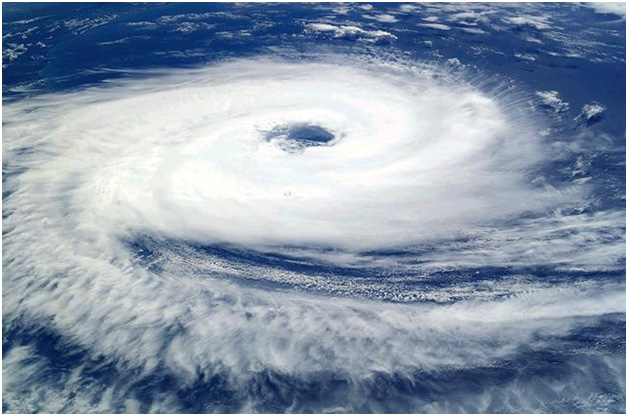
RMA is the name of a category 5 hurricane, one of the worst hurricanes formed in the Atlantic Ocean in 2017. The last horrible hurricane of such intensity, experienced by the U.S in 2005, was when Katrina shook its coastal areas.

Hurricane Irma Damages

It started on the 30th of August 2017 and raged at 185 miles/per hour for 37 hours. It is recorded to be the longest and fiercest hurricane of the Atlantic Ocean.

Irma originated in the deep tropics near the islands of Cape Verde and quickly intensified.

Regions Affected by Hurricane Irma:

The most catastrophic damage caused by Irma as a category 5 hurricane was experienced by the following regions:

  • Barbuda
  • Saint Martin
  • Anguilla
  • Virgin Islands
  • Saint Barthelemy

Impact of the Tropical Hurricane Irma

Overall Damage of this hurricane is calculated at more than $30 billion in 11 days. Some of the Catastrophes are mentioned below along with regions:

  • Florida: 3 million Floridan lost the power supply. And more than 6.5 million people migrated.
  • Irma caused a massive destruction in the Caribbean.
  • Hurricane Irma wreaked havoc in British and American Virgin Islands.
  • The ST Martin, Islands on the Dutch half, Island of Barbuda were devastated.
  • Puerto Rico was safe from the direct encounter, but still suffered from electricity and power shortage.

For more detailed facts and figures, check very comprehensive infographic produced by HuntingMark.com.

HuntingMark
 

Irma Broke the Records:


This tropical hurricane broke many global records:

  1. This was the first storm with wind speed of 185 miles/HR in the Atlantic Ocean, and it remained for more than a day. (1 day and 17 hours to be exact).
  2. It broke the records of low pressure, that is, 914 millibars.
  3. 7th September was the most active day for the Atlantic hurricanes on record.
  4. Storm Irma raged as 5th category storm for 3 days turning into the 4th category.
  5. This hurricane turned into a category 2 storm and finally dissipated on the evening 12th of September.

A Survivalists Guide To Body Armor

Owning body armor these days makes a lot of sense for civilians as well as professionals in the security industry. With crime statistics through the roof in recent years, frequent terrorist attacks, violent protests and demonstrations – more and more people are viewing the purchase of a tactical vest as a sound investment.

It’s hard to put into words just how important body armor is, but let’s just say – it can be the difference between life and death in a number of scenarios. Still, many survivalists are quick to buy different type of guns and ammo, but overlook protective vests. However, it’s really this simple – if you own a gun or plan on owning a gun, you should also have a bulletproof vest in your house.

It’s a common trait of all survivalist to plan ahead, to be prepared. Equipping yourself with adequate protection helps you stay safe in specific circumstances. You need to understand how body armor works, what it can and cannot do for you against different threats, and how to select the best one for you.

Types and Styles of Body Armor

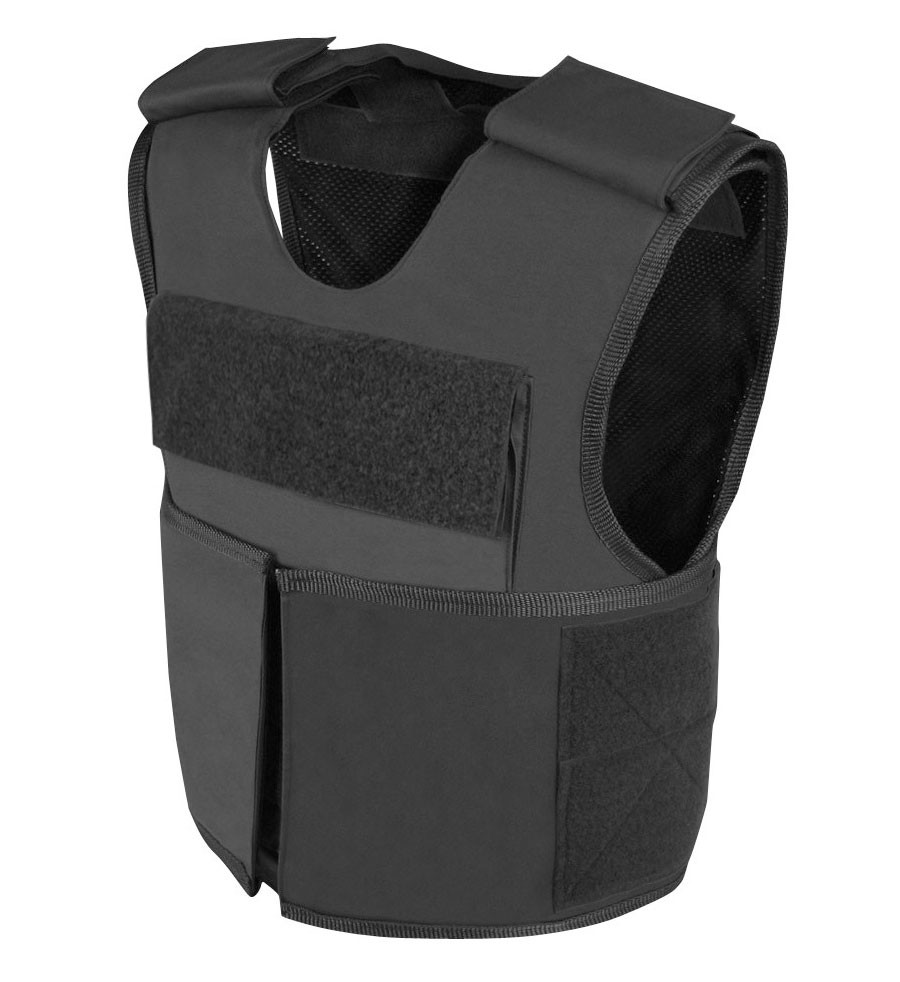
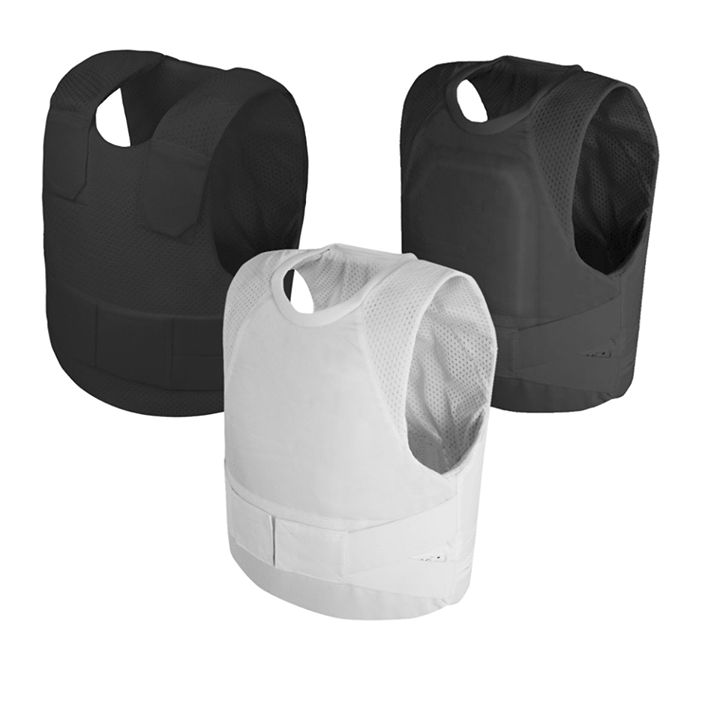
While there are 6 levels of protection in ballistic armor, there are three forms of armor platforms: covert,overt armor and tactical overt.

Covert armor is worn under the clothing and can be easily concealed. It is lightweight and flexible, making it idea for prolonged use. Recent advancements in the development of body armor have allowed the use of breathable materials that improve heat transfer, making it more comfortable for the wearer.

Overt armor’s main function is to protect the wearer and can also be used to intimidate the opposition. It comes in a variety of colors, styles and levels, although it is usually used when a high threat level exists. Overt armor is typically bulkier and heavier than covert and it conveys a sense of authority. Apart from offering more protection, its other main benefit is that it’s easy and quick to put on and take off.

Tactical armor is worn in a situation that is associated with a high degree of risks that prove too much for soft armor to handle. This means that it is likely for armor-piercing rounds to be used. This type of system relies on a combination of overt armor fitted with additional SAPI (hard ceramic) plates and panels that cover the neck, arms, thighs and groin area for maximum safety.

Levels of protection

Body Armor is rated at different levels based on the NIJ standards. Because the protection of the armor increases with the level, so does its weight and the cost. Ballistic body armor is rated by the Department of Justice against different round calibers. Basic soft body armor does not stop penetration from sharp objects and weapons, but it will stop thick-bladed stabs and offers protection against slashing attacks. These makes them suitable to wear in places, where there are large gatherings of people (protests, marches, during riots, etc.) as in close quarters – people often use concealable but deadly weapons, such as knives, broken bottles, screw drivers or other piercing objects to cause harm.

Survivalists who want to ensure they receive maximum protection can go for a combination of ballistic and stab proof systems that are available for purchase online but they are more expensive. In terms of bullets – pistol bullets are easier to stop than rifle bullets, because they are slower. This type of combined protection gives the best chances of surviving in risky situations, such as riots or a scenario, where you might need to travel from point A to point B while facing attacks and poor weather conditions.

Basic levels, such as Level IIA. (Level I is not in use anymore) through IIIA are considered soft body armor types and don’t always offer sufficient protection in high-tension situations, while Level IV provides the fullest protection against pistol and melee weapons but is bulkier and heavier on the wearer.

Do some research and compare the different options on body armor available online. Make sure you measure correctly and select a vest that fits well, is lightweight and comfortable apart from offering a high level of protection – these are just a few of the ground rules that every survivalist should stick to when shopping for body armor.

Forget Farm To Fork – Urban Foraging: The Ultimate in Local Eating

Many of us have grown accustomed to making a list of foods we want, then heading to the grocery store to buy them. Others have embraced the trend of community-supported agriculture by signing up for shares or participating in community gardens. And then there are the daring folks who march out into urban environments to scope out their next meal.

People who are unfamiliar with the practice of urban foraging may view it as the work of a few unconventional individuals, but in reality, people have been foraging since the beginning of civilization. Today, the practice is enjoying a worldwide resurgence. Even the restaurant scene has gotten in on the action, as more and more chefs incorporate foraged foods into their menus to produce unique and sustainable fare.1

Foraging may also aid national efforts to reduce hunger. University of California, Berkeley, researchers are experimenting with a program that maps edible plants in low-income neighborhoods to empower local residents to find food near their homes.2 Many foragers also donate some or all of their finds to local food pantries.

If you want to know more kitchen tips, you better visit this site.

The basic concept behind urban foraging is simple: search for and gather fresh food in urban spaces.3 Practitioners embrace foraging as a way to reconnect with the natural world, obtain free food, reduce their eco-footprint, diversify their diets, and learn to look at urban spaces in new ways. Not to be confused with dumpster diving, foraging focuses on obtaining fresh food straight from the source – whether from trees, bushes, edible weeds, or other plants found in parks, abandoned lots, and local neighborhoods.4

Ever felt curious about seeking out your own food in your local environment but held back because you didn’t know where to start? Consider this your cheat sheet for entering the wild world of urban foraging.

Know What’s Safe to Eat

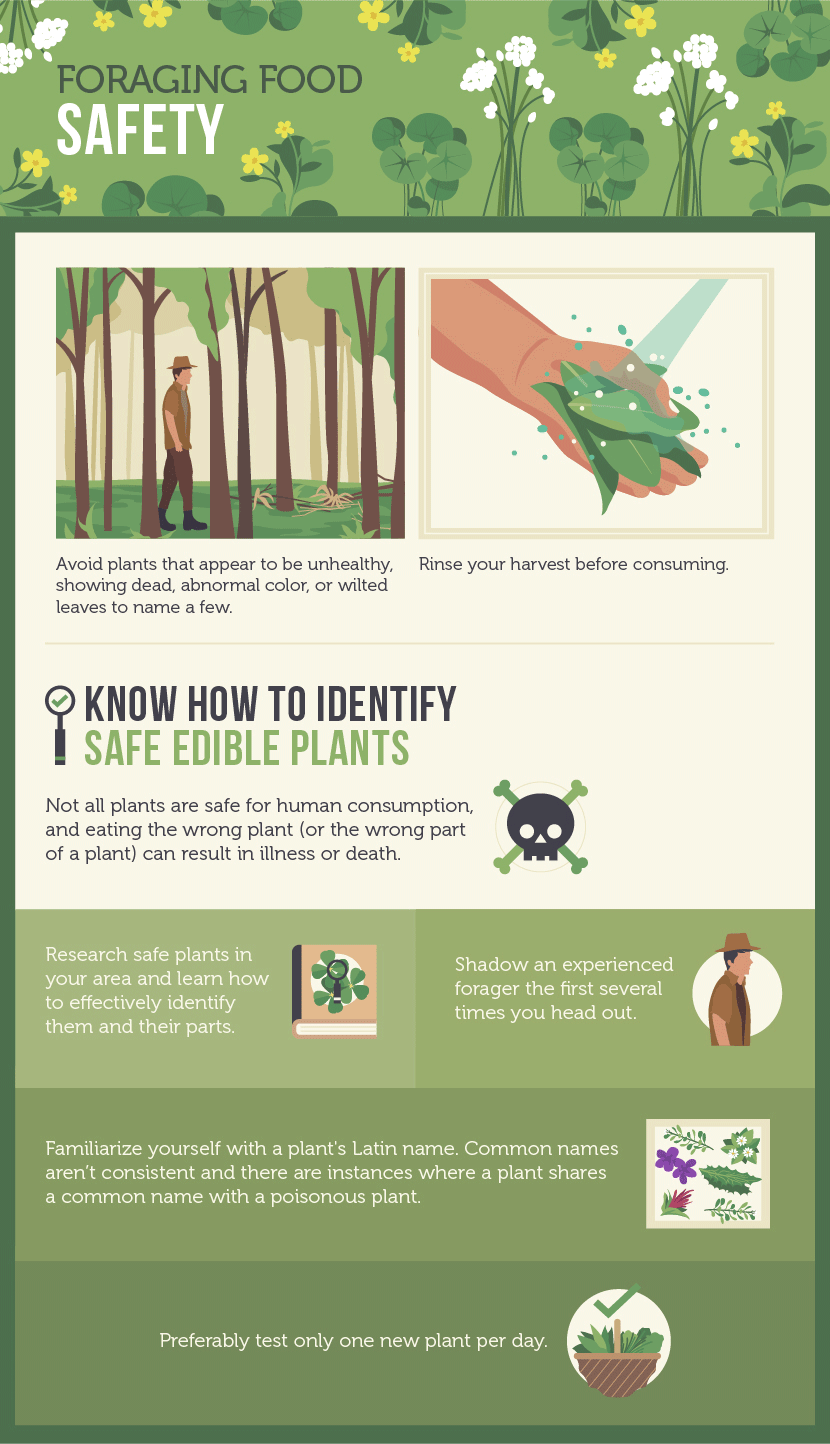
This point really can’t be stressed enough. Not all plants are safe for human consumption, and eating the wrong plant (or the wrong part of an otherwise-safe plant) can result in illness or even death.5That’s why it’s critical to research safe plants in your area and learn how to effectively identify them and their parts. It’s particularly helpful to shadow an experienced forager the first several times you head out so you can learn from their know-how. Regardless of whether you forage solo or with a friend, never eat a plant unless you can identify it with absolute certainty.

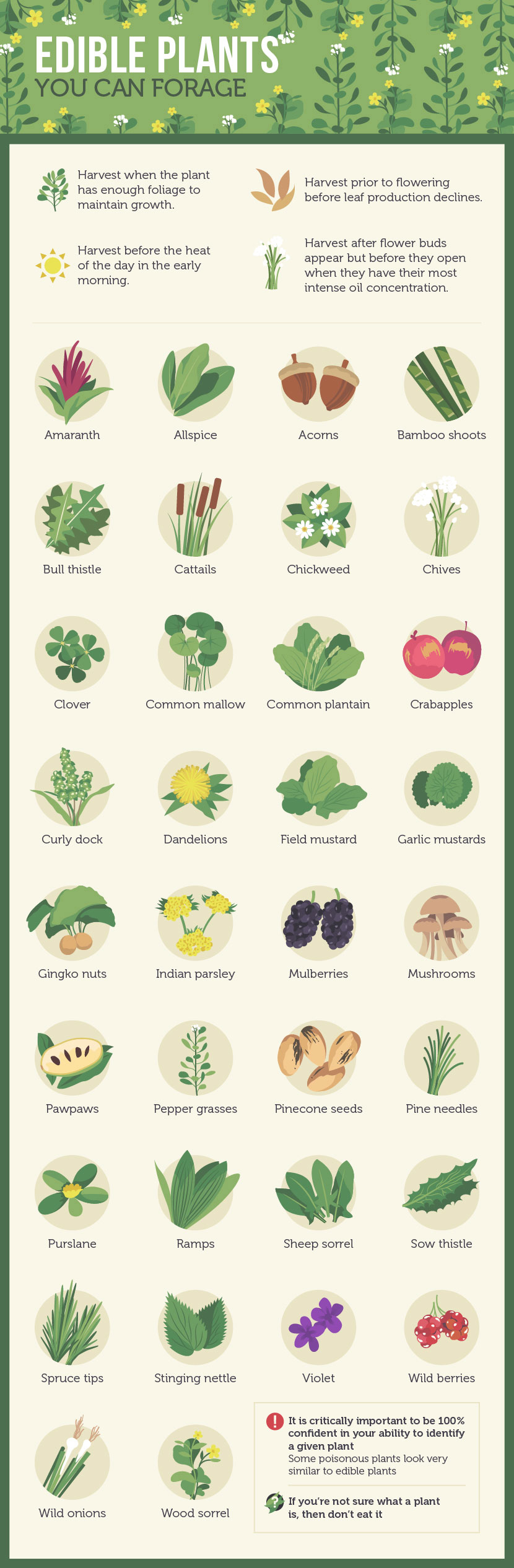
A Guide to Urban Foraging: Plants to Look For

While you research the plants native to your area, it can be helpful to familiarize yourself with their Latin names. Common names aren’t consistent across the board, and there are even instances where a plant shares a common name with a poisonous plant. Write down the Latin names of the plants you’re searching for on a particular day, and then bring along a field guide for proper identification.6

Scout Different Locations

A Guide to Urban Foraging: Where to Look

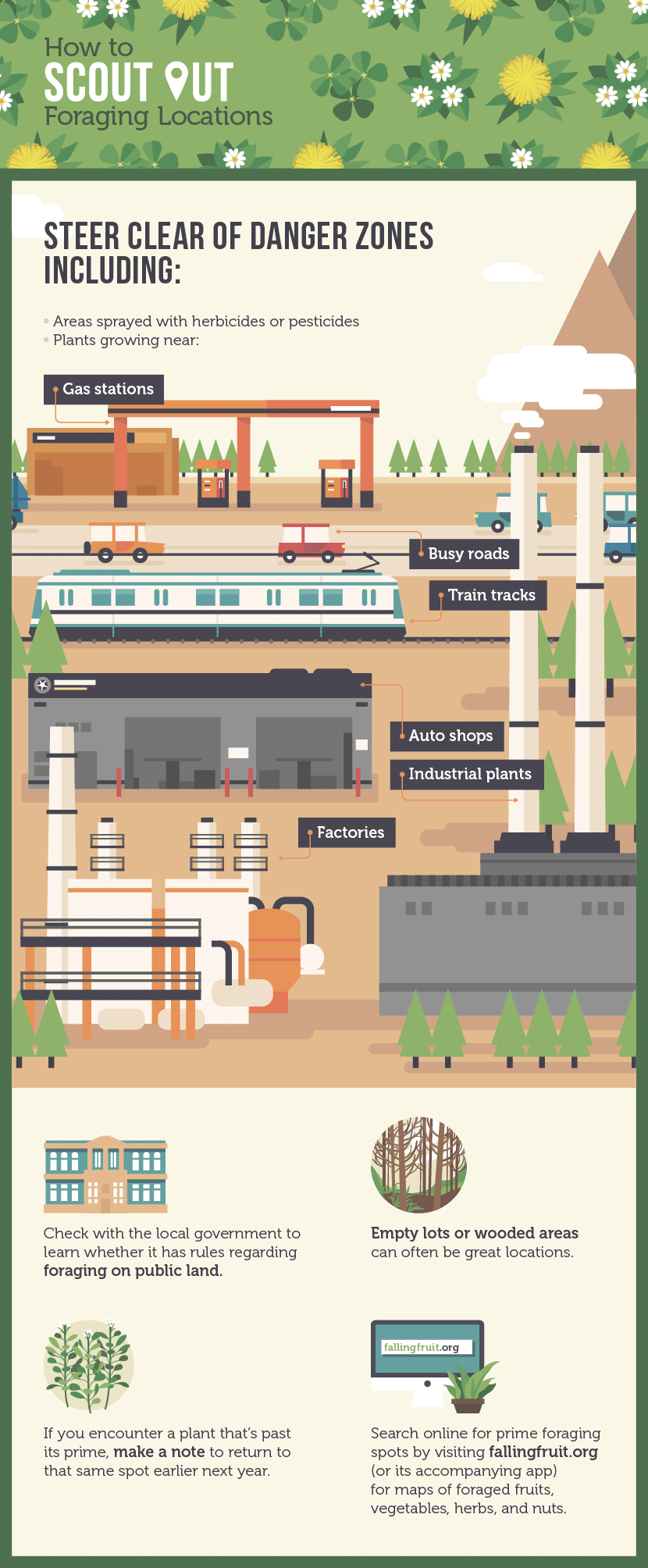
Before picking anything, do some research to figure out where foraging is and is not allowed in your area. In particular, check with local government for any rules regarding foraging on public land.7 If you have your eye on plants that reside on private property, always ask permission before foraging. (If nobody’s home, consider leaving a note with your contact information.8 ) Take note of what grows where and when; foraging is a seasonal enterprise.9 If you encounter a plant that’s past its prime, make a note to return to that same spot earlier next year.

Modern foragers can also use the Internet to identify prime foraging spots. Head to fallingfruit.org, which allows foragers from across the globe to share the locations of found fruits, vegetables, herbs, and nuts, to the tune of more than 800,000 entries from 50 countries.10 The searchable map is free to use online and the founders have also created an app for both Android and Apple.

Check out more fitness stuff here

No matter how you identify possible foraging locations, it’s important to investigate whether the area has been sprayed with herbicides or pesticides, or is located near an industrial area. Avoid plants from these areas, because they’re likely to be contaminated with chemicals that aren’t good for you. In general, try to avoid plants growing near busy roads or train tracks, or in soil that is contaminated with lead (such as at the site of a demolished house). It’s also best to steer clear of auto shops, gas stations, and factories.11 In contrast, empty lots or wooded areas can often be great sources for forage-friendly foods.12

Be Prepared

If you’re setting out to forage, it’s helpful to wear sturdy shoes and bring along some gardening gloves, a spade, a field guide to local plants, and a couple of reusable bags to transport your loot.13 Come prepared with knowledge about the best way to harvest plants so they’ll stay fresh until you get home.14

Respect Some Basic Rules

Part of reconnecting with the land includes developing an appreciation for all the ways nature sustains us – and it’s important to demonstrate that appreciation by treating the earth with respect. Keep the following rules in mind wherever and whenever you forage.

  • If you come across a small patch of a plant species, don’t pick all of the plants. Instead, leave several behind so the species can continue to grow in that location.15
  • Do not to take more than you can use: One of the goals of foraging is to eliminate, not contribute to, food waste.16 On a similar note, don’t harvest the whole plant if you’re only going to use a specific part, such as the leaves.
  • No matter what, don’t harvest or dig up the roots of a threatened species.17 Feel free to remove invasive species from an area, as they’re not doing the local ecosystem any good.

Use Common Sense When it Comes to Food Safety

A Guide to Urban Foraging: How to Forage for Food

If you’re wondering about the safety of foraged foods from urban areas, take solace in this: One study conducted in Boston found that foraged foods were no more dangerous to eat than conventional produce. And in some cases, they actually contained more micronutrients.18

Of course, this is just one study from one city. But common sense can help protect you from major food safety hazards. Know how to identify safe plants, scout locations according to the guidelines above, avoid plants that appear to be unhealthy, and thoroughly rinse your harvest before consuming. By practicing these basic tenets and trusting your gut, you’ll maximize your chances of foraging in a healthy way.19

Even as you digest all the serious pointers outlined above, keep in mind that foraging is ultimately meant to be exciting and fun. (Consider it the adult version of a scavenger hunt.) So get out there with your field guide and marvel at all the food nature provides – even in the concrete jungle.


Source: Fix.com Blog

Sources:

  1. http://experience.usatoday.com/food-and-wine/story/news-festivals-events/food/2014/01/27/foraging-chefs-dishes-trend/4817825/
  2. http://grist.org/food/can-urban-foraging-actually-feed-poor-people/
  3. https://canberraurbanforaging.wordpress.com/about/
  4. http://www.urbanfarmonline.com/sustainable-living/eat-local/5-rules-for-urban-food-foraging.aspx
  5. http://www.urbanfarmonline.com/sustainable-living/eat-local/5-rules-for-urban-food-foraging.aspx
  6. http://www.huffingtonpost.com/2013/06/02/foraging-tips-dos-and-donts_n_3367633.html
  7. http://www.urbanfarmonline.com/sustainable-living/eat-local/foraging-tips.aspx
  8. http://www.urbanfarmonline.com/sustainable-living/eat-local/5-rules-for-urban-food-foraging.aspx
  9. http://kwgn.com/2015/09/17/foraging-app-created-by-boulder-men-helps-you-find-all-the-free-food-around-you-2/
  10. http://www.shareable.net/blog/how-to-be-an-urban-fruit-forager
  11. http://www.chicagomag.com/Chicago-Magazine/August-2011/Urban-Foraging-Tips-How-to-Find-Your-Dinner-in-Chicagos-Wild/
  12. http://www.npr.org/2011/04/18/135412640/foraging-the-weeds-for-wild-healthy-greens
  13. http://www.chicagomag.com/Chicago-Magazine/August-2011/Urban-Foraging-Tips-How-to-Find-Your-Dinner-in-Chicagos-Wild/
  14. http://www.urbanfarmonline.com/sustainable-living/eat-local/foraging-tips.aspx
  15. http://netnebraska.org/article/news/nettles-milkweed-and-dandelion-its-whats-dinner-some-urban-nebraskans
  16. http://www.huffingtonpost.com/2013/06/02/foraging-tips-dos-and-donts_n_3367633.html
  17. http://www.urbanfarmonline.com/sustainable-living/eat-local/5-rules-for-urban-food-foraging.aspx
  18. http://www.mnn.com/food/healthy-eating/blogs/urban-foraged-food-found-safe-eat-boston
  19. http://www.npr.org/2011/04/18/135412640/foraging-the-weeds-for-wild-healthy-greens


Self-Watering Seed Starter – DIY

DIY Gardening Tip

Reuse old bottles to make this clever seed starter! A great way to start off your seeds now and be ready to plant soon.


Campfire Cooking – The Basics

One of the first images that comes to mind when people talk about camping is a campfire. For many people, campfires and camping are practically synonymous. Campfires can serve many functions on a camping trip: as a quick source of heat on a cold night, and an efficient way to dry off layers after a rainy day. Some people even refer to campfires as “caveman television,” because of their addictive nature. One of the best uses for a campfire is to cook food. Although cooking on a campfire takes longer than using a backpacking stove, campfires are incredibly versatile. The smoke imparts a unique flavor to the food and, with the right equipment, you can cook everything from s’mores to fresh bread using a campfire. Campfire cooking is perfect for car camping or canoe trips, where heavier items like a Dutch oven and fresh ingredients are easy to pack.

You can learn more fishing tips here.

Making a Fire

Many official or established campsites have nicely built fire pits or fire rings. In regions without established camping sites, fire rings are usually easy to find in well-traveled areas, but many are built in locations that don’t adhere to land use regulations. Fire regulations vary greatly from state to state and between land agencies, so double-check any requirements before leaving home. If you’re on public lands, don’t build a new fire ring if you can’t find one where you are camped. Instead, build a Leave No Trace fire – one that won’t have a lasting impact on the area. The most important part of having a campfire is to ensure that your fire doesn’t impact the surrounding environment. Every summer, improperly extinguished campfires create massive wildfires. It takes very little time for a smoldering fire to flare into a multi-acre wildfire, so be sure your fire is completely dead when you go to bed or leave the campsite. The most effective way to achieve this is by pouring water on the embers and ashes. Another preventive measure is to keep the size of your pile manageable. A huge bonfire in the woods can get out of hand quickly, so aim for nothing larger than a three-foot diameter and a foot high and don’t use branches that are thicker than your wrist. Never burn trash, especially toilet paper because tiny pieces can catch the wind and blow out of sight, moving embers to areas beyond your vision. If you’re on public lands, check for fire bans in your area before starting any fires.

Source: eReplacementParts.com

Campfires can be used to create several types of cooking conditions, from an open flame to seasoned coals. The stage of fire you want to cook with depends entirely on what you are cooking. For fast-cooking items like hot dogs and marshmallows, full flames are fast and easy. While these items can be cooked on the end of a sharpened stick, it’s simpler to bring a set of roasting sticks. For easy packing, invest in a set of extendable sticks with wooden handles. People who are new to campfire cooking usually stick their marshmallow or hot dog right into the flames, which certainly will work. However, this usually results in a crispy exterior and chilly interior. For a perfectly golden-brown marshmallow or an evenly crispy hot dog, look for a patch of wood that’s glowing, but not shooting flames. The glowing signals coal, which emits a more even heat than flames. It does require more time to cook this way, but the effort pays off for those with patience. Kids will usually opt for the full flame effect, which is half the fun of having a campfire with children. To dress up s’mores, try using peanut butter cups in place of chocolate or bring filled chocolate bars instead of flat ones. If you like the chocolate slightly melted, set your graham cracker and chocolate on a stone by the side of the fire while you cook the marshmallow. The same technique will toast a hot dog bun.

For more delicate items like fish, vegetables, and anything baked in a Dutch oven, you need to wait until the fire has created a nice heap of coals. A Dutch oven is a large, heavy cooking pot with a sturdy lid. When buried in or surrounded by hot coals, the pot acts like an oven, evenly cooking the ingredients inside. Though heavy, they’re incredibly versatile and can be used for everything from stews and roasts to cobbler and fresh bread. They’re easy to clean and incredibly durable; there are countless recipes for home cooking in a traditional oven that utilize a Dutch oven, so it’s not a specialty camping item. If you’re cooking something with coals, pack heavy-duty leather gloves or a small shovel to help you move coals to where you need them. For cooking with a Dutch oven, make a flat space in the coals where you can set the pot without worrying about it tipping. Once it’s in place, scoop coals onto the top of the lid so the oven is completely surrounded by even heat. You can also cook food packets wrapped in heavy-duty tinfoil (be sure to use heavy-duty rather than regular). These can be cooked on a grill grate over the fire, or directly in the coals.


These are just a few recipes and cooking ideas to get you started! Campfires are excellent for cooking any number of dishes, including bacon and eggs, fresh corn, roasted vegetables, fresh bread, macaroni and cheese, and even hot drinks like cocoa and coffee. Experiment with different equipment, like a kettle for water or a tripod for hanging a Dutch oven over coals.


25 Uses for Duct Tape

Read on for more genius ways to tap into duct tape’s potential.

Duct Tape to the Rescue

If it’s good enough for wars and space travel, it’s good enough for all sorts of hacks for your next camping trip. When times are rough, here are some ways duct tape may help get you out of the woods.

Shelter

After a long day outside, there is nothing worse than getting to a campsite and realizing something is wrong with the night’s cover. Here are some ways duct tape may be able to step in to help you get a good night’s sleep.

  • Mend a fabric tear: Tear off a piece of duct tape long enough to cover the rip in the tent. Adhere the tape on both the outside and inside of the tent. This should help keep water, dirt, and bugs out of your shelter.
  • Fix a broken zipper: Rather than let the tent door flap in the wind and let in the chill, apply a strip of duct tape along the break in the zipper.
  • Remedy a broken pole: If a pole snaps in half, put it back together by wrapping duct tape around the two parts. For a sturdier fix, tape a stick alongside the broken pole for reinforcement.
  • Fashion guylines: Guylines protect tents from rough winds by increasing stability. If the air is howling and your tent isn’t equipped with guylines (or they’re too tangled to use), fashion some out of duct tape. Make the cord by twisting several lengths of duct tape together. Tie and/or stick the cord to the sides of the tent, and then tie the other ends to rocks or trees, keeping the guylines taught.
  • Whip up an unplanned bivvy: No tent? No problem! With some duct tape and a couple of trash bags (which can also serve plenty of survival/camping purposes) you’ll be able to build a tent in no time. First, run a cord (a duct tape one, if needed – see guyline instructions) between two trees, allowing enough space for you to fit in between. Tape two trash bags together and drape them over the cord. To hold the shelter in place, place rocks where the trash bag meets the ground to hold it in place.

Duct Tape Guide - Using Duct Tape for Shelter

Footwear

Solid footwear is one of the most important pieces of equipment for a quality camping trip. But if treads fail or your feet are in need when out in the elements, here are several ways duct tape can step in.

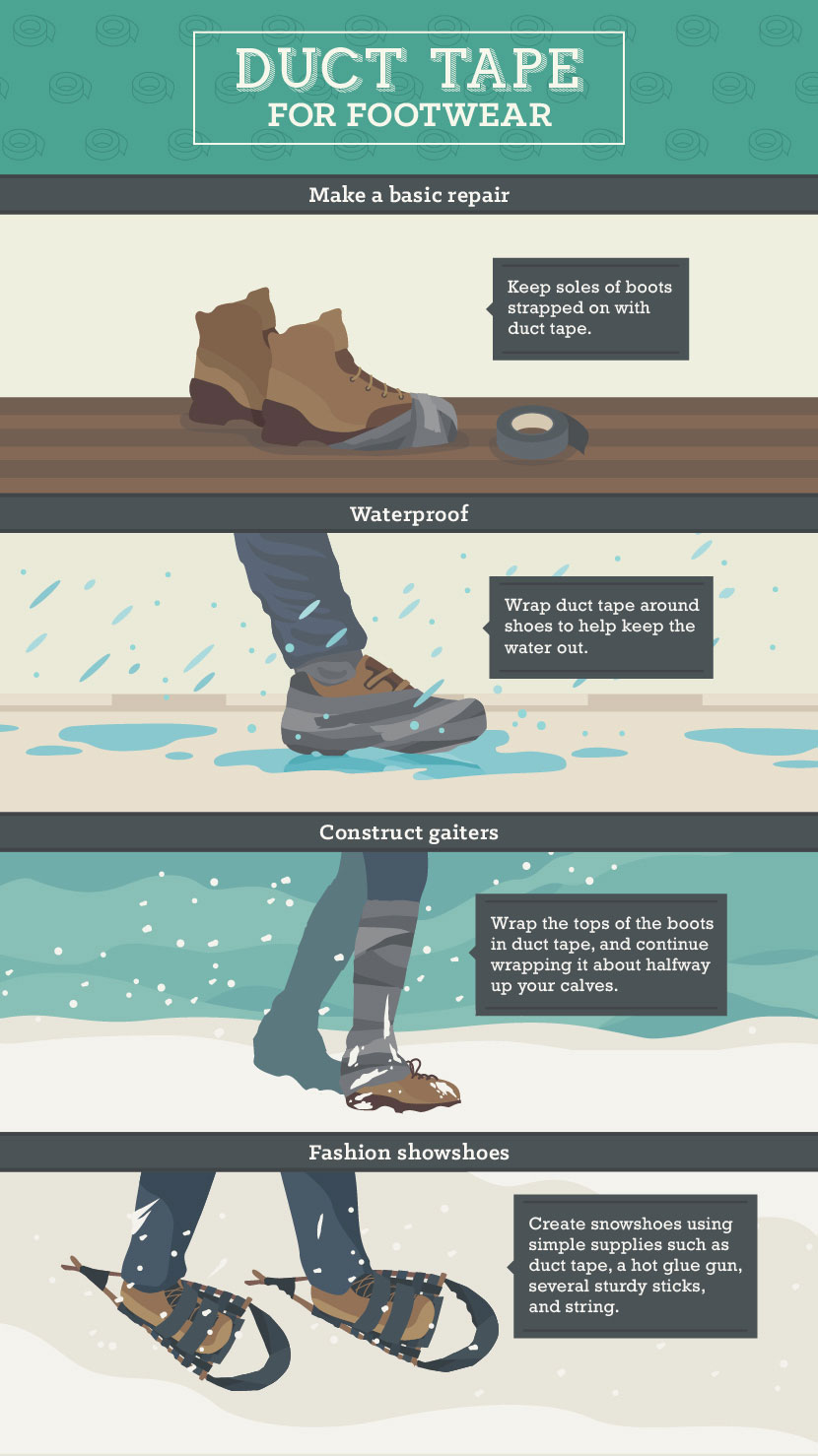
  • Make a basic repair: You aren’t going to be able to hike very far if the soles of your boots are literally falling off, but keeping them strapped on with duct tape will allow you to regain basic function for at least a few more miles.
  • Waterproof: Soaking wet socks are no fun. When the rain’s coming down, wrap duct tape around shoes to help keep the water out.
  • Construct gaiters: Even if boots do a fine job keeping out moisture, a day of winter tromping can mean wet feet when the snow creeps in around your ankles. Stay dry with makeshift gaiters by wrapping the tops of the boots in duct tape, and continue wrapping the tape about halfway up your calves.
  • Fashion snowshoes: This one is going to take a little longer – something you’ll likely want to do at home, rather than when you’re actually in the snow. You’ll need two rolls of duct tape, hot glue, a sharp knife, several sturdy sticks, string, scissors, and a large bowl. Find more detailed instructions here.

Duct Tape Guide - Using Duct Tape for Shelter

First Aid

Just as the WWII soldiers discovered, duct tape is a great addition to a medical kit.

Note: The following is not a substitute for basic wilderness first aid. Please brush up on your skills with a class before a big trip, and be sure to bring more than just duct tape in your first aid kit.

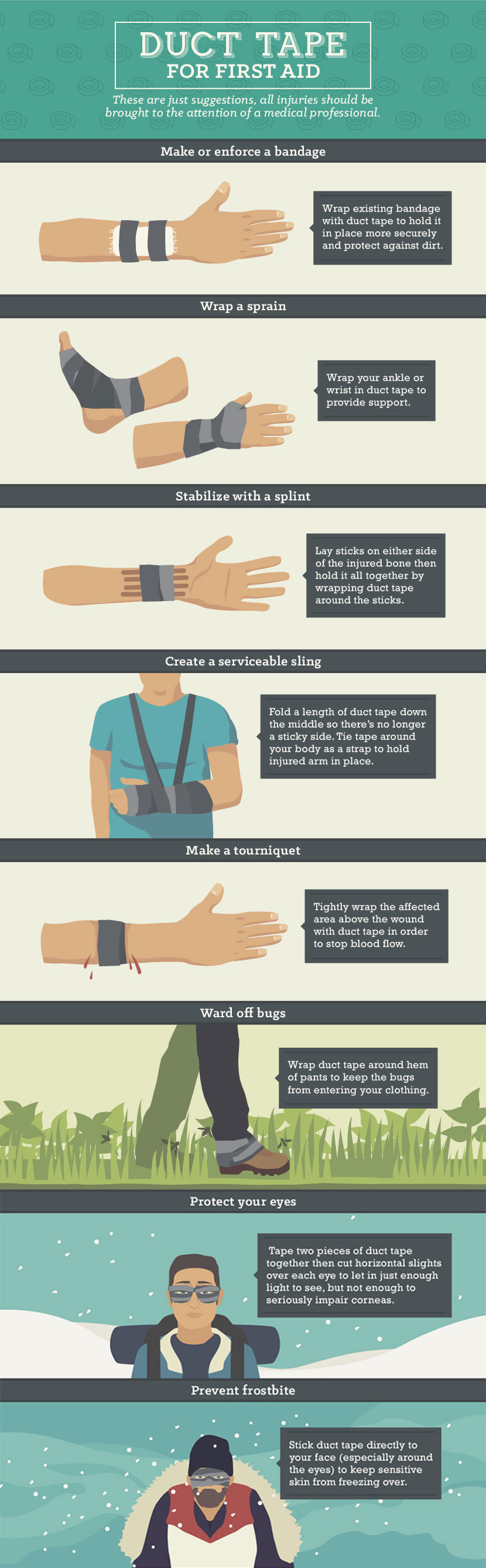
  • Make or enforce a bandage: Place sterile gauze over a cut and hold it in place with duct tape. This is also a good quick fix for blisters (just be sure the duct tape itself is not touching the wound). Alternatively, wrap an existing bandage with duct tape to hold it in place more securely and protect against dirt.
  • Wrap a sprain: In lieu of an Ace bandage, wrap your ankle or wrist in duct tape to provide support.
  • Stabilize with a splint: Stabilize a possibly broken limb with sticks and duct tape. First, lay sticks on either side of the injured bone. Then hold it all together by wrapping duct tape around the sticks.
  • Create a serviceable sling: Fold a length of duct tape down the middle so there’s no longer a sticky side. Tie the tape around your body as a strap to hold an injured arm in place.
  • Make a tourniquet: In the event of unstoppable blood, tightly wrap the affected area above the wound in order to stop blood flow.
  • Ward off bugs: For walks through grassy fields that may be home to ticks or chiggers, wrap some duct tape around the hem of your pants to keep the bugs from sticking onto you.
  • Protect your eyes: You may not always think to bring sunglasses on a winter camping trip. If the sun is beaming—especially at high altitudes—it can intensely reflect against the snow and cause painful and possibly permanent damage to your eyes, called snow blindness. Prevent eye damage with some super makeshift sunglasses. Tape two pieces of duct tape together, then cut horizontal slights over each eye to let in just enough light to see, but not enough to seriously impair corneas.
  • Prevent frostbite: Alaskan dogsledders swear by this frigid practice: If it is really cold out, stick duct tape directly to your face (especially around the eyes) to keep sensitive skin from freezing over. Just be careful when removing the tape so as not to take some skin with it.

Duct Tape Guide - Using Duct Tape for First Aid

Forgotten Goods

Did you leave an oh-so-important item at home? Duct tape can be molded into all sorts of basic necessities.

  • Craft a cup or bowl: Don’t let a forgotten bowl keep you from enjoying dinner. With several strips of duct tape, you can quickly craft a nifty alternative. Thanks to duct tape’s waterproof attributes, it should be able to hold liquids as well.
  • Use as a fire starter: Duct tape is surprisingly flammable. In a pinch, it could be the secret tool to get a campfire going. For an even more reliable fire starter, wrap duct tape around a bundle of dryer lint, and then cover the outside with char cloth.
  • Build a makeshift torch: Don’t have a flashlight? Light up a wad of duct tape to provide a bit more illumination – even if short-lived.
  • Create a handy hat: When the sun beats down, stick several pieces of duct tape together to form a visor, then use another strip to strap it on. (Be sure to take some selfies showcasing the fashionable new headpiece.)

Duct Tape Guide - Using Duct Tape For Forgotten Goods

The Rest of the Roll

  • Make an all-purpose cord or rope: A duct tape cord can have a lot of uses beyond just guylines, such as a clothesline, a gear sling, or a way to tie food in the trees to keep it safe from hungry critters. You can also make a heavier duty rope by braiding three pieces of duct tape cord together.
  • Repair clothing: If you have a tear or hole in a down jacket or even sleeping bag, place a strip of duct tape over it to help keep the feathers where they are.
  • Mend leaky bottles: If your water vessel – be it a plastic water bottle or a flexible water bladder – has sprung a leak, stop it (or at least slow it down) with a piece of duct tape over the puncture.
  • Soften sharp edges: There is nothing more annoying than the constant jabbing of a pointy object in your pack. Apply a layer of duct tape to buffer sharp edges.

Duct Tape Guide - Using Up the Rest of the Roll
This list should give you plenty of ideas for duct tape survival, but there are many more ways to salvage your outdoor adventure with this wonder tool. Throw a roll or two into your pack, or wrap several layers around a water bottle or trekking poles for later use, and you’ll be equipped with the tools you need to unstick yourself from all sorts of binds.
Source: Fix.com Blog


30 Things To Include In Your Camping & Wilderness Survival Pack

This is a great starter list for packing a camping or hiking bag. Many of the items cross over to a survival bug-out bag as well.

Top 30 Essential Tips For Your Camping & Wilderness Survival

Source: GroomNStyle | 30 Things To Include In Your Survival Pack