DIY Gardening Tip
Reuse old bottles to make this clever seed starter! A great way to start off your seeds now and be ready to plant soon.

DIY Gardening Tip
One of the first images that comes to mind when people talk about camping is a campfire. For many people, campfires and camping are practically synonymous. Campfires can serve many functions on a camping trip: as a quick source of heat on a cold night, and an efficient way to dry off layers after a rainy day. Some people even refer to campfires as “caveman television,” because of their addictive nature. One of the best uses for a campfire is to cook food. Although cooking on a campfire takes longer than using a backpacking stove, campfires are incredibly versatile. The smoke imparts a unique flavor to the food and, with the right equipment, you can cook everything from s’mores to fresh bread using a campfire. Campfire cooking is perfect for car camping or canoe trips, where heavier items like a Dutch oven and fresh ingredients are easy to pack.
You can learn more fishing tips here.
Many official or established campsites have nicely built fire pits or fire rings. In regions without established camping sites, fire rings are usually easy to find in well-traveled areas, but many are built in locations that don’t adhere to land use regulations. Fire regulations vary greatly from state to state and between land agencies, so double-check any requirements before leaving home. If you’re on public lands, don’t build a new fire ring if you can’t find one where you are camped. Instead, build a Leave No Trace fire – one that won’t have a lasting impact on the area. The most important part of having a campfire is to ensure that your fire doesn’t impact the surrounding environment. Every summer, improperly extinguished campfires create massive wildfires. It takes very little time for a smoldering fire to flare into a multi-acre wildfire, so be sure your fire is completely dead when you go to bed or leave the campsite. The most effective way to achieve this is by pouring water on the embers and ashes. Another preventive measure is to keep the size of your pile manageable. A huge bonfire in the woods can get out of hand quickly, so aim for nothing larger than a three-foot diameter and a foot high and don’t use branches that are thicker than your wrist. Never burn trash, especially toilet paper because tiny pieces can catch the wind and blow out of sight, moving embers to areas beyond your vision. If you’re on public lands, check for fire bans in your area before starting any fires.

Source: eReplacementParts.com
Campfires can be used to create several types of cooking conditions, from an open flame to seasoned coals. The stage of fire you want to cook with depends entirely on what you are cooking. For fast-cooking items like hot dogs and marshmallows, full flames are fast and easy. While these items can be cooked on the end of a sharpened stick, it’s simpler to bring a set of roasting sticks. For easy packing, invest in a set of extendable sticks with wooden handles. People who are new to campfire cooking usually stick their marshmallow or hot dog right into the flames, which certainly will work. However, this usually results in a crispy exterior and chilly interior. For a perfectly golden-brown marshmallow or an evenly crispy hot dog, look for a patch of wood that’s glowing, but not shooting flames. The glowing signals coal, which emits a more even heat than flames. It does require more time to cook this way, but the effort pays off for those with patience. Kids will usually opt for the full flame effect, which is half the fun of having a campfire with children. To dress up s’mores, try using peanut butter cups in place of chocolate or bring filled chocolate bars instead of flat ones. If you like the chocolate slightly melted, set your graham cracker and chocolate on a stone by the side of the fire while you cook the marshmallow. The same technique will toast a hot dog bun.
For more delicate items like fish, vegetables, and anything baked in a Dutch oven, you need to wait until the fire has created a nice heap of coals. A Dutch oven is a large, heavy cooking pot with a sturdy lid. When buried in or surrounded by hot coals, the pot acts like an oven, evenly cooking the ingredients inside. Though heavy, they’re incredibly versatile and can be used for everything from stews and roasts to cobbler and fresh bread. They’re easy to clean and incredibly durable; there are countless recipes for home cooking in a traditional oven that utilize a Dutch oven, so it’s not a specialty camping item. If you’re cooking something with coals, pack heavy-duty leather gloves or a small shovel to help you move coals to where you need them. For cooking with a Dutch oven, make a flat space in the coals where you can set the pot without worrying about it tipping. Once it’s in place, scoop coals onto the top of the lid so the oven is completely surrounded by even heat. You can also cook food packets wrapped in heavy-duty tinfoil (be sure to use heavy-duty rather than regular). These can be cooked on a grill grate over the fire, or directly in the coals.
These are just a few recipes and cooking ideas to get you started! Campfires are excellent for cooking any number of dishes, including bacon and eggs, fresh corn, roasted vegetables, fresh bread, macaroni and cheese, and even hot drinks like cocoa and coffee. Experiment with different equipment, like a kettle for water or a tripod for hanging a Dutch oven over coals.
Read on for more genius ways to tap into duct tape’s potential.
If it’s good enough for wars and space travel, it’s good enough for all sorts of hacks for your next camping trip. When times are rough, here are some ways duct tape may help get you out of the woods.
After a long day outside, there is nothing worse than getting to a campsite and realizing something is wrong with the night’s cover. Here are some ways duct tape may be able to step in to help you get a good night’s sleep.

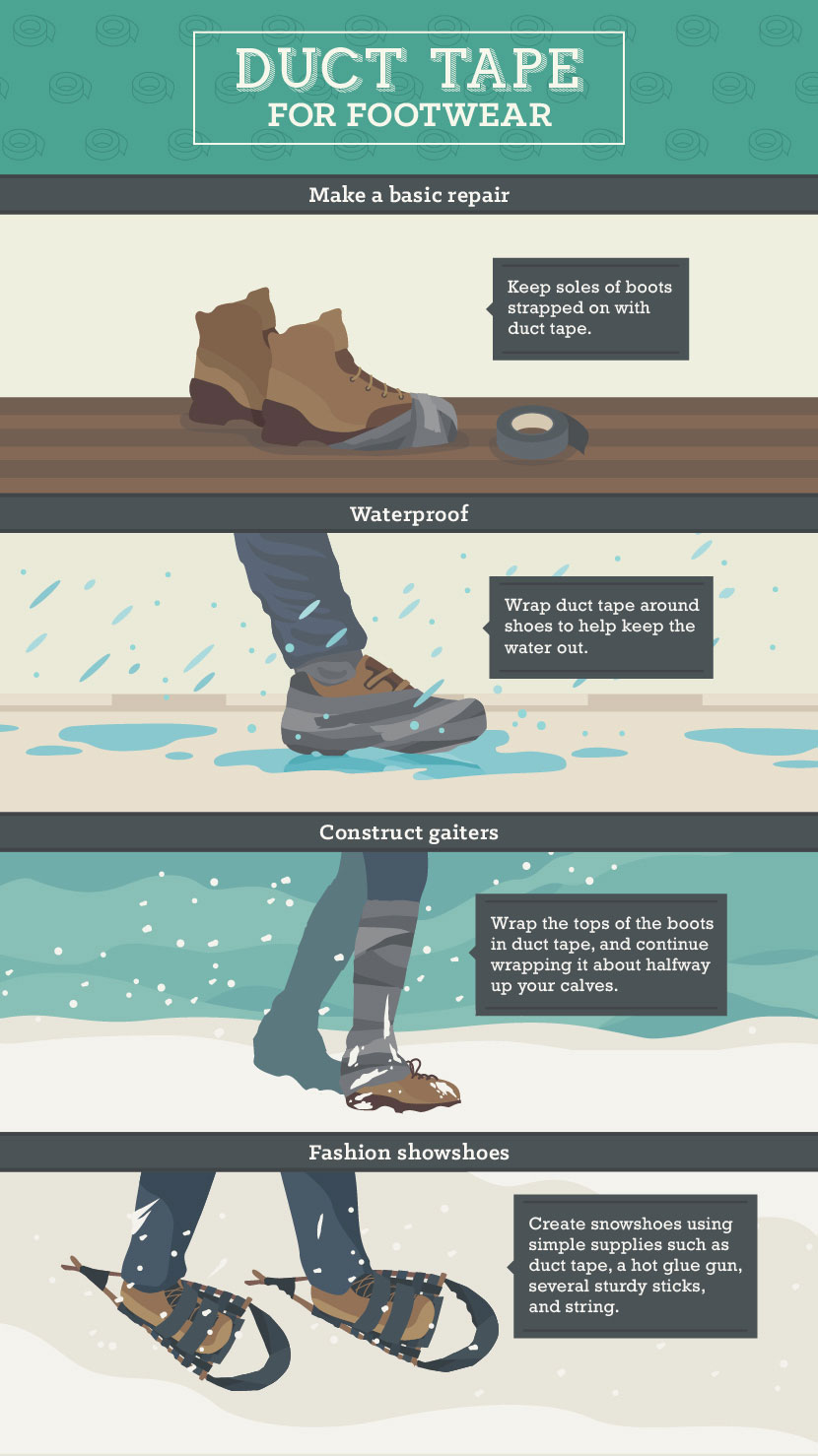
Solid footwear is one of the most important pieces of equipment for a quality camping trip. But if treads fail or your feet are in need when out in the elements, here are several ways duct tape can step in.
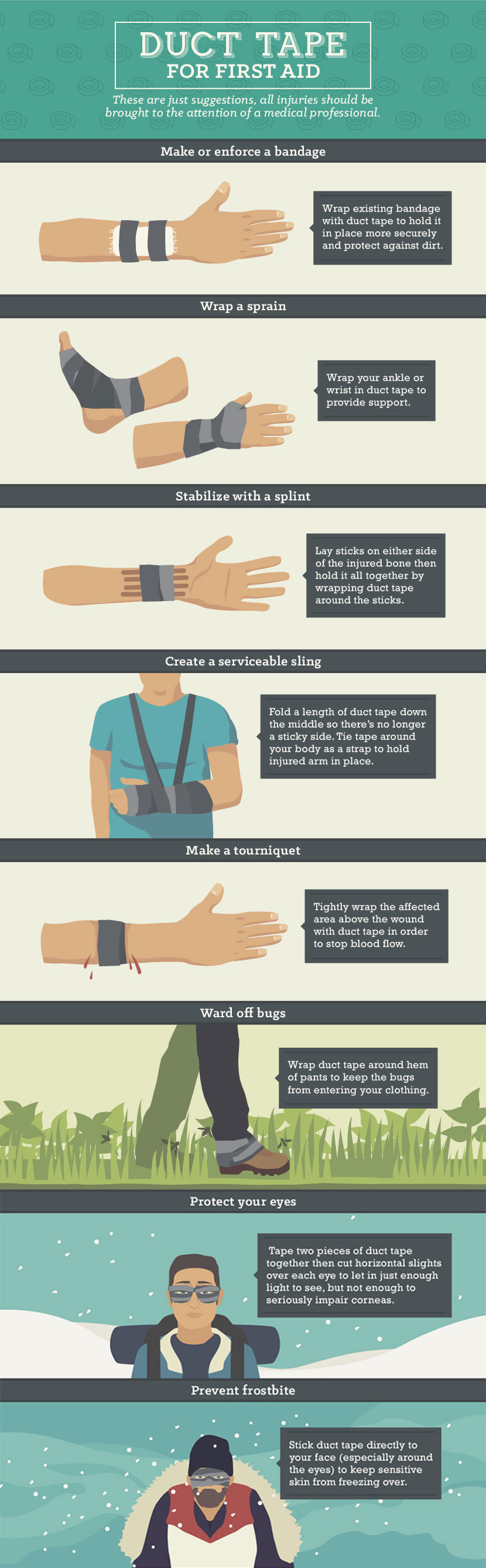
Just as the WWII soldiers discovered, duct tape is a great addition to a medical kit.
Note: The following is not a substitute for basic wilderness first aid. Please brush up on your skills with a class before a big trip, and be sure to bring more than just duct tape in your first aid kit.
Did you leave an oh-so-important item at home? Duct tape can be molded into all sorts of basic necessities.


This list should give you plenty of ideas for duct tape survival, but there are many more ways to salvage your outdoor adventure with this wonder tool. Throw a roll or two into your pack, or wrap several layers around a water bottle or trekking poles for later use, and you’ll be equipped with the tools you need to unstick yourself from all sorts of binds.
Source: Fix.com Blog

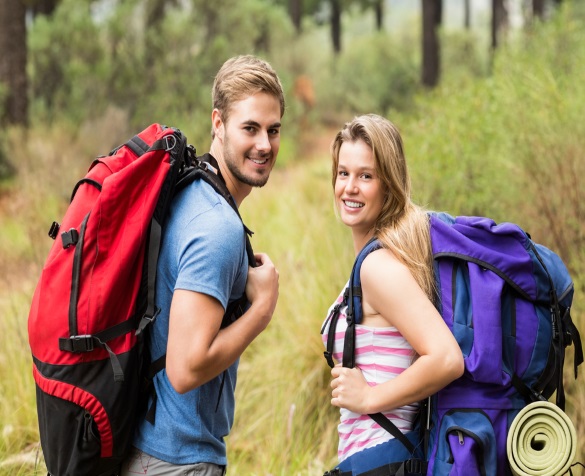
This is a great starter list for packing a camping or hiking bag. Many of the items cross over to a survival bug-out bag as well.
Top 30 Essential Tips For Your Camping & Wilderness Survival
Source: GroomNStyle | 30 Things To Include In Your Survival Pack
So, here’s a simple tip to build your own simple camp stove cooking fire.
DIY camp stove/heat from tuna can + cardboard + oil.
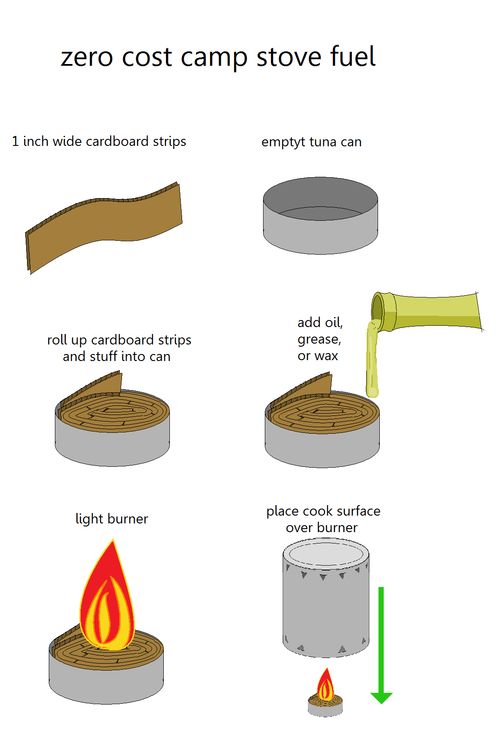
It’s simple but effective. Make up a few ahead of your next outdoor adventure and try it for yourself.
In reading this article, it brought several new ideas into our own survival research and preps. We recommend you follow the link below as we did.
A collection of seven interesting survival ideas that you can put into practice right now.
Source: 7 Survival Ideas You Never Thought About | Suburban Steader
Scouring the internet for information on disaster preparedness sheds an interesting light on what most people think it costs to ready themselves for the unexpected. Guides abound on how to prepare with minimal investments – but most put the focus on unreliable foodstuffs, tools, and supplies.
At the opposite end of the spectrum are the complete “how to” guides, that claim to show a family how to prepare for any emergency. These guides tend to indicate that the total cost of preparing a family of four for a natural disaster ranges from $5,000 to over $50,000.

Preparing for the Worst – Not As Expensive As Most Think
Preparing for a disaster doesn’t mean that you and your family could survive in an underground bunker for thirty years without ever accessing the outside world. It means preparing for the inevitable and unexpected emergencies that can arise at any time.
Disaster preparedness isn’t limited to hurricanes, blizzards, and failures of the national infrastructure. It extends into the smaller disasters that we encounter while going about our everyday lives – like getting stranded in a broken down vehicle in the middle of nowhere, or finding yourself injured while on a hike.
Preparing for these situations is relatively inexpensive. With the help of products like these Backpack Survival Kits it can be incredibly simple, too.

Preparing for Different Types of Emergencies
While the ideal disaster preparedness plan includes provisions for long periods of isolation from modern amenities (such as running water and food supplies), the majority of emergencies the average person will encounter require far less extensive planning.
Breakdown / Stranded Emergencies – If your vehicle were to break down, or if you found yourself stranded in the middle of nowhere, what would you do? With a ready-made kit, like the Guardian Elite (which comes prepared in a sturdy, easy-to-carry back pack) you would have food, and first aid supplies on hand. Toss in a few bottles of water before you head out, and you’ll have that covered, too.
Temporarily Unavailable Food Supplies – Whether it’s a true natural disaster or merely a predicted blizzard, when the newsman warns that rough weather is moving in, everyone rushes to the grocery store and clears the shelves. Having a one month supply of food on hand would ensure that your family doesn’t go hungry, and with kits like the Meal Package, is not only affordable, but incredibly easy to store.
In both of the cases described above, your total investment is going to be far less than what you might expect. Since the kits are ready made and based on government recommendations for preparedness, you can also be sure that they’re relatively complete.
Don’t put off preparing for disaster because you don’t think you can afford it – it’s far less expensive than you think.
Please share your cost saving prepper and survival ideas in the comments below.