What to Look for in a Survival Tent

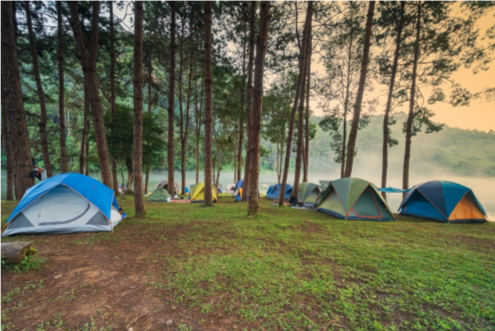
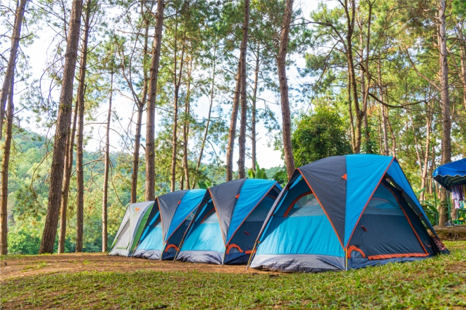
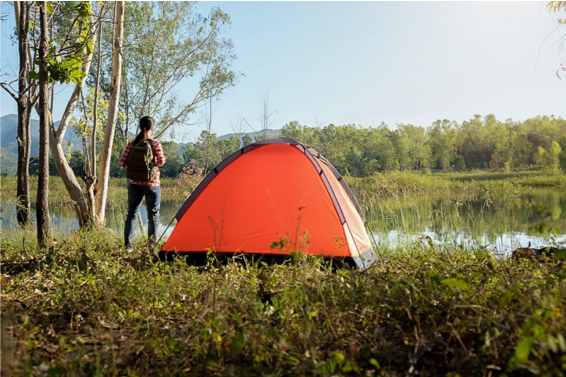
One of the most important pieces of equipment you’ll need for survival is a reliable and heavy-duty tent. When it comes to survival, the best shelter will not only keep you protected from the elements, but it will also give you a comfortable place to take cover for the night.

Every keen survivalist needs a well-designed tent. However, tents come in all shapes and sizes, so you’ll need to do your research before you pick one up.

There is such a wide variety of tents on the market, making it difficult to know exactly what to look for when choosing a tent for survival purposes. A tent to last in any survival situation needs to do more than stay put against the wind.

Take a look at our tips to find out how you can choose the best survival tent for you!

Strong and Sturdy Materials

Some might argue that durability is the most crucial feature of a good survival tent, and we can’t really disagree too much. However, how much a tent can withstand all comes down to the materials used for its construction.

survival tent 1

There are several materials survival tents will be made from, but you can typically expect to find either canvas, nylon, or polyester designs.

Nylon and polyester are more commonly found, and they’re ideal for survival and wilderness environments due to their lightweight feel. These materials might not be heavy, but that doesn’t stop them from delivering a heavy-duty performance. They are generally highly resistant against tears and rips, and usually have a water-resistant layering to add to their toughness.

Polyester is also an excellent choice if you’re looking for something with UV resistance, as this material often has a UV-resistant coating already built-in, preventing your tent from suffering sunray damage.  

Canvas, however, is often considered to be stronger and sturdier than plastic materials. However, it is worth considering the difference in weight compared to other tents. Canvas tents will be heavier, and are likely to take up more space in your bug-out bag. When it comes to survival, you’ll need to consider whether this would be an issue for you.

As well as being durable and long-lasting, the best survival tent will be breathable and well-ventilated. Ideally, your tent should have windows and more than one door if it is built for over two people. This will help to allow the air to flow properly inside, and allows the temperature to be better regulated.

Lightweight and Compact

As we’ve discussed with regards to the material of the tent, the weight should be a factor to look for when choosing a tent for survival.

You should consider how long you’re likely to be in the wilderness for as a way of determining how heavy your tent can be. Generally, the longer you’re going to be traveling, the lighter your tent will need to be, as you’ll have to carry it around with you for longer. You won’t want to exert too much energy by carrying around an unnecessarily heavy tent for days on end.

Many modern tents are built with this in mind, and will be made as lightweight and compact as possible. Some tents will be specifically designed to fit inside a survival kit, and can roll up easily for a comfortable carry. However, I’d advise being slightly wary of these tents, as their focus on being lightweight can sometimes mean a lapse in quality, and they can instead feel flimsy and useless.

The overall size and shape of the tent also shouldn’t be overlooked. Not only should it not weigh your bag down, but it should also be able to actually fit inside. You might be thinking that a tent will be the heaviest and largest piece of survival gear you’ll have to carry around, but with the compact tents available on the market right now, that isn’t necessarily true.

This will also depend on the amount of people you’re planning on having in your tent, as a larger group will inevitably require a larger tent.

Resistant to Water and Wind

A tent that isn’t able to handle heavy rainfall might as well not be worth having. There are many ways a tent’s waterproof capabilities are enhanced, and one way is through the seams. Look out for taped seams, which ensure that no water can seep through and you can remain dry inside the tent.

Many tents’ waterproof level is indicated by a ‘Hydrostatic Head’ rating, which can usually be found in the tent’s specifications. A higher Hydrostatic Head rating highlights a stronger tent that can handle greater amounts of water.

In addition to being waterproof, a sturdy tent will of course be able to resist blowing away in the wind as well. Try to find tents that use sturdy poles for their construction, preferably made from metal such as aluminium. This will prevent the tent from collapsing at the slightest breeze.  

survival tent 2

Number of People in Your Group

You’ll need to consider how many people are going to have to sleep in the tent, as this will be a determining factor in deciding which tent is right for you.

However, whether it’s a single-person tent you’re looking for, a family-sized one, the tent will need to be comfortable and spacious to allow for a rejuvenating sleep in the wilderness. It’s important to consider the height of the tent, as while a taller tent provides more room to move around freely, it can be more noticeable in the outdoors, which isn’t great if you’re trying to keep a low profile.

If you’re anticipating being in a survival scenario with a large group or with several family members, then there’s no escaping the fact that you’ll need a big tent. However, you may find it’s more efficient to go with two 2-Person tents, as opposed to carrying one family-sized shelter instead.

Although 2-Person or single person tents are a convenient choice, you’ll need to consider how breathable and comfortable they are. Look out for smaller tents made from materials that promote ventilation, such as nylon or polyester, for a less restrictive feel.

Useful Extras for Survival

Many of the best, high-quality survival tents will come equipped with extra features to make your life easier in the outdoors.

Ideally, your chosen tent should have additional storage space included, often in the form of mesh pockets. These can be used to store smaller items that you’ll need easy access to, such as a flashlight or a folding knife. This helps to keep items within easy reach, but also saves you from unnecessarily using floor space for gear storage.

survival tent 3

Another common feature found with survival tents is the addition of one or more vestibules, depending on its capacity. While vestibules may seem like a weighty extra to fit into your survival backpack, they will be incredibly useful in the wilderness. You can’t always anticipate the weather conditions, and this feature helps to shelter your survival gear from the elements.

For survival purposes, you should also consider a tent with a reversible fly. This is a useful feature to have, particularly in the wilderness, as the option of a darker or lighter color means you can change the color of your tent’s exterior to camouflage with the environment. This can also help to protect you from potential threats, as well as giving you privacy when you need it the most.

Conclusion:

A survival tent is one of the most important pieces of equipment you’ll purchase in your preparation for survival, so it is essential that you know exactly what to look for. If you’re serious about survival, it is undoubtedly worth investing in a high-quality and well-constructed tent, that you can be sure won’t fall apart during tough times.

We hope this guide has helped you in making your decision, and now you know just what to look for in a survival tent! If you’re interested in reading more of our articles, check us out at Survival Front for more survival-related tips and product reviews.

Thanks for reading!


Key Ways To Prep and Save Money On Your Survival Gear

Camping, hiking, and hunting can test your survival aptitude. But, of course, before heading to these activities, it’s important to equip yourself with the right knowledge and skills in order to become a true survivalist. Also, it’s crucial to prepare your gear to ensure safety and a more enjoyable overall experience.

However, premium quality survival kits and gear don’t come cheap. So check out some ways you can save money on survival equipment by reading below.

How do you save money on survival gear?

Take Advantage of Online Promos and Discounts

When going on a survival journey, make sure that you have all the right equipment to help you get through emergency and life-threatening situations. Remember that essential survival gear can make a big difference in terms of your personal safety and of the people around you. That being said, make certain that you purchase only high-quality survival equipment that can withstand harsh elements and great impacts.

One of the best ways to save money when buying essential survival gear is by using discounts or promo codes such as  Palmetto State Armory discounts. But, where can you find such?  Good thing there are promo sites that are readily accessible to make your search a lot easier.

Here are the benefits of using online discount codes or coupons when purchasing your survival gear:

  • Stack Coupons and Discounts: You can use multiple discount codes on some of your purchases. For instance, you can get a 5 percent discount on the item price of a portable water filter to ensure safe drinking water in the wild, plus a promo code for free shipping.
  • High-quality Survival Gear at a Lower Price: The best thing about using promo codes is that you don’t have to pay for the full price of premium-quality survival gear, such as survival boots, knife, and rifle. You can use your special discount codes to get them at more reasonable prices that fit your budget.
  • Save Time and Effort: Bring with you the best survival gear you purchased at a discounted price online. You don’t have to search every manufacturer’s website to get some special deals because online coupon sites serve as a one-stop shop for all your promo needs.
  • Peace of Mind: Because your survival equipment can be pricey, you are assured that you can rely on them whenever you need them, most especially during emergency situations.

Invest in High-quality Survival Gear

By spending money on quality survival gear, you can save more money in the long run. Whether you need new hunting shoes, cutting gear, binoculars, tarp, or sleeping bag, make sure to consider quality over the price. While you can save with cheap survival gear for the upfront cost, you wouldn’t want to risk your health and safety with poorly made products that easily get damaged after one or two days of use.

Here are some tips and tricks when assessing the quality of survival gear:

  • Check the Stitches: Stitching should be consistent and tough for survival gear made of fabrics, such as survival shoes, pants, jacket, and even tarp and tents.
  • Know the Make: For metal survival gear, such as a knife, rifle, and other hunting tools and supplies, make sure that they don’t rust right away, and maintenance should be minimal.
  • Know the Functions: For devices, such as cooking tools, ensure that you purchase one with multiple functions allowing you to save resources, like cookware that allows frying, boiling, baking, and steaming food at the same time.
What to look for in high quality survival gear.

Testing and Proper Use of Survival Gear

You don’t have to purchase new survival gear every time. By investing in high-quality items and taking care of them through testing and proper use will surely save you a lot of money over a long period of time.

When choosing the best survival gear, you need to prioritize food, fire, shelter, and water. Make sure that your survival kit carry items that meet your basic needs. Also, you need tools that aid in security, self-defense, stealth, and shelter building. However, make sure that you also know how to use these equipment to avoid self-injury or causing harm to other people as well as to wildlife

Here are some tips when testing and using survival gear:

  • Read the manufacturer’s instructions regarding proper use and maintenance tips.
  • Check the duration of battery-operated devices to ensure they will last for a couple of days before they need recharging. Solar chargers are very helpful in the wild.
  • Watch video tutorials or join survival courses to learn how to use survival tools and equipment properly and efficiently, and to develop and enhance your survival skills.

Conclusion There’s no secret in survival–you just ought to survive no matter what. But, you need to be prepared with the right tools and survival gear, along with the right survival knowledge and skills. Of course, the prices of survival tools and equipment can be tough on your budget, but using promo codes can help. Also, investing in high-quality survival gear and using them properly can save you money in the long run. 


Should You Be Including A Body Armor In Your Survival Gear?

Being prepared for a disaster is something that everyone should do. And this is not a rule that only military and law enforcement professionals should observe. Even civilians need to have the right kind of tactical gear to cope with the adverse situations they may come across at any point in time. Speaking about tactical equipment, one piece that you may overlook is body armor. However, this is one of the most important pieces for civilians and law enforcement professionals alike. At the same time, it is also legal in most of the states. So even if you aren’t a security personnel, you can still buy one. Before you decide whether you should include body armor in your arsenal, here are some facts that you should know.

Should You Be Including A Body Armor In Your Survival Gear?

What is body armor? 

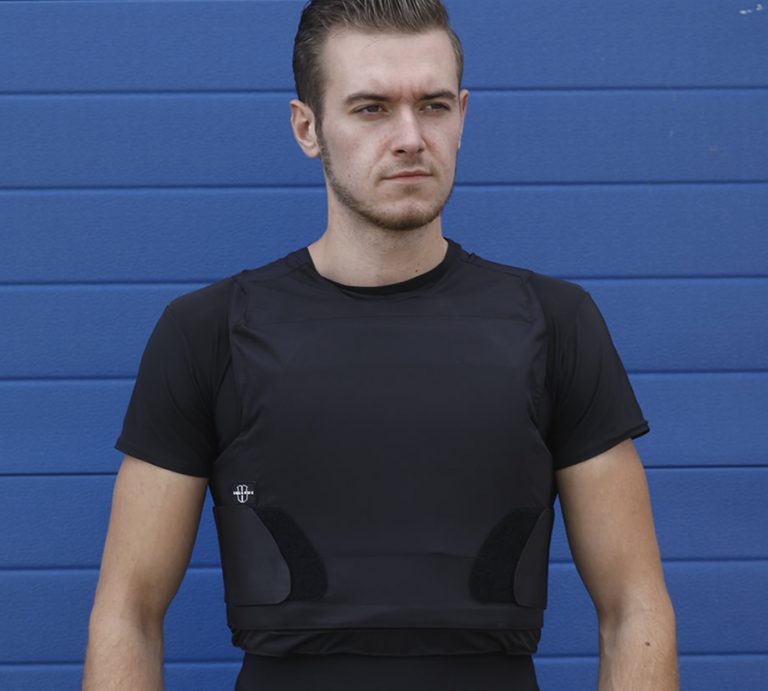
Even before you contemplate buying body armor, you need to understand what it exactly is. Essentially, body armor is a piece of gear (usually a vest) that covers your body to protect it. This means that you may even consider a helmet as body armor because it protects your head. Often, body armor is used interchangeably with bulletproof vests but may not necessarily be resistant bulletproof. At the same time, it may be strong enough to slow down a bullet if not completely stop it. 

The popular base material for modern armors is Ultra High Molecular Weight Polyethylene (UHMWPE). It comprises plastics that are tightly woven for giving them added strength and making them capable of dispersing a bullet’s energy as it makes way through different layers of the protective gear. Besides the ones made out of UHMWPE, you can also find armors that are crafted with Aramid steel. This variant is heavier in weight but offers protection comparable to the UHMWPE counterpart.

What are the types of body armor you can explore?

It has already been explained that body armors are usually made of UHMWPE and Aramid UHMWPE and steel. Besides these, there are different variants available in the market. If you want to explore the options, you can choose to buy body armor from engardebodyarmor because there is plenty of choices here. The best part is that you can shop online discreetly in just a few clicks, without even having to step out.

Here are variants that you can explore:

Soft body armor: 
These soft armor packages consist of a certain amount of flexible layers of PE and/or Aramid. This type of armor is capable of stopping a round from handguns penetrating through it by decelerating it rapidly. This usually results in the bullet deforming or “mushrooming” (and ultimately stopping) the bullet falling after it hits the armor (unless you are unlucky). The successive layers of the material of the vest absorb the bullet’s energy and gradually stop it before it is able to penetrate.

Hard Body Armor: This category is segregated into three types on the basis of plates being used in them.

Ceramic plates:  The armors made with ceramic plates are stronger than soft ones when it comes to resisting rifle rounds. Ceramic plates use a combination of layers of PE/Aramid with Ceramic. The Ceramic part is placed a strike face side of the panel. The ceramic breaks the incoming round and the PE/Aramid package part of the plate absorbs any fragments left. Essentially, ceramic has the potential to slow down the bullet in addition to fracturing its impact. On the downside, ceramic cannot take multiple rounds because the plates become weaker with each round just as it happens with  soft armor. Further, these are heavy in weight and you cannot wear them without an additional carrier.

Polyethylene plates: A variant in body armors that has become popular in recent times is that made in polyethylene plates. These polyethylene plates (PE) are made from layers of PE (UHMWPE) that are pressed together under very high pressure and temperature. These plates can weigh around 1-1.5 kg in comparison with their ceramic plate counter part weighing 3-3.5 kg. However these polyethylene plates do not stop armor piercing rounds.  They can slow down the bullet by “mushrooming” effect and the bullet is actually caught in the plate. Weight reduction is the main benefit of these plates.


Steel plates:
Steel is another variant you can find in hard body armor. Compared to the other variants, it is quite a poor performing product as rounds tend to ricochet. These plates are cheap but very heavy. So you will seldom find professional operators using this type of armor these days. Still, steel emerges as the best choice if you are on a budget because it provides ample protection and does not cost a fortune.

You can explore these options and find the one that matches your requirements and budget.

How can you fit the body armor? 

The fitting of body armor matters the most, irrespective of the variant you opt for. Ideally, it should provide coverage for the main areas of the torso, including your front, back, and sides. The purpose is to protect your ribs and vital organs from potential bullet attacks. Also, you need a good fit to get the right level of protection. This is done by proper positioning and correct adjustment of the armor. 

Do you really need body armor? 

Now is the most important question, whether you really need body armor. The answer is that it is completely up to you. For example, if you are in the law enforcement department, this is one piece of tactical gear that you cannot just manage without. On the other hand, it can act as a lifesaver in a defensive scenario even for a civilian. Whether it is a disaster or an attack, body armor can be a great thing to keep you safe. You may feel protected just because are armed. But remember that your attackers will be armed too and wearing protection can actually save your life in the worst situations. Even if you are a civilian, wearing armor gives you the confidence that you may need when facing survival issues.

Can body armor actually save your life?

Body armor can absolutely play the role of a lifesaving gear but wearing it does not guarantee complete protection. The truth of the matter is that you need to choose one that is strong enough to maximize your chances of survival even from bullet attacks. If you have the right one on, the probability of survival increases to a significant extent. When you buy body armor, its NIJ rating is a factor that you should consider. NIJ refers to the National Institute of Justice while NIJ rating is a global rating system that is used as the ballistic standard of resistance. A reputed manufacturer always mentions the NIJ rating for the armors he sells. The rating is classified from Level IIA to Level IV.Level I to Level IV and the higher is obviously better.  Level IIA, II and IIIA are ratings for handgun protection (soft armor). Level III and Level IV are ratings for rifle protection (hard armor).

What factors should you consider while choosing a carrier?

Besides choosing the right body armor, you also require a carrier irrespective of the fact whether you are picking soft or hard armor. A carrier is basically a textile piece that has pockets in which soft armor panels and/or hard armor panels can be placed.

The best carriers are made out of cotton or polyester and have Velcro straps. There are adjustable variants that allow you to attach other gear such as extra pouches to them. When you choose a carrier, steer clear of elastic because it weakens with time and eventually the vest may sag. It is not advisable to wear one that does not give you a snug fit because the vulnerable areas of your body will get exposed.  

Considering these key facts about body armor, you will realize how important it can be in combat situations. Though nothing can guarantee survival at such adverse times, this protective gear increases your odds to a significant extent. Make sure that you pick one from a good brand and also a piece that offers a snug fit for great protection. Still, you should not get overconfident because this attitude can make you slack about your safety!


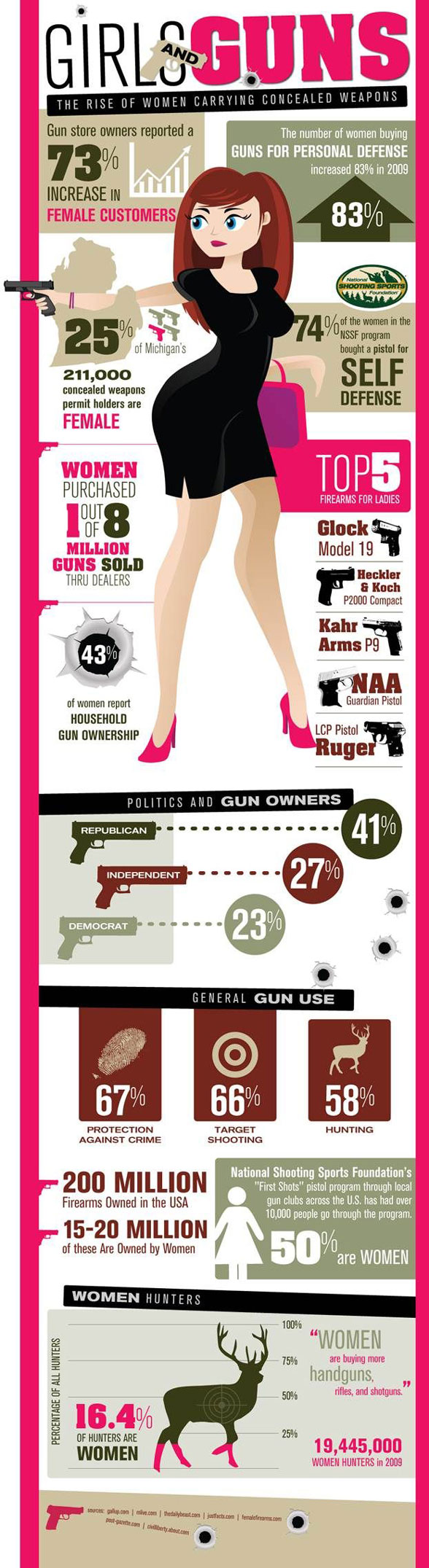
The Rise of Girls and Guns – infographic

Girls and Guns

With the start of the world and political unrest domestically, more and more women are choosing to protect themselves. Learn, train and survive.


How To Choose The Best Instant Tent For Camping

Instant tents take the hassle out of camping due to how easy they are to carry around and set up. However, with a few different types available, it can be tough picking one for yourself. In this article, we’re going to help you make the right choice when it comes to instant tents, and cover all the basics that you need to know. 

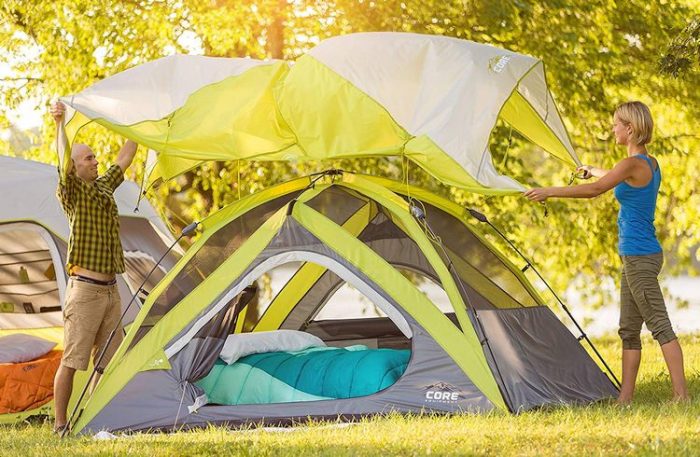
Best Instant Tents - Representation Image - Core Instant Dome Tent

Instant Tents – What Are The Benefits? 

Ease of Use

Instant tents are just what they sound like – they can be pitched in no time at all, thanks to the fact that there are poles already attached to the body. Hence, even first-timers can set up camp without anyone’s aid or having to read through a manual. 

Price

An instant tent for camping can vary in price from cheap to very expensive, depending on the brand and the size. As a result, you can find several that fit your budget. 

Time-Saving

Imagine there’s a storm approaching and you need to set up a shelter as soon as possible. With regular tents, there’s a high probability of you getting soaked before you’re done pitching them. If you’ve got an instant tent, on the other hand, you’ll be done in less than a minute!

Freestanding

This means that you’re able to pitch an instant tent on any terrain without needing to stake it down. As a result, you can always adjust the position if necessary. However, when winds are particularly strong, it may be a good idea to go ahead and pin the tent down with stakes.

What Size Is Right For You? 

Instant tents come in both large and small sizes. If you go camping with friends or family, then it might be better to go with the former. However, that isn’t the only reason to go for a larger tent. If you’ve got claustrophobia, for instance, the extra space can help you feel more comfortable.  

The only drawbacks with larger tents are that they tend to be pricier and can be harder to carry around.

Which Type Of Instant Tent Should You Pick?

There are two main types of instant tents to choose from – cabin and dome. Let’s take a look at each:

Cabin Tents

These come in either square or rectangular shapes (hence the name) and are usually able to house anywhere from 6 to 12 people. In addition, cabin tents usually have tall ceilings, allowing people to walk around without having to hunch. In addition, the roof is made out of mesh materials, which means that you can stargaze at night. 

Typically, cabin tents come fixed with strong poles that can stand their own against the roughest winds. On the flip side, cabin tents do come with a couple of downsides. First of all, they’re quite heavy to carry around. Secondly, they can’t be repaired easily if something breaks. Due to the size, it may be difficult for just one person to pitch a cabin tent without help. 

Dome Tents

These are much smaller than cabin tents, meaning that you can’t walk around in them comfortably. However, there are quite a few pros to having these type of tents. For starters, they can be set up in a minute or so, while cabin tents take longer. Plus they’re lighter as well, while still being able to withstand rough winds. Furthermore, they just require one person to set up.

At the same time, there are a couple of negatives, like being unable to take them apart to make it easier to carry. In addition, you have to keep it fixed in the ground while it dries.

Instant Tents With Screened Porches

You’ll come across instant tents that contain screened porches. These are ideal for summer and spring camping because you can let in some sunlight without having to open up any flaps. Hence, you don’t need to worry about bugs getting inside the tent.

Are Fast Pitch And Instant Tents The Same?

Even though the names sound similar, fastpitch tents are not the same as instant tents. In fact, there are quite a few differences between the two. The biggest is that the fastpitch is faster to set up. This is due to the fact that the poles are pre-assembled inside the body, unlike instant tents. In addition, most fastpitch tent models come equipped with a hub as well. 

In Summary

Instant tents can make campers’ lives much easier, considering all that they offer. To begin with, they’re very quick and easy to set up – so much so that even amateurs can make do without any instructions. In addition, they are freestanding and come in a variety of price ranges and sizes. 

The two types – cabin and dome are suited for different scenarios. The former is more suited for larger groups while the latter is perfect for the single camper. 


Lost In The Wild: Survival Skills That You Can Always Depend On

A close friend who was reported missing for several days made it back and recounted his ordeals in the Amazon. Surely, he would not have returned alive if he hadn’t some survival skills. Not many people hope to be lost in the wild. People may lose their way for many reasons such as hunting or hiking in unfamiliar locations, after some mishap of shipwreck or air crash, or even a war situation. Sometimes, one could even decide to get lost in the wild just to test his ability to survive!

Lost in the wild: Survival skills that you can always depend on

You owe your survival in the wild to two major factors: Luck and your survival skills. If you do not want to gamble with your life, then you should acquire some basic skills in preparation for any sticky situation. Below are ten survival skills that should get you going:

Skill #1: Constructing a Shelter

Constructing a shelter helps you in several ways. It shields you from the harshness associated with the wilderness. Life is easily taken out by hypothermia than starvation or dehydration. You can build your shelter by leaning logs of woods against the main structure and then pile debris from the ground and leaves on top of it. You generally need some tools when building a shed. Ensure that the ground of the shelter is dry (probably spread with dry leaves). Your shelter should be designed in such a manner that it protects you from the cold ground, open-air and wind.

Skill #2: How to Find a Source of Water

Once you are in the wild, the first thing you should do is to find water. Bodies of water are always located in earth depressions or valley between mountains. The reason is that water flows downhill. Let your compass be your guide as you wander away from your base where you have always constructed a temporary shelter.

Where water is not located, you then have to dig up the earth in the valley a foot deep or more and place lined leaves or a piece of clothing inside it to filter the water as it gradually fills the small pit.

Skill # 3: How to Search for Food

In terms of surviving while lost in the wild, one has to source for food to replenish the out-burning calories in the body. Although human beings can stay for weeks without food, there is still the need to eat to get refreshed with needed energy.

Think of food that you could easily find in the wild. However, if you had found a large body of water, using your fishing hook to get fresh fishes for protein readily comes to mind. Besides this, you can make some animal traps in the forest. Other tips to finding food include tracing of trees that have edible inner bark. The wild is filled with such trees. Your knowledge of some local nut trees makes it easier for you to find them in the wild.

Skill #4: Igniting a Fire

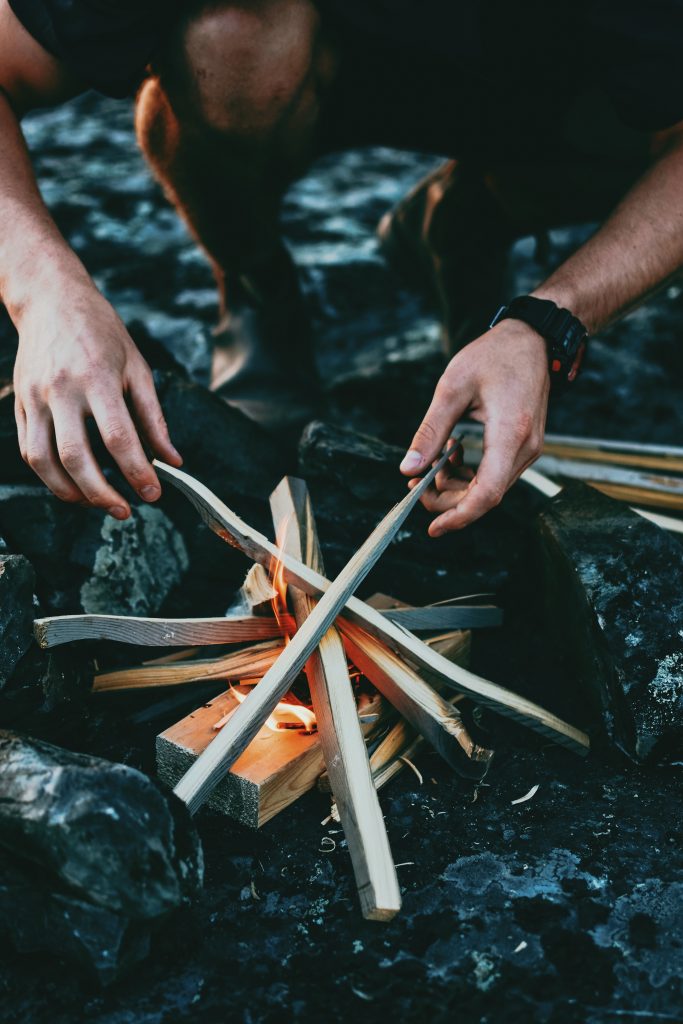
Your ability to make fires while in the wild is essential. Fire would give you warmth. When you are wet or in a chilling cold night, five to ten minutes of warmth from the fire can save you from possible death caused by hypothermia. Striking one stone against the other over dried and rusty leaves severally in quick succession will spark off the fire. It is more advisable to acquire the easier method of making fire, which is through the bow drill skill. As soon as a fire is made, keep it burning throughout the night and the days that follow. Fire will help you make food, keep you warm, and scare away predators.

Your ability to make fires while in the wild is essential.

Skill #5: Sending Smoke Signals

Remember the stories of ancient Red Indians, who were skilled in sending messages across miles with sending clouds of smoke into the atmosphere?  You do not have to be like the Red Indians anyway. All you need to do is to choke your fire with dried leaves to send up cloudy smoke into the atmosphere during the day. This will enable possible rescuers to spot your location in the wilderness easily.

Allow the upward flow of smoke to rise consistently into the air when you are trying to attract attention and help. This smoking skill is normally done in broad daylight upon mountaintops.

Skill #6: Water Discipline

There might be a scarcity of water, especially if you find yourself in desert prone areas. All you need to do is to maintain a high degree of water discipline, which means drinking one or two mouthfuls of water and carrying it for a very long time before taking another gulp of water.

Surviving in the wild requires taking drastic measures as well. Perhaps, you may have no option than to drink your urine in places where there is an absolute lack of water.

Skill #7: Self-Disguising

An enemy might be lurking around the forest. You need to disguise yourself by hanging on some green leave around your body. As you move around the greenish bush on green leaves, you will be hardly noticed. You may need to rub your face and hands with either mud or charcoal.

Skill #8: Herbal Knowledge

Good knowledge and use of medicinal herbs is yet another skill you need to acquire. Knowing where to source for these herbs in the wild will help you boost your immune system against fever and infections.

Skill #9: Follow Water

Life largely depends on water. So if you ever find where there a stream or river, follow its flow. Chances are that you are likely going to meet a settlement of people who depend on the river for their survival.

Skill #10: Maps and Compass Reading

Reading of maps with a compass will be very helpful while navigating your way in the wild. This tool never disappoints, as it continues to work under any sort of weather condition. Even where you do not know how to read a map or use the compass, you just have to follow the tip pointing to the North Pole to get to your destination. Sometimes, you may climb a high ground to see where you are heading.

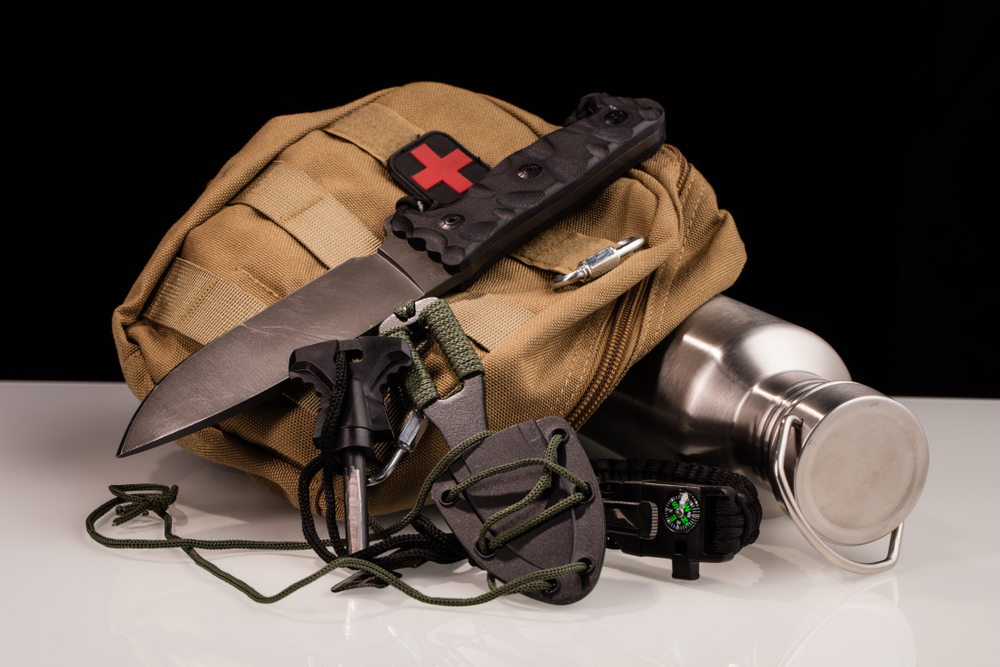
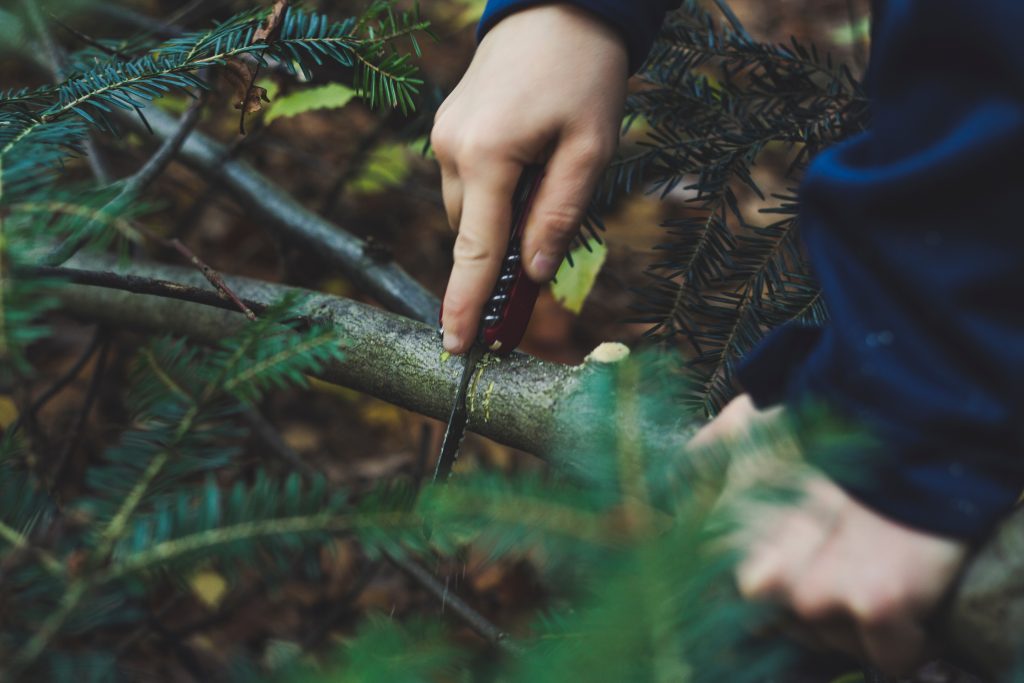
The Eleventh Skill – The Survival Tools/Weapons: You will require a tool or more to complete each of the above mentioned tasks. Most importantly, you need some sort of weapon to defend yourself when the need arises. Since you cannot carry a big box of tools and weapons around, I’d recommend you always carry a portable survival knife with you. Knifing skills should be the first anyone should acquire in preparation for survival in any environment. Quality is a very important factor to consider when choosing a multipurpose knife. Only the best survival knife can be used to cut sticks and thick tree barks, catch fishes, dig holes, tear meat, fight off predators and help you through any sticky situation.  I have a personal resolve to always carry a good pocket knife along with me.

In summary, you’re better off not getting lost at all. But should you miss your way in the wild at any time, with these basic skills, you stand a chance of returning alive with an interesting survival story.

5 Legal Self Defense Weapons You Should Consider Buying

Whether you are at home or traveling, safety matters the most. After all, you would not want to be attacked or threatened at any time. The best way to deal with the risks is by having a self-defense strategy in place. While you can learn some physical tactics, carrying a weapon or two can make you feel safer and more confident anywhere. But you would want to carry only the ones that are legally permissible because anything that is not can get you into trouble with the authorities. Here is a list of legal defense weapons you should consider buying for being safe everywhere and at all times.

What are the 5 Legal Self Defense Weapons You Should Consider Buying?

Pepper spray

Perhaps the best weapon that you can carry for being safe while you commute and travel is pepper spray. It is lightweight and easy to carry as you can just slip it into your bag or pocket. Moreover, pepper spray is easy to take out and use when you are in potential danger. There is a good choice available if you want to pick the level of potency, though even the lightest one can be highly effective.

Tactical knife

A tactical knife is small in size yet effective and easy to use when it comes to defending yourself from an attacker. You can choose a flip open variant or one that can be carried in a holder on your side. Flip open knives are easy to conceal while the side-holder ones are easier to access when you are in danger. Tactical knives, though, are not legal everywhere.

Stun guns

Stun guns are effective self-defense weapons that enable you to shock the attacker. Since these are non-lethal, you need not fear legal restrictions in most of the places. While even a basic one would give you good protection, look for an advanced product like TASER X2 if you want to be extra sure. These guns are widely used by law enforcement professionals through even civilians can use it.

Tactical pens

A smart self-defense weapon that you can carry everywhere is a tactical pen. It looks like a pen but is capable of doing much more. The impact edges are designed to dissuade attackers while it has LED lights as well. Moreover, the tip of a tactical pen can cut glass and help you to escape if you are abducted.

Personal alarms

Not exactly a weapon, a personal alarm is still something that can keep you safe in adverse situations. A whistle is the best example of a traditional personal alarm. However, there are high-tech ones that you can use to send across an alert to the authorities when you are attacked. Some alarms are even equipped to share your location so that you can get help on the spot. Look for a small and easily accessible one that you can reach when you need it the most.

Since these weapons are non-lethal, you will not get into legal problems by using them. Still, carrying them makes you feel confident as you can use them for being safe all the time.


A Quick Guide On How To Choose The Right Holster Bag

As an avid hunter, you will probably know the importance of carrying the right equipment on hunting trips. Of course, your firearm will figure on the top of the list but you need to make sure that you have a perfect holster bag too. After all, you cannot just carry around your gun all through the trip. You need something that conceals the weapon and ensures that you carry it safely and conveniently. So how do you decide that a holster bag is just perfect for you? Here are some tips that can help you choose the right one for your hunting trips.

Concealment matters the most

Welding around a gun is never a great idea because it gets you undue attention. This is the very reason why you would want to buy a holster bag in the first place. Opt for one that is discreet even while being easy to access when you need to draw out the weapon suddenly. Besides concealing your weapon successfully, it should also provide all the safety and convenience that you want.

Prioritize a durable material

A holster bag is not something that you would buy every day because you expect it to last for years. So it is always good to prioritize durability while looking for a sturdy material that does not tear or rip easily. Make sure that the material is capable of bearing the brunt of rough use, which is something common for hunting trips. The zips and buttons should be strong as well.

Look for extra storage

Besides safety, accessibility, and durability, ample storage is another thing that you should consider. Ideally, you should look for one which stores more than your gun. Picking an option like Marom Dolphin Star Bag is a good idea because it has multiple pockets that can store stuff like your cellphone, wallet, first aid kit, and extra magazines.

marom dolphin star gun bag holster

Test for ease and safety of a draw

Before you buy a holster bag, test for ease and safety of draw. After all, you would not want to fidget with the bag at the time of an emergency. Make sure that you are able to pull out the weapon effortlessly at the moment you need it. Also, safety matters a lot because there is always a danger of making a mistake when you are in stress.

Consider the price

Finally, consider the price of the bag in addition to its features and functionalities. You will probably have a budget to start with and want something that fits into it. At the same time, make sure that you do not compromise with quality just to save a few dollars. Look for something that is stylish and lasting but does not dig a hole in your pocket.

Following these smart tips will surely help you choose the best holster bag out there. Before you pick one, do try the size as well because you would not want one that is too big or too small. Also, make sure that it is strong enough to bear the weight of the firearm.